
Q&A

A single drug made Argenx one of the most valuable biotechs in Europe. Its new CEO is ready for the next act.
Argenx has become one of Europe's most valuable biotech companies thanks to its blockbuster drug Vyvgart. New CEO Karen Massey is planning a broader autoimmune disease research and development strategy to maintain innovation and expand the pipeline.

Is AI finally proving its worth in drug R&D?
The pharmaceutical industry is actively betting on artificial intelligence across the entire drug development pipeline, yet data on whether it can ultimately translate into clinically effective therapies remains scarce. The latest analysis jointly released by the Tufts Center for the Study of Drug Development (Tufts CSDD) and Medable shows that AI can generate significant financial returns in oncology trials: the expected net financial value for a single Phase III drug development program reaches up to $21 million, with a return on investment of up to 82-fold. Based on Tufts' oncology benchmark data and Medable's AI clinical monitoring agent operational and cost data, the model indicates that efficiency gains—such as accelerated patient enrollment and earlier database lock—can shorten development timelines by approximately 18 weeks. Although the study is limited to the oncology field, its methodology is generalizable. Tufts CSDD Executive Director Ken Getz and Medable Chief Medical Officer Dr. Pamela Tenaerts were interviewed on the study details, human-machine collaboration models, and industry implications.
Legend’s interim CEO sees a shorter path to the next era of CAR-T
Less than a month after taking over as interim CEO of Legend Biotech, Alan Bash made it clear that the company's strategic direction remains unchanged. In an interview, he discussed the global expansion of Carvykti, the path to overcoming barriers to patient access, and the safety and efficacy thresholds that the in-vivo CAR-T therapy LB2501 must cross before larger-scale studies.
Beyond Obesity: Three Potential Blockbuster Pipeline Drugs to Watch
Although obesity drugs such as Ozempic, Wegovy, and Zepbound top the list of global best-selling drugs in 2025, the pharmaceutical industry's pipeline extends far beyond that. This article focuses on three investigational drugs that could become blockbusters: Revolution Medicines' pancreatic cancer drug daraxonrasib, Gilead's CAR-T therapy anito-cel for multiple myeloma, and Lilly's next-generation Alzheimer's drug remternetug, analyzing their clinical data, market potential, and regulatory progress respectively.

Tyra’s one-drug, three-indication bet nears its first phase 2 test
Tyra Biosciences' single oral drug dabogratinib is advancing development for three indications—two types of urothelial cancer and achondroplasia—with its first Phase 2 clinical trial about to begin. The company expects to release multiple key data points by 2027 and seeks to achieve first approval in low-grade upper tract urothelial cancer.
How cost and perception could reshape the GLP-1 market
Eli Lilly and Novo Nordisk are racing to expand their GLP-1 franchises, but recent earnings and surveys suggest that cost, prescriber satisfaction, and public perception may be as influential as clinical performance. This analysis examines the latest data, including Lilly's Q2 revenue surge, the slower-than-expected uptake of oral GLP-1s, and the barriers posed by high prices and stigma.

How Helus’ new CEO plans to scale its psychedelic drug pipeline
Helus Pharma新任CEO Michael Halstead正以规模化战略推进公司致幻剂药物管线。凭借在Intra-Cellular Therapies期间主导146亿美元并购的经验,Halstead计划将HLP003(III期)与HLP004等资产推向后期开发与商业化,同时应对Compass Pathways、Definium Therapeutics等竞争对手的挑战。

Biotech initiatives pick up as more regions race to become hubs
As pharmaceutical manufacturing investment reaches historic levels, multiple U.S. regions are launching or winning government-backed biotech programs. Pennsylvania and New York introduced new initiatives this year, while Kansas City and Central Virginia secured federal Tech Hubs funding. Industry experts note these incentives complement—but do not replace—fundamental infrastructure factors like workforce and education in attracting major capital projects.
Merck is pharma’s most patent-exposed company. Now it’s reinventing itself.
Merck was once a leader in infectious diseases and immunology, and the arrival of Keytruda made it dominant in oncology. However, with Keytruda's core patents set to expire in 2028 and biosimilar competition poised to impact its performance, Merck has been rated by Evaluate as the pharmaceutical company most exposed to patent risk in the near term. To address this challenge, Merck is actively reinventing itself through a series of acquisitions (such as Terns Pharmaceuticals, Cidara Therapeutics, and Verona Pharma) and pipeline diversification. This article, based on an interview with Merck's Vice President of Business Development, Elizabeth Naldi-Jacob, explores its M&A strategy, its expansion beyond oncology, and its exploration of emerging fields such as obesity and neuroscience.
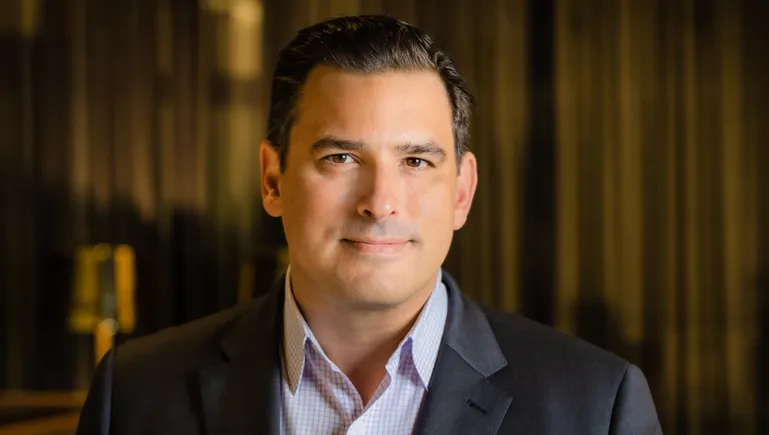
How Telix landed a $2.1 billion radiopharma deal with Regeneron
Amid the growing popularity of the radiopharmaceutical field, Telix Pharmaceuticals and Regeneron have reached a collaboration agreement potentially worth $2.1 billion. Telix Founder and CEO Christian Behrenbruch revealed that its manufacturing platform and clinical experience were key to winning the partnership. This article outlines the collaboration details, Telix's pipeline layout, and market strategy.