
FDA Politicization Reaches Unprecedented Depths, Experts Warn of Long-Term Impact
The U.S. Food and Drug Administration (FDA) is experiencing an unprecedented wave of politicization. Genevieve Kanter, an associate professor of public policy at the University of Southern California, points out that compared with previous administrations, the current comprehensive overhaul of the agency's personnel, expert panels, and review processes has pushed political control to new heights. The integrity concerns in reviews raised by the commissioner's priority review voucher pilot program, the erosion of professional expertise due to staff attrition, and changes to the external advisory mechanism together constitute the main short-term risk points. In the long term, experts worry about a decline in the quality of drug approvals, companies redirecting resources toward lobbying rather than R&D, and permanent damage to public trust.
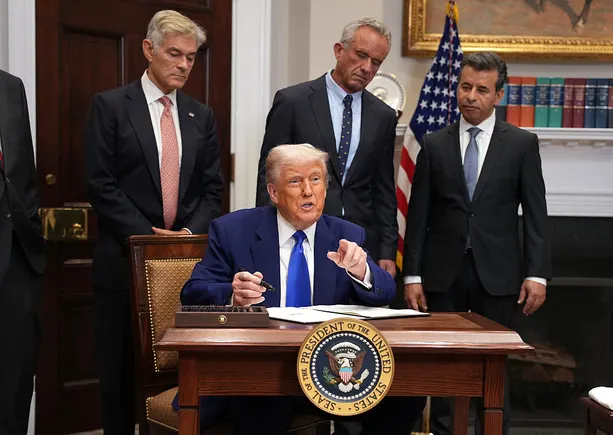
Has the U.S. Food and Drug Administration (FDA) ever swung so dramatically along the political spectrum in just one year? Policy experts believe this federal agency has become the focus of widespread partisan strife, driven by a fundamental shift with far-reaching implications for the regulator's future.

Genevieve Kanter, an economist and associate professor of public policy at the University of Southern California, says the current level of politicization within the FDA is unprecedented in both depth and breadth. While every presidential administration has used political appointments to pursue ideological goals within the agency, she notes that the sweeping overhaul of staffing, expert panels, and review processes has taken this control to a new level.
Take, for example, theCommissioner's National Priority Voucher (CNPV) pilot programannounced last year. This program not only raised questions about "who is making review decisions and by what criteria," but also exposed a lack of transparency in how health department leadership selected beneficiary companies. According to reports, when Eli Lilly and Novo Nordisk announced plans to lower prices for obesity drugs, both companiesreceived priority review vouchersjust before the President's press conference on drug pricing. Additionally, due to safety and efficacy concerns, the FDA has had todelay the review of two drugs in the program。
"I worry about the quality of drugs about to be approved in the U.S., and I worry that more corporate energy will shift toward lobbying or political patronage rather than drug development. That would be an inefficient and terrible use of resources."

Genevieve Kanter
Associate Professor of Public Policy, University of Southern California
Kanter believes that using regulatory decisions as political leverage could have profound implications for the FDA's short- and long-term relevance. Here, Kanter breaks down the key concerns of stakeholders after a year of heightened politicization, the uncertainty this has created among drug companies and patient groups, and the corrective measures she believes could get regulators back on track.
This interview has been edited for length and style.
PHARMAVOICE: What short-term impacts at the FDA over the past year concern you most?
GENEVIEVE KANTER:The first thing that comes to mind is the reduction in workforce across the government, and especially within the FDA—both the involuntary departures driven by the Department of Government Efficiency (DOGE) and the wave of early retirements. This is the most direct and immediate blow to the agency's professional expertise, which encompasses both how workflows are executed and the specific knowledge about drug products and trial designs.
Second is the politicization of the review process. We're seeing political appointees take positions previously held by career civil servants. What didn't happen during the first Trump administration but is happening now is the politicization of product approval and review, which is very problematic. This is especially evident in the Commissioner's National Priority Voucher program—we've seen beneficiary companies selected that haven't even submitted applications. Apart from meeting some broad general criteria, the selection criteria are not clear.
Third is the change in the external expert network. Advisory committees have been replaced by panels that aren't subject to the same conflict-of-interest guidelines or regulations.
This politicized atmosphere is bidirectional, and the current situation is partly a reaction to the agency's policies during the Biden administration. Can you talk about how this political swing differs from previous ones?
I'm among those who saw politicization during the Biden administration, especially in certain phases of the COVID vaccine rollout and how it was handled. Since the agency head and the Secretary of Health and Human Services (HHS) are themselves political appointees, some politicization is inevitable.
But as a scholar, the difference I see is the greater depth of penetration by current political appointees, which has led to an intensification of ideological bias. Every administration brings change and leaves its unique imprint on agencies to advance its priorities, but most FDA observers agree that the current level far exceeds recent history—including the first Trump administration. And these are precisely the positions where it's possible to have the best of both worlds—appointing career civil servants with expertise. Center directors clearly fall into this category.
From a historical perspective, has there been a period when FDA change was this disruptive?
No precedent comes to mind. This is unprecedented, and it's too early to tell whether appointees like [FDA Commissioner] Dr. Marty Makary or [CBER Director] Dr. Vinay Prasad can transition from maverick outsiders to effective bureaucrats, and I'm not sure they can. Within a year, they've accomplished the "outsider" part and introduced a great deal of change, which is consistent with this administration's style, and its impact may only be judged by history.
As a specific case, what aspects of the priority voucher program concern you?
I'm certainly not the only one uneasy about the CNPV program. It promises reviews at a speed we've never seen, but the current staffing simply can't support that. It's hard to imagine how we can maintain the review standards we've historically followed in just one or two months. Moreover, the conditions attached to the priority vouchers aren't based on unmet medical need, but are tied to things like domestic manufacturing and price reduction commitments. The way beneficiaries are selected is opaque, which creates problems for establishing approval standards. I'm surprised there hasn't been a lawsuit against the program yet, but I think litigation might be the only force that can effectively check such programs.
What corrective measures would make you feel more comfortable about the FDA's direction?
The most important thing is to hire or rehire staff. Staffing shortages inevitably lead to lower decision quality, especially under the pressure of Prescription Drug User Fee Act (PDUFA) review deadlines. Additionally, I'd like to see specific guidance documents follow the press releases and op-eds, so stakeholders have something to rely on. At the same time, I hope these programs—not all of which are bad—can have greater certainty and more established institutional norms. For example,publishing complete response letters (CRLs)is generally a good thing. The proposed "reasonable mechanism pathway" is also worth discussing. But we still need to see supporting guidance and clear criteria so that companies can have greater certainty.
In the long term, what impact do you think these changes will have on the U.S. biopharmaceutical industry and its global standing?
This is a critical moment, as experts like [former FDA Commissioner] Dr. Scott Gottlieb havediscussed. Over the next three years, how much damage will these disruptions cause? If companies pause projects while waiting to see how things develop, the U.S. could fall behind. I worry about the quality of drugs about to be approved in the U.S., and I worry that more corporate energy will shift toward lobbying or political patronage rather than drug development. That would be an inefficient and terrible use of resources.
In terms of public trust in the FDA as an institution, what's at stake? What would it take to rebuild trust?
The aspect with the most long-term impact—and unfortunately, possibly permanent impact—is the damage to public trust. Damage done over three or four years is extremely difficult to reverse, and the increasing politicization of FDA decisions is something I'm very concerned about. What they can do is very clearly articulate the selection criteria for these new programs, some of which are good ideas, like the rare disease pathway. If patients start to see drugs that help patient populations get accelerated approvals, even amid turmoil and uncertainty, that could become a source of increased public trust.