
Former Lilly Small Molecule Business Head Joins Emerging Obesity Biotech
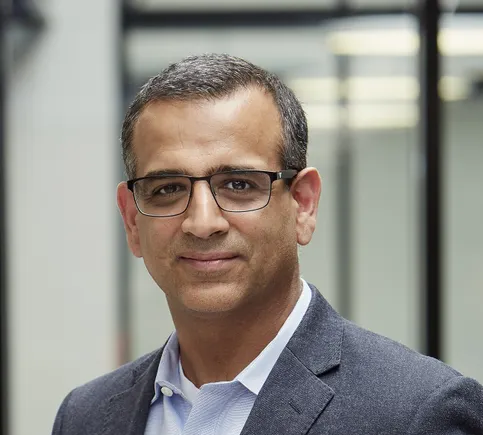
Utpal Singh, an executive who calls himself a "drug hunter" on LinkedIn, has moved from Lilly's small molecule business to Zealand Pharma, a biotech focused on peptides, as Chief Scientific Officer. Zealand recently entered into a partnership with Roche valued at up to $5.3 billion to advance its obesity candidate petrelintide. Singh's arrival comes as multiple obesity programs at the company enter critical stages, and he plans to leverage his experience at a large pharma to drive the company's pipeline strategy.
In the booming obesity market, pharmaceutical companies are competing not only for the next potential blockbuster drug, but also for talent, which is equally in high demand. Last month, a European biotech company with mid-to-late-stage obesity assets successfully recruited a heavyweight figure in the field.
Utpal Singh, an executive who describes himself as a "drug hunter" on LinkedIn, has moved from Eli Lilly's small molecule business to Zealand Pharma as Chief Scientific Officer. Zealand is a biotech company focused on peptides and is currently advancing multiple obesity drug candidates.
Zealand made headlines in mid-March when it announced a development and commercialization agreement with Roche,with a total transaction value of up to $5.3 billionto advance its Phase 2 clinical-stage amylin analog obesity injection, petrelintide, which is being tested alone and in combination with Roche's obesity and diabetes candidate, CT-388. This collaboration is the largest obesity deal in the pharmaceutical industry to date, bringing Zealand into the spotlight.
During his tenure at Eli Lilly, Singh focused on strategic collaborations, which will play a key role in Zealand's obesity program. Zealand is not the only emerging company attracting leadership talent from obesity market competitors Eli Lilly and Novo Nordisk. Its partner Roche, shortly before announcing the deal with Zealand, alsopoached a senior executive from Novo Nordisk。
Singh, who previously worked as a scientist at Merck, has now crossed the Atlantic to join the growing Zealand. In addition to bringing in Singh, the company also announced this week the appointment ofSteven Johnson as Chief Development Officer, who previously worked at UCB.
Zealand is advancing four obesity assets, including survodutide, a Phase 3 glucagon/GLP-1 receptor dual agonist being developed in collaboration with Boehringer Ingelheim, as well as candidates for congenital hyperinsulinism, short bowel syndrome, and chronic inflammation. Recently, the companycompleted patient enrollment for all Phase 3 obesity trials of survodutide. The company expects to have top-line data for survodutide and petrelintide early next year.
However, the biotech company's path has not been smooth. Last December,the U.S. Food and Drug Administration rejected the new drug application for glepaglutide, a long-acting GLP-2 analog for the treatment of short bowel syndrome. Zealand is still seeking an approval pathway for the drug and plans to initiate a new Phase 3 trial this year to support resubmission.
As Zealand gets closer to bringing drugs to market, Singh is adapting to his new role, responsible for the company's pipeline strategy and applying his strategic expertise.
Here, Singh explains how he applies drug development experience gained at large pharmaceutical companies to a small biotech, his leadership style, and the prospects for peptide drugs.
This interview has been edited for length and clarity.
PHARMAVOICE: What cultural differences have you noticed coming from a large U.S. pharmaceutical company to Zealand Pharma in Copenhagen?
UTPAL SINGH:Coming from Eli Lilly to Zealand, there are more similarities than differences. There's a lot of 'can-do' attitude here. Of course, from a disease area perspective, there's a high degree of overlap, and the scientific acumen is very similar. One thing I've noticed here is... the 'grit' that Zealand shows is impressive. [And] for an organization of this size, to be running multiple Phase 3 programs and a very high-value Phase 2 program that could go into Phase 3 next year—that's quite remarkable. The clear prospect of multiple potential launches... speaks to how resourceful this company is.
Is there also this 'grit' in your role?
Yes. The label I would give myself might be 'resilience.' My story begins with coming to the U.S. from India at age 8 without speaking English, when my brother and I were the only two brown kids in the entire school. As a first-generation immigrant, you learn a certain resilience. I see that in Zealand too. Zealand has been through tough times, but they've been resilient and persevered. And now, we're at a very important inflection point for growth.
Shortly before your position was announced, Zealand entered into a $5 billion development collaboration with Roche. What does this deal tell you about the biotech's pipeline?
Zealand has been on my radar. Even before the Roche deal, I think [CEO] Adam [Steensburg] was very forward-looking in pointing out that while GLP-1 drugs are exciting, there are some tolerability issues. I don't think he gets enough credit for this, but he was one of the first to clearly state that GLP-1 drugs are good but not the long-term solution. What Roche brings is more confidence that this value will be realized with the scale [they] can bring in manufacturing, commercial, etc.
Where are we in the science of peptide drugs?
I think this is the best time to be doing discovery research. Think about what you can do with peptides today, whether it's different routes of administration, targeting different tissues, or as delivery vehicles. Many things you can do with peptides now were not possible 10 to 15 years ago, when few thought they were feasible. For Zealand, the question is: how much do we need to own ourselves? And how much do we need to partner?
How do you adapt R&D strategy from a large pharma to a much smaller organization?
You have to think about where your differentiation is. [Zealand] will never have the scale of Novo, Merck, Roche, or Lilly, right? We don't have $50 billion in revenue to play with, so... you really have to play to your strengths. Coming here from Lilly, I focus on two or three things. First, starting with people. We already have a very strong and talented base, but... the global war for talent is fierce, and you will be defined by the talent and team you have.
Second, recognize that as a company much smaller than Novo or Lilly, we have limited risk tolerance in our pipeline. Therefore, our decisions must be very clear. The targets we initiate in discovery must have a clear connection to the clinical hypotheses we want to validate and their positioning. Ultimately, I think Zealand can win on speed. As a small, agile organization, we can make decisions faster. So my focus now is on ensuring we pick the right targets, continue to attract top talent, and develop internal talent to compete globally. If you pick the right biology and the right people, magic happens.
What is your leadership style?
Over the past few years, I've learned a lot about leadership through my daughter's eyes. She hates it when I say that. But I'll say it anyway because it's true, though now that I'm in another country, she won't know. But what truly defines me [as a leader] is 'vulnerability.' I don't take myself too seriously. I'm very clear about what I know and don't know, and I don't mind asking those 'dumb' questions.