
As venture capital tightens, how non-traditional investors are injecting vitality into emerging biotech companies
The biotech industry faces financing challenges, with traditional venture capital becoming more conservative, while non-traditional investors such as family offices and high-net-worth individuals are beginning to fill the funding gap. Diakonos Oncology's COO Jay Hartenbach explains the drivers of this shift, the risk appetite of non-traditional investors, and its impact on industry innovation.
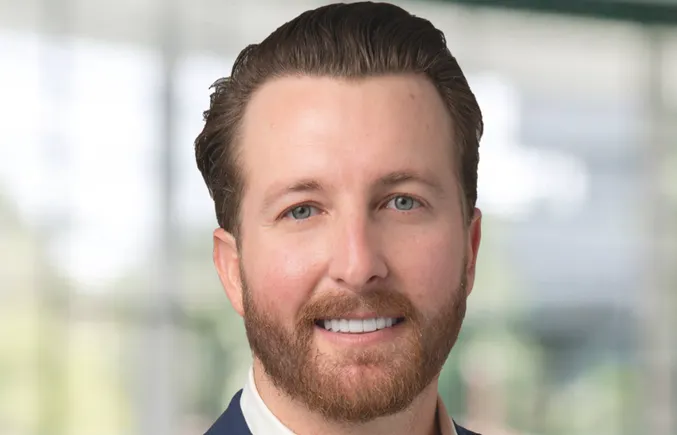
In times of financial strain, creative strategies often become key. For the biotechnology industry, the past few years have seenfinancing difficulties, with small companies especially struggling to secure the funding needed to advance drug candidates to the clinical stage.
Despite lackluster IPO performanceand large venture capital firms leaning toward safer investments, small biotech companies like Diakonos Oncology are breaking the mold. The company has a Phase 2-ready dendritic cell vaccine targeting glioblastoma, and its Chief Operating Officer and President, Jay Hartenbach, says the company is taking non-traditional financing paths.
"It's frustrating because you want people to give you a chance, but at the same time they say, 'Once you have initial data, we'll be interested,'" Hartenbach said. "It's a chicken-and-egg problem, and we're just one of many companies trying to innovate financing approaches."
When considering a Series A round last year, Diakonos encountered a "cold reception" from traditional biotech venture capitalists. Instead, the company "turned to less traditional routes." For example, Diakonos chose a financing method called a Simple Agreement for Future Equity (SAFE), working with family offices beyond the investors commonly seen in the biotech field. SAFE financing defers valuation discussions and equity issuanceto a future point in time.。
Hartenbach noted that non-traditional investors such as family offices and high-net-worth individuals have a different perspective than traditional venture capitalists, and they are more willing to accept high-risk, high-reward investment opportunities. This mindset is crucial for biotech companies whose pipelines involve challenging therapeutic modalities and underserved indications. He cited Diakonos as an example, which focuses on dendritic cell therapy for a particularly difficult-to-treat brain cancer.
"Any program that is not based on a 10% or 20% improvement but rather pursues a fundamentally new approach will have to rely on this type of financing," Hartenbach said. "The non-traditional investor community will enable funding for more difficult, underserved indications that might not otherwise receive R&D capital."
Here, Hartenbach discusses the importance of non-traditional investors in biotech as competition for funding remains intense.
This interview has been edited for length and style.
PHARMAVOICE: What is driving this shift toward non-traditional biotech investment?
JAY HARTENBACH:Traditional pharmaceutical companies are reducing R&D spending, and more responsibility is falling on small biotech companies to advance drugs to clinical proof-of-concept or later clinical stages, so they need different types of funding, and the timeline for M&A or out-licensing is pushed back. Who fills that gap? The biotech industry has indeed been in a tough spot over the past three or four years, but innovation is still happening. If venture capital becomes more cautious, then opportunities arise—for us, this is especially driven by what we do.
We have a dendritic cell therapy with a lead asset targeting glioblastoma. When you talk to traditional venture capitalists, they say the glioblastoma field has never succeeded, with about 60 consecutive failures, and they lost a lot of money. So, despite growing interest in cell therapy, many VCs who invested heavily early in cell therapy have lost money. Due to reduced VC interest, we are working with various family offices on a SAFE round.
It sounds like non-traditional investors, such as family offices, help move cutting-edge drugs through the clinical process. Can you explain why they are willing to take on more risk than traditional VCs?
Dendritic cell therapies have historically not been successful, so if you are a traditional biotech VC, you look at other opportunities—their success depends not only on what they invest in but also on what they turn down. The market contracts to areas that have underperformed or had poor returns, whether by indication or modality. In that context, it is hard to take another risky bet.
But high-net-worth individuals or family offices are more willing to look at the data objectively without being influenced by historical track records like glioblastoma. They are very savvy, and the risk comes with financial returns they find interesting—that is how they built their wealth. Additionally, they are more able than professional investors to prioritize humanitarian factors. They view certain investments as "for the greater good."
How are these strategies different?
Non-traditional investors do not necessarily have expert teams of PhDs or MDs to deeply review the science or clinical results. In some ways, their due diligence is more based on how management describes the deal, so there is more trust involved. But at the same time, they still conduct extensive due diligence, just in a less uniform manner. For high-net-worth investors or family offices, the investment horizon is often longer. They tend to be less focused on specific timelines and more on the potential return of a particular asset or indication.
What impact does this have on the biotech industry?
Let's look at what would happen without the participation of non-traditional investors—you would see more limited success and innovation through more conservative approaches. The field would certainly move forward, but it might not achieve major leaps, especially in areas with significant unmet clinical need. High-net-worth individuals and family offices are often willing to participate in early-stage or preclinical work, but it is not common to see them start getting involved in Phase 2 registrational trials. And that is what makes potential leaps possible in higher-risk, cutting-edge technology areas.
The biotech industry has faced difficulties in raising capital in recent years. Can this shift toward non-traditional investors inject momentum into the industry?
I think it can. Look at the pendulum effect—companies that went public around 2020 made large deals or raised funds based on just three or four patient data points or very promising preclinical data—that was unsustainable. So, the contraction is actually good for the industry as a whole; it makes people focus more on what needs to be accomplished. When you know funding is not unlimited, you start thinking about how to design trials or partner with trial sites to maximize capital efficiency. This increases discipline, and for companies that are truly making progress, it helps filter out the noise.