
Merck and Lilly Join Forces with Purdue University to Establish a Pharmaceutical Manufacturing R&D Alliance to Strengthen U.S. Domestic Capacity
Lilly and Merck, in partnership with Purdue University, have established the Young Institute Pharmaceutical Manufacturing Alliance, focusing on the development of new technologies such as aseptic processing, aiming to promote the reshoring of U.S. pharmaceutical production and address tariff challenges.
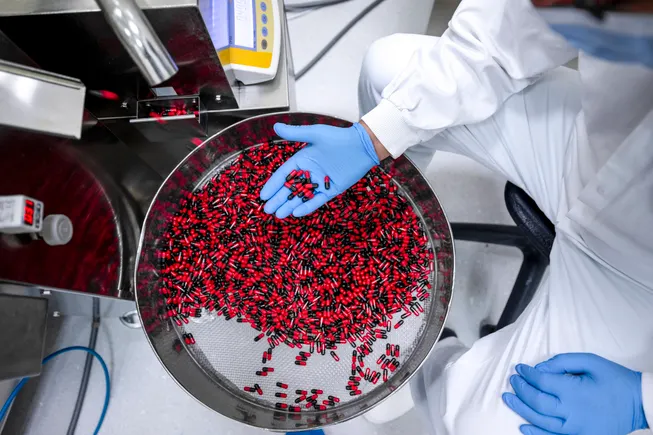
In recent years, investment in pharmaceutical manufacturing has become a focal point of the industry—from major pharmaceutical giants expanding GLP-1 production capacity to meet surging demand, to other companies developing advanced manufacturing technologies to ensure adequate vaccine supply, all highlighting the urgency of capacity expansion and efficiency optimization.
Against this backdrop, Eli Lilly and Company and Merck & Co., together with Purdue University, have jointly established the Young Institute Pharmaceutical Manufacturing Consortium. The consortium will focus on developing new production technologies to address the industry's pressing needs for capacity expansion and manufacturing efficiency.

"The consortium brings together companies across pharmaceutical manufacturing, aiming to cover the entire value chain: large pharmaceutical companies, startups, equipment manufacturers, instrument makers, packaging companies, and venture capital. Our initial focus will be on the drug manufacturing segment," said Elizabeth Topp, Director of the Young Institute, in an email.
The press release announcing the consortium noted that this collaboration "demonstrates a commitment to reshoring pharmaceutical manufacturing and strengthening domestic production." This initiative is particularly significant amid new tariff rules that could drive up costs and exacerbate drug shortages.
Eli Lilly has already demonstrated its commitment through action. The company previously announced a $3 billion investment to expand its Wisconsin manufacturing site acquired in April, adding injectable production capacity. Additionally, Lilly recently committed an additional $9 billion to an Indiana manufacturing site and opened a new plant in North Carolina.
At the Young Institute, member companies will focus on experimental research. "But we hope the consortium's innovations will truly reach 'real' manufacturing facilities," Topp said.
A core focus of the consortium is improving aseptic processing technology—a critical step in injectable manufacturing—to be advanced through artificial intelligence, robotics, and online sensors.
"Aseptic processing involves maintaining a sterile, microbe-free environment during manufacturing without heat sterilization. This is especially important for injectable liquid products, which require absolute sterility, but heating can damage the drug itself," Topp explained. "These 'sterile injectables' include life-saving drugs such as insulin and vaccines, which dominate the U.S. drug shortage list."
Below, Topp elaborates on the consortium's potential industry impact.
This interview has been edited for length and style.
PHARMAVOICE: Could you discuss how the consortium will utilize its manufacturing resources? Will it involve shared facilities and cost-sharing?
ELIZABETH TOPP:Yes, it will involve shared manufacturing facilities. We are renovating Purdue's site as a testbed for new manufacturing technologies. The facility will not operate under full regulatory approval (i.e., GMP conditions), so we will not actually produce any drugs. We welcome a wide range of companies to join the consortium—proposals for cost-sharing in the form of equipment donations or computational resource contributions are all welcome.
How will these efforts ultimately benefit the broader pharmaceutical industry?
Member companies and the industry as a whole will benefit in several important ways. For example, members will have the opportunity to develop new manufacturing technologies and steer the consortium's research focus toward critical industry pain points. These efforts will be conducted in collaboration with Purdue's distinguished faculty, which boasts a strong pipeline of scientific and engineering talent within a vibrant entrepreneurial environment.
Additionally, member companies can collectively voice their positions to regulators in the form of best-practice documents and consensus standards, carrying far more influence than any single company expressing its views alone. Members will also gain direct access to Purdue students—a high-quality talent pipeline—and have the opportunity to shape the education and training they receive.
What does corporate participation in the consortium look like?
We have three membership tiers, corresponding to different levels of financial commitment and influence. These tiers are designed to encourage participation across the entire value chain, from multinational pharmaceutical companies to startups and academic institutions.
Will the consortium have an impact on the industry goal of reshoring pharmaceutical manufacturing?
That's a good question, and we certainly don't have all the answers. Pharmaceutical manufacturing is global, with many critical raw materials and drug compounds produced in countries such as India and China. Since manufacturing costs in these countries are lower than in the U.S., offshoring helps control overall manufacturing costs. Imposing tariffs may erode the offshoring advantage, but there is a risk of rising overall costs, which would likely be passed on to consumers.
At the same time, there is strong industry interest in reshoring pharmaceutical manufacturing to ensure an adequate supply of critical drugs during pandemics or global conflicts. We hope that by improving pharmaceutical manufacturing technologies—enhancing efficiency, capacity, and supply chain management—we can help achieve reshoring goals and mitigate the impact of tariffs.