
Regeneron's R&D Strategy Yields Dual Wins: Beats Alexion's Ultomiris in PNH and Shows Promise in Lymphoma
At the American Society for Hematology (ASH) meeting in San Diego, Regeneron presented two significant trial results: a combination therapy (pozelimab and cemdisiran) outperformed Alexion's Ultomiris in paroxysmal nocturnal hemoglobinuria (PNH), and its bispecific antibody Ordspono achieved complete responses in all 12 evaluable first-line follicular lymphoma patients. Dr. L. Andres Sirulnik, senior vice president of translational and clinical sciences in hematology, discusses the science-driven approach behind these advances.
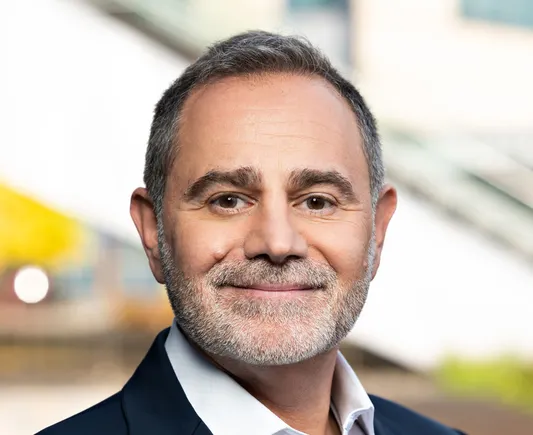
Regeneron left the American Society for Hematology (ASH) meeting in San Diego this week with two notable trial successes: a head-to-head win against a rare disease blockbuster and a potential best-in-class performance in the competitive lymphoma market.
For Dr. L. Andres Sirulnik, senior vice president of translational and clinical sciences in hematology, these achievements stem from the company's long-term scientific investments. Despite playing catch-up in several disease areas, Regeneron maintains a robust pipeline that Sirulnik believes will significantly disrupt treatment paradigms.
"We are very excited with what we have at hand, and I'm super busy," Sirulnik said.
Head-to-Head Victory in PNH
In a late-stage, head-to-head trial against Alexion Pharmaceuticals' standard-of-care medicine Ultomiris, Regeneron demonstrated that its combination of the antibody Veopoz with an investigational siRNA drug developed with Alnylam Pharmaceuticals achieved better disease control in patients with the rare blood disorder paroxysmal nocturnal hemoglobinuria (PNH).
Complete Responses in Follicular Lymphoma
In follicular lymphoma, Regeneron's phase 3 study of the bispecific antibody Ordspono led to a complete response in 12 out of 12 previously untreated patients. This result positions Ordspono for its own head-to-head comparison against existing lymphoma treatments, including chemotherapy and checkpoint inhibitors.
"That's how we take new technologies and bring them to the table — we go where the science takes us."

Dr. Andres Sirulnik
Senior vice president of translational and clinical sciences in hematology, Regeneron
In an interview, Sirulnik discussed the key considerations Regeneron weighs before embarking on drug development, the implications of these two successful studies, and why a disease-focused approach has been central to the company's strategy.
This interview has been edited for brevity and style.
PHARMAVOICE: Before we dig into your ASH data, can you tell me a little about Regeneron's overall approach in hematology?
DR. ANDRES SIRULNIK: Regeneron is a truly science-driven company. We tackle difficult-to-treat problems, but we're not focused on the platforms, technologies, or modalities we use — we're focused on understanding the underlying biology and using whatever tools we have to bring new medicines to patients. Hematology is an outstanding example of how we apply different methodologies. Regeneron is probably one of the greatest companies in antibody development, but we have branched out to bring new tools to address hematologic challenges.
For instance, with complement inhibitors, we combine an antibody with an siRNA [developed with Alnylam Pharmaceuticals] to offer a differentiated approach and potential improvement over existing therapies for PNH. The siRNA inhibits the synthesis of the target protein in the liver, reducing the burden the antibody must neutralize. This results in more constant, deeper, and prolonged inhibition than an antibody alone can achieve.
Another example is in hereditary amyloidosis, where we use in vivo CRISPR technology to shut down the production of a liver protein. This was the first instance of in vivo gene editing using CRISPR. That's how we take new technologies and bring them to the table — we go where the science takes us.
As you said, the siRNA-antibody combination is synergistic against PNH. How did you go about finding a combo worth pursuing?
The problem is a classic one: we have a very abundant target that requires a significant amount of antibody to inhibit. In complement activation, even a minute amount of the C5 protein can trigger the disease. Our advantage was to decrease the protein by inhibiting its synthesis, knowing that some circulating C5 will remain because 100% inhibition is difficult. We believe combining synthesis inhibition with activation inhibition will provide uninterrupted control and easier administration.
The data have been encouraging. Compared with the standard-of-care long-acting C5 inhibitor [Ultomiris], a larger proportion of patients on the combination achieved disease control. More importantly, among five patients who never achieved control on [Ultomiris], four achieved immediate disease control. We are now enrolling a pivotal study comparing not to [Ultomiris] but to the gold standard [Soliris] in this disease.
Alexion has had a hold on the PNH market for a long time. Where does Regeneron's option fit into that space?
We bring substantial value. We will offer a potentially better drug with a more convenient administration route. Additionally, we have undisclosed pipeline assets entering PNH next year that I believe have the potential to disrupt the market.
Switching gears to lymphoma, tell me about the results for the bispecific Ordspono that you're presenting at ASH. And what are the challenges moving forward?
We are addressing scientific questions that could change the treatment paradigm in lymphoma. The efficacy we have observed, particularly in follicular lymphoma, has been remarkable. In the last-line setting, Ordspono achieved an 80% objective response rate, with 73% complete remission. In first-line, all 12 patients who received the full dose had a complete response. That is potentially best in class, and we believe this level of efficacy offers a chemotherapy-free option for patients.
Safety is a challenge. Moving a bispecific to earlier lines means patients have an intact immune system. In later lines, after extensive immunosuppressive therapy, we saw cytokine release syndrome. However, we are seeing better tolerability and less cytokine release with single-agent use in earlier lines.
Another challenge is the crowded market, but based on late-line data, we believe we have a potentially best-in-class treatment in follicular lymphoma.