
How Astellas Coordinates Multiple Variables in Precision Oncology Development
As precision oncology advances, drug development processes are becoming increasingly complex. Japanese pharmaceutical company Astellas recently led the way with the approval of its first-in-class gastric cancer drug Vyloy, outpacing notable peers such as AstraZeneca, Moderna, and Legend Biotech. In an interview, Dr. Tadaaki Taguchi, the company's Chief Medical Officer, elaborated on how Astellas coordinates collaboration between R&D teams and diagnostic manufacturers while navigating a challenging manufacturing environment to bring this first-in-class drug to market.
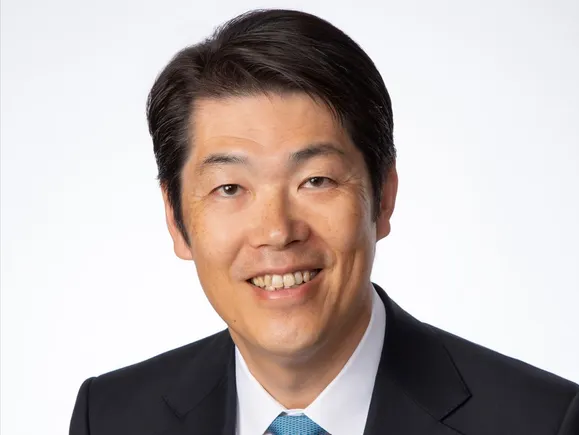
As precision medicine in cancer continues to advance, drug development processes are becoming increasingly complex. From screening appropriate diagnostic methods to finding manufacturing partners with the required capabilities, companies like Astellas need to advance multiple efforts simultaneously before a drug enters the clinic.
The Japanese pharmaceutical company recently celebrated the approval of its first-in-class gastric cancer treatment, Vyloy. With this anti-CLDN18.2 drug, Astellas has outpaced high-profile peers such as AstraZeneca, Moderna, and Legend Biotech in time-to-market.
After a manufacturing setback earlier in the year, Astellas secured approval for Vyloy in combination with chemotherapy, while the U.S. Food and Drug Administration (FDA) approved a companion diagnostic developed by Roche to determine whether patients carry the mutation targeted by the drug.
"For us, the most important thing is to find the right tool for the cancer, not to find the most suitable cancer for the tool."

Dr. Tadaaki Taguchi
Chief Medical Officer, Astellas
This cross-company collaborative effort highlights the challenges of advancing precision medicine in an already complex oncology landscape.
How did Astellas achieve this?
Here, the company's Chief Medical Officer, Dr. Tadaaki Taguchi, explains how Astellas coordinated work between its R&D teams and diagnostic manufacturers while navigating a challenging manufacturing environment to bring this first-in-class drug to market. Taguchi also discusses why Astellas is well-positioned to capitalize on unique drug development opportunities in oncology.
This interview has been edited for length and style.
PHARMAVOICE: What is the biggest challenge you face when developing precision medicine drugs?
Dr. Tadaaki Taguchi:The biggest challenge is always determining which biomarkers or targets are most important, and how we can actually achieve such targets. The second challenge is developing the diagnostic test, because if you have a great drug asset that increases the expression level of a certain protein, you need to develop a test with the same sensitivity and specificity. The third challenge is making that test part of routine practice—sometimes this is inconvenient and more costly, and if physicians don't see the benefit, they won't order the test. So, it is very important to educate physicians on its value so they can initiate treatment in a timely manner.
Does the parallel development of precision medicine drugs and companion diagnostics create a "chicken-and-egg" dilemma, making it difficult to find a starting point?
We actually start addressing this at the discovery stage. For example, we have a product targeting the KRAS G12D mutation—we know that KRAS mutations drive tumor growth, especially in pancreatic, lung, and colorectal cancers. We use a targeted protein degradation approach, but that is of course only the first stage. The second stage is providing the test to patients in the clinical setting, and you need to advance both stages simultaneously in collaboration with clinical trial sites. There is also the cost issue. You need to coordinate and consider the perspectives of patients and payers, as well as the turnaround time for getting test results from the lab, especially for patients with rapidly progressing cancer. It is important that you do all of this at the same time.
You recently received approval for Vyloy in specific mutations in advanced gastric cancer and gastroesophageal junction cancer, and the drug was approved alongside Roche's diagnostic test. Can you talk about how those conversations began?
First, we had to decide whether to develop our own test at the experimental level or partner with another company before starting clinical trials. At the same time, we needed to consider who would be the best partner that could truly provide scientific support. Since this process would run in parallel with the development of the new product, we needed to consider a partner with sufficient commercialization capabilities not only in the U.S., but also in Europe, Japan, and sometimes China. You need to synchronize and coordinate this, and I think that is extremely important.
The FDA initially rejected Vyloy due to manufacturing issues, which were unrelated to the science itself—something that is common these days. How do pharmaceutical companies work with manufacturers to avoid this?
In the pharmaceutical industry, we cannot have all capabilities in-house, so we need to partner with organizations such as CDMOs (contract development and manufacturing organizations). For any pharmaceutical or biotech company, building a good partnership with them is crucial. In our experience, when developing complex products like bispecific antibodies or antibody-drug conjugates, we need to work closely to improve quality and build appropriate confidence in their manufacturing capabilities. We also need to understand the cost structure so that we can achieve good alignment between market demand and regulatory requirements.
What are the next steps for Vyloy? You mentioned new targets like pancreatic cancer.
We are conducting a Phase 2 clinical trial for Vyloy, and we hope it can become a registrational trial. Of course, we have already begun developing a companion diagnostic for pancreatic cancer with partners and preparing for the data generation activities needed in the future. This is extremely important across different cancer types because different thresholds require optimizing the test and ensuring alignment with partners to bring the product to market.
What are the biggest challenges and opportunities in oncology over the next few years that will have the greatest impact on patients?
The opportunity in oncology lies in the enormous unmet medical need. Take lung cancer alone—tremendous progress has been made over the past two decades. But patients develop resistance to existing treatments, so we need to understand, for example, what happens after PD-1 inhibitor therapy, otherwise the only effective treatment option is chemotherapy. Therefore, in the second-line setting and beyond, there is a huge opportunity to introduce new treatment modalities and new ways of treating patients, such as T-cell engagers or protein degraders.
Astellas does not shy away from challenges. For example, KRAS was long considered "undruggable." How do you persevere when others in the industry think a path is a dead end?
What makes Astellas unique compared to other large pharmaceutical companies is that we do not necessarily have the same level of modality diversity. We have cell therapy, bispecific antibodies, ADC platforms, and more. Even within one cancer type, there are many pathways that can be targeted—if you are just an antibody company, that limits your approach. But if you have five different tools, you can choose the best method to target that pathway. For us, the most important thing is to find the right tool for the cancer, not to find the most suitable cancer for the tool.