
Behind California's Life Sciences Leadership: Joe Panetta's Years of Advocacy and Industry Insights
California's life sciences industry supported 1.24 million jobs in 2023, contributing over $128 billion in labor income and $414 billion in economic output. Biocom California President Joe Panetta, in an exclusive interview before stepping down, analyzes the state's leading advantages in areas such as cell and gene therapy and digital technology integration, while pointing out shortcomings like high costs and regulatory burdens, and looks ahead to the potential of emerging clusters such as Los Angeles.
California's life sciences companies have been making frequent moves recently: from Amgen's potential first-in-class lung cancer blockbuster drug Imdelltra receivingapproval, to the deal between California-based Mammoth Biosciences and Regeneron Pharmaceuticalsa $100 million gene editing transaction, and to Gilead'sunprecedented HIV clinical results, the state remains a major hub for biopharmaceutical innovation.
These developments are just a small part of California's life sciences industry. According to2023 data, the industry supported 1.24 million jobs, contributed over $128 billion in labor and self-employment income, and $414 billion in economic output.
"California sets the benchmark for the nation and the world in life sciences," said Joe Panetta, president and CEO of Biocom California, which represents the state's life sciences industry with more than 1,800 member companies.
And California's moves often lead the entire industry's direction.
California is thefirststate to legislate allowing self-manufacturing of generics; the first to require drug manufacturers to provideadvance noticefor significant price increases; and one of the earliest to pass prescription drug price transparency laws. Now, California is seeking toregulate pharmacy benefit managers (PBMs), while the U.S. Federal Trade Commission (FTC) issuingthe three major PBMs, accusing them of artificially inflating insulin prices.
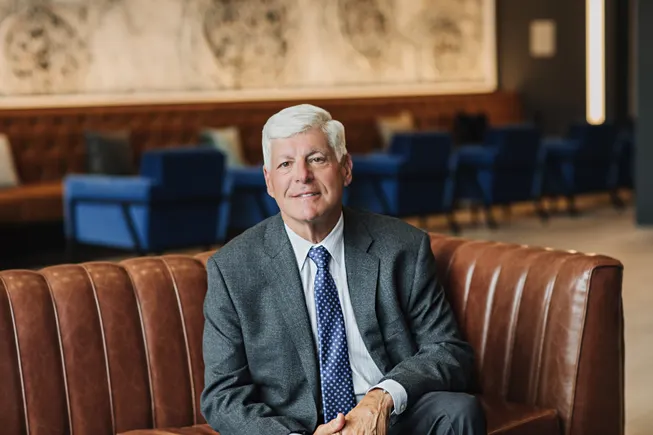
Panetta, who has led Biocom California since 1999, will step down at the end of this year, succeeded by biotech industry veteran Tim Scott.
In this interview, Panetta discusses California's pharmaceutical and biotech industry landscape, strengths and weaknesses, existing and emerging clusters, and the industry's future in the state.
This interview has been edited for brevity and clarity.
PHARMAVOICE: How do you assess California's life sciences industry?
JOE PANETTA:Without a doubt, this is the largest, most innovative, most forward-looking, and unique life sciences cluster in the world. California's culture has always been future-oriented and trendsetting. Just look at the example of creating the California Institute for Regenerative Medicine 20 years ago.
There are two major biotech hubs here (San Diego and the San Francisco Bay Area), and one emerging (Los Angeles), all located in major metropolitan areas. Together, they form a multi-cluster region that is unmatched elsewhere, with each cluster boasting numerous renowned universities and research institutions.
What are the state's current strengths and weaknesses?
In terms of strengths, California is clearly a leader in cell and gene therapy, stem cell research, and the development of regenerative medicine therapies and products.
Another leading area is digital technology and the convergence of high tech with life sciences to develop more efficient candidate discovery processes, improve patient engagement in clinical trials, and create more efficient research and development programs.
Another major strength of California is its workforce—through our research university system and other institutions, we can cover the full spectrum of workforce needs in biotech, from research scientists and computer engineers doing analytical work, to production facility workers, and even three programs across the state that train management and administrative talent.
In terms of weaknesses, the cost of living in California is high. It's expensive to do business here, and it's expensive to live here. California's regulations place a significant burden on industry. Due to some zoning regulations, it's difficult to build facilities here. This creates challenges for operating in California.
California has multiple clusters, including the Los Angeles area. Can you elaborate on these clusters?
Each cluster has its own characteristics, but all make unique contributions to the industry. The Bay Area has evolved into at least five or six smaller life sciences clusters, each with different focuses. The East Bay is more focused on manufacturing; the Peninsula is more focused on R&D. The Bay Area also has large, established life sciences companies like Genentech and Gilead.
San Diego remains a cluster where we excel most in terms of ideas, innovation, early-stage company success, and incubating these companies. I think this is largely due to San Diego having UC San Diego (UCSD), the San Diego Biomedical Research Institute, and numerous research institutions like the Salk Institute and Scripps Institution.
Los Angeles is a very young life sciences cluster. Less than 10 years ago, we partnered with Los Angeles County to develop its life sciences cluster. One of its major strengths is being an international city with global recognition, and it has prestigious research institutions like Cedars-Sinai Medical Center and City of Hope. There's also UCLA, which isthe number one public university in the nation, as well as Caltech. Los Angeles is full of hope and promise.
The challenge for Los Angeles lies in the lack of experienced talent, investment capital, and available real estate. Therefore, this is exactly what Los Angeles County, Biocom California, and our other partners (such as the Los Angeles County Economic Development Corporation) are working to develop.
But Los Angeles has the capacity to become a fairly prominent biotech cluster. In fact, Los Angeles receives research funding from the National Institutes of Health (NIH) comparable to (or even more than) San Diego.
You are about to step down from Biocom California. What are your expectations for the future?
From the first day I entered this industry, the goal has always been not just to treat disease, but to cure it. That's what excites me even more about the future. We are beginning to see therapies that truly hold the promise of curing diseases.