
Eli Lilly's Sustainability Goals Run in Parallel with Capacity Expansion: ESG Head Discusses Long-Termism
Eli Lilly has rapidly become the world's most valuable pharmaceutical company by market cap, thanks to drugs like Mounjaro and Zepbound, but rapid growth also brings environmental and social responsibility challenges. The company's ESG head, Jim Greffet, says that Eli Lilly is advancing its 2030 carbon neutrality goal while expanding production through measures such as solar energy and AI-driven efficiency optimization, and is incorporating drug accessibility and affordability into its sustainability framework.
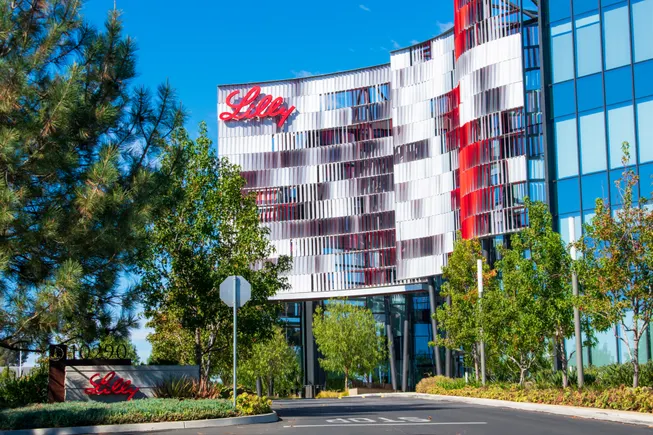
In just a few years, Eli Lilly has rapidly risen to become the world's most valuable pharmaceutical company, driven by new diabetes and weight-loss drugs such as Mounjaro and Zepbound. However, with this expansion comes responsibility on environmental, social, and governance (ESG) issues—and the pharma giant is taking these goals seriously.

To meet the surging demand for GLP-1 drugs, Eli Lilly has dramatically expanded its manufacturing footprint, committing more than $18 billion to facility construction in the U.S. and Europe—including new builds, upgrades, and acquisitions—while alwayskeeping sustainability in mind. From solar power to AI-driven efficiency optimization, the company is working toward its goal of achieving carbon neutrality through renewable energy by 2030.
Jim Greffet, Head of ESG at Eli Lilly, says these goals are more important than ever given the company's rapid growth. And they extend beyond environmental impact—the drugmaker also includes medicine access and affordability under the umbrella of sustainability.
"Doing the right thing, delivering effective medicines to patients over the long term, and taking a long-term view—we didn't call it that in the past, but that's what sustainability is all about," says Greffet. "For us, that has never changed, because we are at a crossroads."
After ESG efforts surged in the early 2020s, they laterfaced a backlash, but Greffet hopes Eli Lilly will continue to stay at the forefront of sustainable business practices, honoring the company's commitments over the years.
"These issues are not controversial, because protecting the planet is a good idea, and getting medicines to patients who need them is a good idea," says Greffet. "We also like to look at this in a very pragmatic way, tying it to the mission of making medicines and rising above the fray."
"We are a 150-year-old company, so a lot of these things are just how we run our business."

Jim Greffet
Head of ESG at Eli Lilly
Here, Greffet discusses what makes ESG work unique in the pharmaceutical industry, how drug pricing transparency forms part of the company's social contract, and what ESG means for the financial performance of large corporations.
This interview has been edited for length and style.
PHARMAVOICE: What makes the pharmaceutical industry's approach to ESG unique compared to other sectors?
JIM GREFFET:The value of looking at these issues is putting the company on the strongest possible foundation for long-term resilience. In pharma, we have to take a long-term view—from an idea in a scientist's mind to a patient receiving a beneficial new medicine can take 10 years or more. So by design, we have to think and act with a long-term perspective, and the pharmaceutical industry—especially Eli Lilly—is already accustomed to operating that way, which makes my job easier.
Our sustainability efforts are about making the way the company operates more transparent and easier for stakeholders to understand. When I took on this newly created role four years ago, I wondered: Is this job about creating new ways of doing things, or better communicating what we already do? It turned out to be almost entirely the latter. We are a 150-year-old company, so a lot of these things are just how we run our business.
How do you ensure the company grows "the right way"—for example, balancing the social need for medicine access against the environmental impact of manufacturing?
We have found ways to alleviate a tremendous amount of suffering from obesity and diabetes. To achieve that, we are building new manufacturing plants around the world, expanding our footprint to bring medicines to those in need. But when we start planning a new plant from a blank sheet of paper, we deliberately incorporate environmentally conscious design principles from the very beginning. On-site solar, water recycling, water conservation—we do things the right way from the start. This also drives us to look at efficiency, such as using AI to study how machines move, capturing sub-second inefficiencies that humans can't detect but that add up significantly over time.
Access and affordability are among the most prominent topics in our sustainability report, and we do a great deal of work in this area. Growth and sustainability are not an either/or—we are working to achieve both.
The broader point is the non-competitive nature of sustainability issues overall. In this role, I talk to peers at other pharmaceutical companies almost every day, which would have been unimaginable in my earlier finance work. The same themes extend to cross-company collaboration at the supply-chain level—let's learn from each other and advance our shared goals together.
On the social side of ESG, Eli Lilly has been proactive on insulin pricing in recent years, but public perception is another matter due to various factors. When the public is looking for someone to blame and the spotlight falls on your company, how do you maintain a good ESG reputation as a corporation?
The most valuable thing we can do is be transparent and show the data, and we strive to do that in our sustainability report. You will see very transparent charts showing how our list prices have changed over time and how net prices as a percentage of list prices have steadily declined. Facts are your friend here. It's easy for someone to point to a high-priced pharmacy bill as a talking point, but explaining the complex web of PBMs, rebates, and discounts to help the public understand where we stand is much harder. But we do our best, because we believe it reflects where we truly are and what we are doing.
Do you see ESG as linked to financial performance when shareholders evaluate investment opportunities?
I'm not a zealot—I think in a role like this, it's important to keep the real purpose and value in mind. At the most pragmatic level, effective sustainability programs are about helping prevent bad things from happening, which is a very easy story to tell investors. We want to be mindful of our environmental footprint because we don't want to end up in disputes with the EPA. We want to ensure we have the most engaged, diverse, and inclusive workforce giving their all every day, because that helps us make medicines. These are easy-to-understand, non-controversial ways of looking at things that should resonate with any stakeholder, including investors.
That said, if we had the most innovative climate plan and the best governance structure but no innovative medicines, investors probably wouldn't be interested in us. So we have to do both.