
23andMe Advances Cancer Immunotherapy with Genetic Database
As a consumer genetic testing company, 23andMe is leveraging its genetic database of over 15 million people to develop cancer immunotherapies. Its first antibody drug targeting the CD200 pathway, 23ME-00610, has shown preliminary clinical benefit in mid-stage studies for neuroendocrine cancer and ovarian cancer. Despite challenges such as data breaches and layoffs, Dr. Jennifer Low, head of the therapeutics division, remains optimistic about the potential of genetic data in drug discovery.
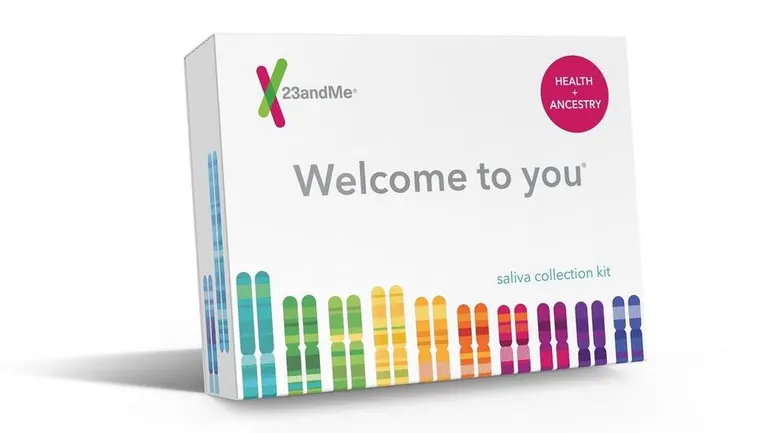
As a consumer-facing genetic testing company, 23andMe is known for its mail-in genetic testing kits that provide detailed family history information. However, beyond this business, the biotech company is also leveraging its vast genomic information database to develop drugs and is gradually approaching the launch of its own cancer treatment.

23andMe is drawing on the success of immunotherapies such as Merck & Co.'s Keytruda and Bristol Myers Squibb's Opdivo. These drugs are checkpoint inhibitors that work by blocking signaling pathways between tumors and the immune system, enabling the body to fight cancer. Dr. Jennifer Low, head of 23andMe's therapeutics division, says that with its rich data resources, researchers have identified new pathways that may have similar effects, potentially expanding the arsenal of oncology drugs.
By identifying genetic variants in the world's largest database, 23andMe has found a targetable biomarker in the CD200 pathway. Blocking this pathway with the therapeutic drug 23ME-00610 has shown in interim studies in patients with neuroendocrine cancer and ovarian cancerinitial clinical benefit. As the first antibody to target this pathway, Low and her team hope this marks the company's official entry into the field of precision medicine—a concept that has beendiscussed for years。
23andMe urgently needs a win. The company has been mired in controversy, from theethical issuesof using genetic information for research, to a high-profiledata breach incident. Last year, as biotech investment cooled and the company'sstock price remained depressed, the therapeutics division had tocut positions。
But Low is optimistic about the company's foothold in new drug research and development. In this interview, we spoke with the therapeutics head about the role of genetic databases in discovering and developing new treatments for diseases like cancer, how understanding demographics can help improve diversity in clinical trials, and the potential for future partnerships with traditional pharmaceutical companies.
This interview has been edited for length and clarity.
PHARMAVOICE: How has 23andMe's vast customer database guided the company in developing oncology checkpoint inhibitors?
DR. JENNIFER LOW: One of the biggest challenges facing the entire pharmaceutical industry is that we use animal models to understand human biology, but they are very limited in actual translation. Animal models do not fully replicate what happens in the human body. A major advantage of the 23andMe database is that it is based on human data and human genetics—we have over 15 million genotyped individuals from our customer database, which allows us to establish statistical links between genes and biological phenomena that people actually experience. We ask about family history and disease information, and we also ask about many other aspects, such as their susceptibility to toenail fungus, or whether they are among those prone to mosquito bites. This allows us to capture subtle biological differences that are not available in medical records.
This provides us with a wealth of information, allowing us to observe subtle differences in immune function and their association with cancer susceptibility. Combining this information, we can gain insights into which parts of immune biology are crucial for the human immune system to recognize and attack cancer. We can also adjust the drugs we are developing so that the immune system no longer turns a 'blind eye' to cancer.
Immunotherapies like Keytruda, while successful, are still limited by patients' genetic profiles. How is 23andMe improving to create the next wave of checkpoint inhibitors?
Checkpoint inhibitors have made tremendous progress. Initially, immunotherapies like interferon or IL-2 were difficult for patients to tolerate and offered limited long-term survival chances. Then, PD-1 and PD-L1 immunotherapies raised survival rates to over 20%, which is remarkable—but still, 70% to 80% of patients do not achieve long-term benefit. There are likely other important checkpoints. Our first program, the CD200R1 program, targets a checkpoint independent of PD-1 and PD-L1. Achieving the right combination of effects requires multiple different options and a deeper understanding of the immune system we are trying to activate. Because 23andMe has a broader understanding of immune system variability, we are discovering targets that allow us to explore multiple different therapeutic pathways. We are very excited about the potential of these drugs.
23andMe's involvement with demographic questions in genetic research has raised someethical concerns. How can the database help improve diversity in clinical trials?
The FDA is very focused on the lack of breadth in many clinical trials, and they want to see diversity because the U.S. population is very diverse and requires a broader understanding. With our experience in genetics and deep insights into differences, other players in the industry will realize the importance of obtaining this additional information. The U.S. accounts for only about 30% of the global market for most drugs, so this is crucial.
As precision medicine advances, the expansion of biomarkers is crucial. How do you see 23andMe's database integrating into this field in the future?
We have been talking about personalized medicine for a long time, because even with broad labels like lung cancer or breast cancer, for each individual, their tumor and immune system greatly influence the efficacy of drugs and whether the body can ultimately control the tumor. In oncology, we often focus on the tumor itself, but we know that is far from sufficient. We are trying to understand those subtle differences and understand biological processes. 23andMe is doing a lot of work on polygenic causes and polygenic risk for disease susceptibility. I believe 23andMe will be a key contributor to thinking about these major questions, and any company that wants to understand these aspects will be an ideal partner. This is also a mechanism through which our impact could become broader.
What are the biggest challenges 23andMe faces in the therapeutics field going forward?
The current market environment is difficult for small biotech companies (which we are). Therefore, we have had to make difficult decisions about priorities and focus—we announced the need to scale down activities and made the difficult decision to reduce some positions in the therapeutics division. We wish we could do everything, but I am confident that the company is now leaner, more efficient, and ready to achieve more in an efficient manner.