
BeiGene challenges mature blockbuster drugs with expanding hematologic oncology pipeline
BeiGene is challenging mature blockbuster drugs in hematologic oncology with its next-generation BTK inhibitor Brukinsa, while advancing a pipeline of novel mechanisms including the BCL2 inhibitor sonrotoclax and BTK degraders. The company's Chief Medical Officer for Hematologic Oncology, Mehrdad Mobasher, elaborated on its research-driven, cross-pipeline synergistic differentiation strategy.
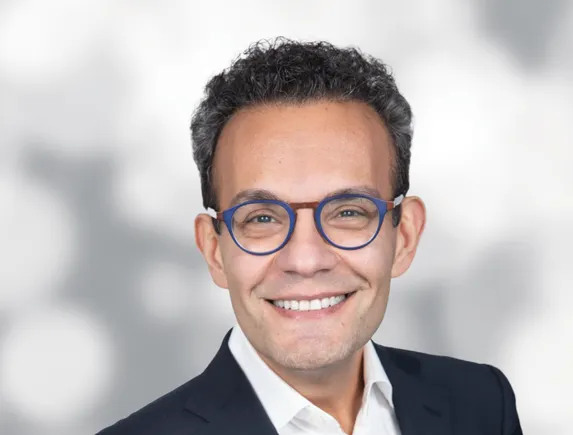
Aiming to establish a standard-setting position in the hematologic oncology treatment landscape, BeiGene is challenging multiple blockbuster drugs in this field with its next-generation BTK inhibitor Brukinsa, and is building a thriving hematologic oncology pipeline on this foundation.
Brukinsa first received FDA approval in 2019 for mantle cell lymphoma, a result stemming from a rigorous research effort designed to surpass AbbVie and Johnson & Johnson's Imbruvica as well as AstraZeneca's Calquence, said Mehrdad Mobasher, M.D., chief medical officer of hematologic oncology at BeiGene.
"From the very beginning, the company deliberately designed Brukinsa to succeed in areas where other BTK inhibitors had not succeeded."

Mehrdad Mobasher
Chief Medical Officer, Hematologic Oncology, BeiGene
The core product subsequently received four additional approvals, while its pipeline continues to expand, including the BCL2 inhibitor sonrotoclax—currently being studied in a late-stage chronic lymphocytic leukemia trial in combination with Brukinsa—as well as a novel modality called a BTK degrader, designed to permanently degrade the disease-causing protein that Brukinsa inhibits.
Although intensifying competition in the hematologic oncology space and safety challenges have weighed on Imbruvica's sales—which last yeardeclined approximately 20%—both Brukinsa and Calquence are on the rise. Last year, Brukinsa's global salessoared 129% to $1.3 billion, while Calquence achieved$2.5 billion in revenue, up 22% year over year。
Here, Mobasher explains how BeiGene builds its hematologic oncology pipeline, aiming to solidify the company's position in blood cancers and bring new therapies to a space that still has significant unmet needs.
This interview has been edited for length and style.
PHARMAVOICE: In hematologic oncology, how do you build a portfolio that both addresses unmet needs and establishes a long-term direction?
DR. MEHRDAD MOBASHER:Our approach is to invest heavily in research. We have over 1,000 researchers dedicated to understanding biological mechanisms and developing cutting-edge models and processes from drug discovery to target development. With this large research team, we have generated a wealth of candidate targets, and Brukinsa as a BTK inhibitor is an example—we will continue to deliver best-in-class and first-in-class drugs. Sometimes, existing drugs can be made better—you can target the same target in a better way to treat patients.
In large companies, pipelines such as hematologic oncology and solid tumors often operate in silos. How does BeiGene connect these pipelines with a unified goal?
The simple answer is: we call it the "BeiGene pipeline"—not the solid tumor pipeline or the hematologic oncology pipeline. I lead asset development in the hematologic malignancy space, which is primarily my background; Mark Lanasa, M.D., Ph.D., chief medical officer, leads the solid tumor side, and we also share drugs. The two organizations work closely together, but have clear roles and responsibilities in their respective disease areas.
How has the BTK inhibitor class evolved, and how has BeiGene participated with Brukinsa?
From the very beginning, the company deliberately designed Brukinsa to succeed in areas where other BTK inhibitors had not succeeded. BTK inhibitors have been known and used for some time; in fact, they have revolutionized the treatment of many B-cell malignancies. The mechanism of action is to block the so-called B-cell receptor signaling pathway—which is essential for maintaining healthy normal cells. When we control this signaling pathway, we can control the survival of malignant cells, putting them into a dormant state, which is exactly what we are trying to achieve.
The first-generation BTK inhibitor was [AbbVie and Johnson & Johnson's Imbruvica], which was a very important step in the treatment landscape; the second generation was [AstraZeneca's Calquence], which improved safety.
The next generation is Brukinsa—we designed it by understanding the science and optimizing the approach to this target. Brukinsa was designed to be more potent while being highly selective for BTK, to avoid off-target inhibition and toxicity. It is this broad development program that has enabled Brukinsa to succeed in areas where other BTK inhibitors have underperformed.
How are you advancing the development and expansion of Brukinsa to differentiate it from other drugs in its class?
Our broad development program for Brukinsa ultimately led to five approved indications in the U.S., including accelerated approvals for mantle cell lymphoma, marginal zone lymphoma, and follicular lymphoma. The other two are chronic lymphocytic leukemia and Waldenström's macroglobulinemia. It is the only BTK inhibitor with such a broad label. Part of this bold program was a head-to-head comparison against [Imbruvica] (the first-in-class BTK inhibitor) in CLL patients, showing superiority in both efficacy and safety—the only drug to do so. Conducting large, broad, and bold head-to-head studies is how we demonstrate deep and durable responses.
You mentioned that BeiGene's approach can improve upon known pathways. How is this achieved?
When we look at the science, we understand the target and the molecule's needs and how to improve them. Look at the names of our assets—they all have numbers after them, indicating how many drugs were tested before that drug was launched. Our way of working is to understand the treatment landscape, the evolution of therapy, and the unmet needs. We want to cover patients throughout their entire journey in these symptomatic malignancies, all the way to curing them. In the future, you will see more combinations of our own assets, as well as combinations with important drugs from other companies. In the near future, you will also see more drugs from our hematologic oncology pipeline.