
Verastem CEO prepares for handover as ovarian cancer KRAS combination therapy awaits review
Verastem Oncology plans to submit an accelerated approval application to the FDA for the combination of avutometinib and defactinib in low-grade serous ovarian cancer by the second half of 2025. New CEO Daniel Paterson outlines the company's preparation for the transition from R&D to commercialization, collaborations with Amgen and Mirati, and the broad prospects for RAS pathway therapies.
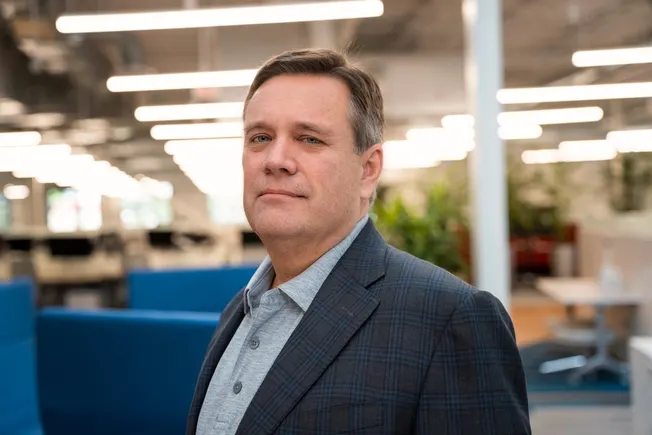
In the development journey of a biotechnology company, if fortunate enough, it will eventually usher in the transition from a purely scientific research-driven organization to a commercial one. Along with this growth, management needs to remain agile and ready to address various challenges at any time.
Verastem Oncology is on the eve of submitting an accelerated approval application for a combination therapy based on the RAS pathway, intended for the treatment of low-grade serous ovarian cancer. This transition coincides with a change in the company's CEO—last year, Daniel Paterson, who has been with the company since its inception, assumed the role of Chief Executive Officer.
The company's core candidate drug is the combination of avutometinib, a RAF/MEK clamp inhibitor, and defactinib, a FAK inhibitor, targeting mutations in the RAS family of genes—which occur in about one-third of cancers. This combination therapy has received Breakthrough Therapy designation and initiated a confirmatory late-stage clinical trial in December. The company plans to submit a marketing application to the FDA before the second half of this year, with the potential for product launch in 2025.
"We are just a small company, but we hope to make a significant impact in important disease areas and become a major player in oncology."
— Daniel Paterson, CEO of Verastem Oncology
Verastem's efforts do not stop there. The company is collaborating with Amgen, another expert in the KRAS field, to advance a fast-track program for avutometinib combined with Amgen's Lumakras in non-small cell lung cancer; it is also conducting another combination study in the same indication with Mirati Therapeutics' (now part of Bristol Myers Squibb) Krazati.
Facing the broad prospects of the company's emerging technology across multiple cancer indications, Paterson, in his initial months as CEO, has been preparing for the next phase of success. Here is his sharing on the role transition, early key decisions, and future outlook as these cancer combination therapies move toward the market.
This interview has been edited for brevity and style.
PHARMAVOICE: When you took over as CEO last year, you had been at Verastem for over a decade, previously serving as President and Chief Operating Officer. Can you talk about this transition and what experiences you brought with you in your rise to the role?
DANIEL PATERSON: I have been here almost since the company's founding, so I have a very clear understanding of how the company operates—there is no learning curve at all. The only area where I need to invest more time is external affairs, such as investor relations and external communications—though even those, I had been involved in quite a bit before. When Brian (Stuglik, the former CEO who retired last year) and I worked together, we adopted a divide-and-conquer approach, so the scope of my responsibilities within the organization has not actually changed much.
What aspects of the company have you adjusted since taking office?
We have a great culture, and we never thought about changing it—we have put a lot of effort into it, and employees stay because they identify with it. They are committed to the mission, and I do not think that will change. The biggest change will come as we prepare for commercialization and bring in talent from different backgrounds. Welcoming new teams and adjusting the organization's focus—from developing therapies to supporting and delivering them to patients—is always a challenge. But it does not change the overall mission.
The combination of avutometinib and defactinib received Breakthrough Therapy designation in low-grade serous ovarian cancer. But in 2015, defactinib caused trouble for Verastem after a late-stage trial failure. How did you turn that clinical setback into a new attempt?
It has been an interesting evolution. We conducted that study in mesothelioma, using a single agent in refractory disease, and the results did not meet expectations. But around the same time, we also conducted a study in KRAS-mutant non-small cell lung cancer, also with defactinib as a single agent, which was well tolerated and showed some efficacy, but it needed other drugs to work with. Based on that work, we conducted extensive preclinical research to find combinations with synergistic effects. That led us to focus on MEK inhibitors, and avutometinib, as a RAF/MEK clamp inhibitor, showed the strongest synergy. We understood the mechanism of the two drugs' synergy, and years of research have also shown that this combination enhances the efficacy of multiple drugs.
So, did the collaborations with external candidate drugs stem from this synergy exploration?
Yes, our focus is on external candidate drugs. If you step back and look at the strategy we have articulated, we aim to be the backbone of treatment for RAS-mediated cancers—which account for about one-third of all cancers, a huge opportunity. For Mirati Therapeutics' Krazati and Amgen's Lumakras, avutometinib targets their resistance mechanisms, so the combination is rational.
With the plan to submit an accelerated approval application this year, what preparations are you currently making?
We have a lot of behind-the-scenes work, from very mundane and time-consuming tasks—such as obtaining state licenses, setting up computer systems, and supply chains—to more exciting work, like engaging with patient groups. We have a team that has been working with key opinion leaders and physicians to raise awareness of low-grade serous ovarian cancer. It is a disease that has not received enough attention, and the patient community has been largely overlooked. We strive to reach out to these groups, listen to their voices, and work with them.
How do you view the position of this treatment in the treatment landscape?
We believe it has the potential to become the new standard of care. There is a huge unmet need—almost all patients with low-grade serous ovarian cancer are potential candidates, and they can be treated for a relatively long period. This is just the beginning—we are also exploring combinations with other therapies for pancreatic cancer, lung cancer, breast cancer, colorectal cancer, and melanoma. The RAS pathway is broadly applicable, so we are laying out a comprehensive plan.
What challenges does Verastem face in the future?
We are in a challenging industry—just look at what the biotech sector has gone through in the past three years. We strive to stay in good shape—we have a cash runway, we are excited about the results we are seeing, and we are recognized as a great place to work. The current financing environment is tough, the regulatory environment is harsh, and the biology itself is complex. Sometimes you feel like the 'little engine that could' against these difficulties. Because we are just a small company, but we hope to make a significant impact in important disease areas and become a major player in oncology.
What do you think is the most important leadership quality in the biopharmaceutical field?
First and foremost is honesty, trust, and openness. We often work to help employees understand that bad things happen, but what matters is how you respond. Especially on major projects, we emphasize that if someone spots a problem, they should bring it to the team. We do not hide information or cover up bad news; instead, we ensure transparency. That way, everyone knows the goals and has the resources to achieve them—as leaders, our job is to remove obstacles.
