
SQZ and Portal Founder Armon Sharei on Second-Time Entrepreneurship in Biotech
Armon Sharei once thought he would never start another biotech company. After experiencing the full cycle of SQZ Biotechnologies from glory to liquidation, he founded Portal Biotechnologies with new insights, shifting to providing cell delivery tools rather than developing drugs. This article is a BioPharma Dive interview with Sharei, exploring the lessons he drew from failure and his renewed understanding of industry risks.
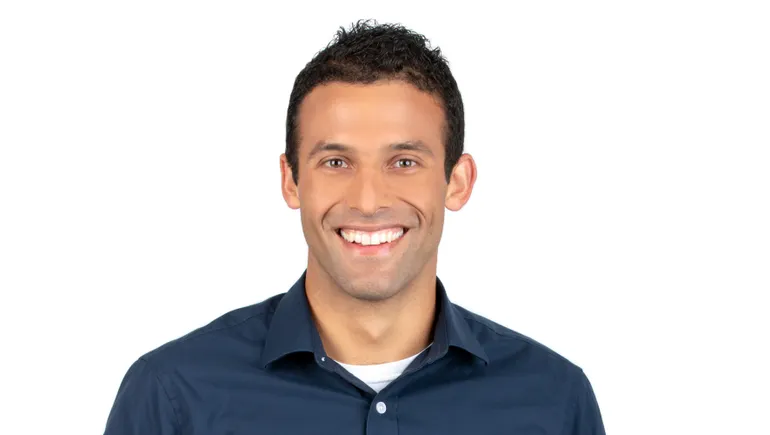
Armon Sharei never thought he would start another biotechnology company.
Sharei hadspent years of effort, trying to turn his doctoral research at MIT—a method for introducing substances into cells without killing them—into a successful startup. He described the experience as "a lot of work, pain, and suffering."
His company, SQZ Biotechnologies, won astartup competitionin 2014, and its technology was named one of the top ten innovations of the year by Scientific American. The company raised a total of$167 millionfrom prominent venture capital firms and signed acollaboration agreementwith Roche, which saw it as a potential avenue for developing cancer cell therapies. In 2020, amid a boom in biotech stock offerings, SQZ successfullywent public。
However, after that, SQZ's development gradually hit troubled waters. The company shifted its focus from technology to therapy development, and setbacks in clinical programs weighed on its stock price, forcing the company to struggle for survival. In 2022, Sharei wasremoved from his role as CEO by the board, and shortly after, Roche alsoterminated the collaboration. At the end of last month, the company wasliquidated and dissolvedfor approximately$12 million, a figure only slightly above its cash on hand.
This experience deeply affected Sharei. He briefly left the biotech field, vacationed with his family, and tried his hand at creating comics about immune cells. But this break instead reignited his drive. "I still care too much about cell therapy," he said. Rather than retreating, he founded another startup,Portal Biotechnologies, to explore similar cell-squeezing technology in a different way.
Portal's strategy is not to develop drugs but to manufacture mechanical tools for others to use in delivering complex substances into cells. So far, more than20biotech companies, pharmaceutical companies, and academic institutions have joined Portal's "test program." Last week, the company completed a$5 million "pre-seed" funding round led by Pear VC。
Sharei shared with BioPharma Dive the lessons he learned from his experience at SQZ. The following conversation has been lightly edited and condensed for clarity.
Witnessing SQZ's Demise
Question:How did it feel to witness SQZ's end from a distance?
Armon Sharei:Seeing SQZ fall was truly sad because I cared deeply about what we were doing and believed some of the therapeutic programs had great potential. I went through the hardest moment when I left, because I worried then that this might happen. But on the other hand, I'm glad I've returned to the field of enabling cell therapy delivery, because that was the core of my early doctoral research.
In SQZ's later stages, everything became more focused on therapy development, but the origin was the same. Cell delivery is a major challenge; it's a bottleneck for various therapeutic applications and implementations, and it also constrains drug discovery and our understanding of biology. If there were a simple solution, it would unlock many possibilities.
The Legacy from SQZ to Portal
Question:What did you take from SQZ to Portal?
Sharei:We thought: "Can we simplify the delivery process even further than what we did at SQZ and in my early graduate years?" The technology foundation of SQZ is now about10 yearsold. We recalled early work by others on using filters to introduce substances into cells and believed we could make a better version. We simplified delivery to passing cells through a precision filter—in layman's terms, that's it.
A Different Way of Building Based on Past Experience
Question:Given your previous experience, is Portal built differently?
Sharei:One of the motivations for choosing this path was having personally experienced the journey of therapy development. When you go down that road, everything inevitably depends on the clinical trial readout of your first (or if you're lucky, second) program. You bet the validity and potential of the entire platform on the program you initially choose. And those programs can succeed or fail for a thousand reasons unrelated to the broader platform.
If you want to maximize financial returns—that's usually the bet people want to make. If you bet right on a therapy, it's the biggest outcome financially because valuations are extremely high. Tools or reagents, on the other hand, are very fragmented, a sales game, and valuations won't be as high.
On Forgoing Potential Returns
Question:What made you willing to give up those potential returns?
Sharei:After going through that, it would be a shame to see a high-potential platform die because of its first program, for reasons that may have nothing to do with the technology itself. So, if we don't want to repeat that, why not stay open from the start and let others make multiple attempts through us?
If someone uses Portal's technology to cure an autoimmune disease, they'll reap more financial rewards than Portal will, and that's fine. I can accept that. I'd be very happy to see patient populations improve dramatically rather than be frustrated that Portal didn't capture all possible gains from that path. Frankly, from a business perspective, it also makes sense because you're not taking on that binary risk. It's a more diversified risk profile.
Challenges of Promoting a New Platform
Question:What's difficult about promoting a new platform? Does it remind you of SQZ's early days?
Sharei:When you have new technology, getting early adopters can be tricky because you don't know what the field really needs. The field doesn't yet understand what you can do, and unless you prove it yourself, you end up in a situation where no one is interested. We faced this in SQZ's very early days (2013 and 2014). SQZ could do many unique things, but because people weren't used to that capability, it became a problem. Unless you truly prove it, the field is slow to accept new things. After that, everyone catches up.
Why Choose a Pre-Seed Round
Question:Why did you choose a pre-seed round rather than applying for grants or doing a larger raise?
Sharei:Although grants are great resources, they often take a long time. While they may be cost-effective, they're not the most time-efficient path. If you can do a pre-seed round with some like-minded investors, it helps speed things up considerably. Although the biotech funding environment is still challenging, fortunately, our traction lies in our background and the fact that the approach can be seen as relatively low-risk.
Therapy development can be seen as high-risk, whereas offering platform technology to others, especially when you've shown traction, is a much lower-risk proposition for investors and a financial win. You don't need to raise$400 millionbefore knowing if you have a drug. In this business model, after putting in$5 million、$10 millionor$20 million, you can know if you're on the right track.