
GSK monopolizes the U.S. shingles vaccine market, and a vaccine with fewer side effects may change the landscape
GlaxoSmithKline's (GSK) Shingrix vaccine is highly effective in preventing shingles but has notable side effects. Curevo Vaccine is developing a vaccine called amezosvatein, which in Phase 2 trials showed immune response rates comparable to Shingrix while causing fewer adverse reactions, potentially breaking the current market monopoly.
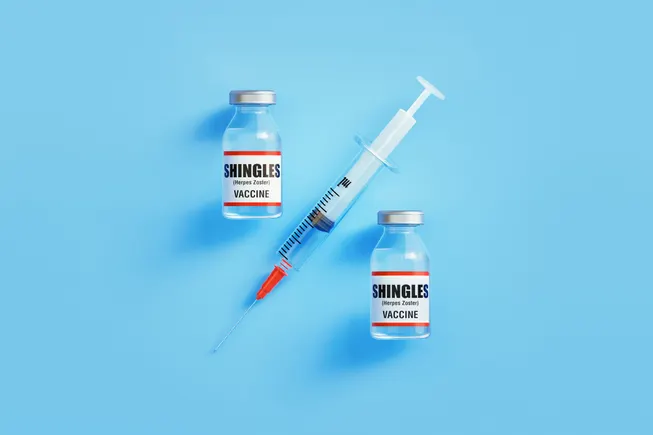
GSK's blockbuster vaccine Shingrix has been shown to be highlyeffectivein preventing shingles and its common complication, postherpetic neuralgia, in healthy older adults. Its immune protection is long-lasting, with immunity lasting at least seven years.

However, the vaccine also has a range of short-termside effects, including extensive swelling and redness, muscle pain, and gastrointestinal discomfort. According to the U.S. Centers for Disease Control and Prevention (CDC), 1 in 6 recipients is unable to perform daily activities due to these reactions.
“The vaccine is associated with these short-duration but highly reactogenic events,” said George Simeon, CEO of Curevo Vaccine, a clinical-stage biotechnology company based in Washington. “This leads to a dual outcome: some people are afraid of the side effects and don't get vaccinated; others skip the second dose after experiencing severe adverse reactions to the first.”
Despite this, Shingrix remains the only option on the market. Merck & Co.'s Zostavax wasdiscontinued in 2020 due to waning efficacy. Curevo aims to change this landscape, competing head-on with GSK's Shingrix—which generated$4.3 billion in sales last year—by offering a vaccine with comparable efficacy but a lower rate of side effects.
The clinical-stage company is currently developing amezosvatein, a shingles vaccine. APhase 2 clinical trialshowed a vaccine response rate of 100%, compared to 97.9% for Shingrix. Additionally, a lower proportion of patients experienced adverse reactions that interfered with daily activities.
“We are very focused on this one virus. I think as a company, we are in a favorable position right now.”

George Simeon
CEO of Curevo Vaccine
Similar to Shingrix, amezosvatein combines a subunit protein antigen (glycoprotein E) with an adjuvant targeting the TLR4 pathway. However, Simeon noted that amezosvatein's adjuvant is synthetic and more targeted.
“The vaccine showed a very consistent and favorable reactogenicity profile across all doses,” Simeon said. “We were able to achieve a better immune response without the penalty of severe side effects.”
These positive results allowed the company to determine the dose for advancing to a Phase 3 program. Simeon stated they plan to initiate the Phase 3 trial by the end of 2024. The company is also testing a varicella vaccine using the same technology.
Here, Simeon discusses the company's focused strategy in the vaccine market and Curevo's positioning.
This interview has been edited for length and style.
PHARMAVOICE: How is the U.S. shingles vaccine market landscape currently evolving?
GEORGE SIMEON:There is really only one vaccine on the market right now, and that's Shingrix. There are several other [mRNA] vaccines in development, fromModernaandPfizer and BioNTech。
For any vaccine to succeed in the market, it must have a unique advantage. The way we look at the market is: you can't beat Shingrix on efficacy. On durability of immune response, you need to at least match or exceed it, and Shingrix has already been shown to last for years. So you have to beat it on reactogenicity, and that's where our strategy comes in. mRNA vaccines, at least in COVID and some flu data, have shown significant reactogenicity. So I doubt they can beat Shingrix on reactogenicity. Additionally, in COVID vaccines, durability has been a real issue. I'm not sure if the same will happen with the shingles virus, but that's something they'll have to prove.
Can you tell us about the company's work on the varicella vaccine?
Regarding varicella, we've had discussions about the clinical need in immunocompromised children... The live attenuated vaccine still introduces the virus to children (in this case), and that virus can cause disease. For immunocompromised children, they are susceptible to severe varicella. The pediatric populations we're discussing include... transplant patients, pediatric oncology patients, and HIV-positive children.
We've had multiple discussions with clinicians and regulators in South Africa, where there is a real need for an effective varicella vaccine that can be used in this highest-risk population. So we received authorization to conduct a trial—a carefully monitored AIDS de-escalation trial—where we will progressively evaluate safety and immune responses in these children with genuine clinical need.
Will Curevo's pipeline expand beyond varicella and shingles in the future?
No. We are very focused on this one virus. I think as a company, we are in a favorable position right now. But I also think it's a wise business decision. Even with just one virus, achieving mastery is extremely difficult, and I don't want to distract myself and the company with other equally complex markets. We've found that building deep scientific knowledge, clinical expertise, and regulatory specialization in this area alone consumes all our energy.
My view is that to serve the global market, we should become the undisputed knowledge and scientific experts in this field. This allows us to excel in an area that contributes to all of humanity.
How does this impact your financial strategy and how investors view the company?
In 2019, and even into 2020, investing in a highly focused company required a very special kind of investor. I attended dozens of meetings, and the only question was always: What is your platform? Because of our focus, we didn't get into COVID, nor did we enter any areas beyond our core competency. We are one of the few vaccine companies to reach Phase 3. After two years of a downturn in funding, capital, and IPOs, this strategy has been validated among investors. Every investor I've met is excited about a focused company. In the 35 to 40 investor meetings I've had, I think only one asked: 'What else do you have beyond the shingles virus?' So, focusing on bringing one product—a safe and effective vaccine—to market in the shortest possible time and with the highest efficiency resonates strongly in the current recovering investment environment. They love the story.