
Exploring Uncharted Territory: Tarsus CEO on Launch Strategy for a New Disease Category
In an interview, Dr. Bobak Azamian, CEO of Tarsus Pharmaceuticals, detailed the launch strategy for its first drug, Xdemvy (for treating Demodex blepharitis). Facing challenges of low diagnosis rates and a new disease category, the company drove market growth through its own sales team, multi-channel education, and data analytics tools, with Q4 2023 revenue exceeding expectations. Azamian also shared future plans, including expanding indications and exploring direct-to-consumer sales models.
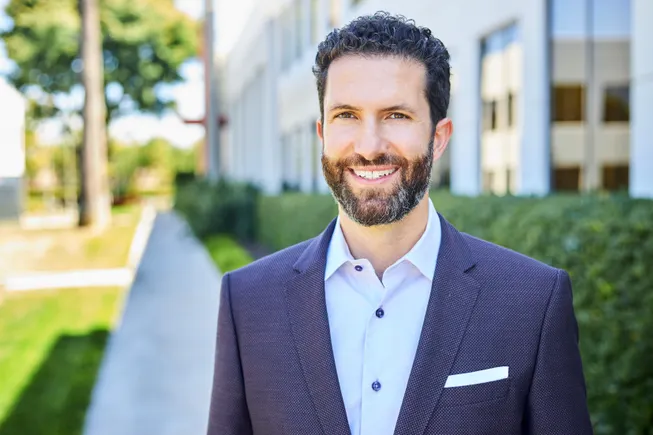
Patients with Demodex blepharitis, an eyelid disease, often follow a similar treatment path—a reality that Tarsus Pharmaceuticals CEO Dr. Bobak Azamian knows well, as his own mother sought care for eye issues.
It all started with a stye, a common and painful red bump on the eyelid. After a round of antibiotics and over-the-counter treatments, some symptoms persisted. For many patients, the story might end there, without a clear diagnosis or further treatment options. But coincidentally, Tarsus was advancing the approval of Xdemvy, the first drug for Demodex blepharitis, caused by Demodex mites that thrive in eyelashes.
Sure enough, Azamian's mother was eventually diagnosed with the condition. After Xdemvy receivedFDA approvalon July 25 last year, she became an early patient, undergoing a six-week course of the drug.
"My mother's case is deeply etched in my mind," Azamian said. "The primary challenge with Demodex blepharitis is that many patients are undiagnosed."
Xdemvy marks a breakthrough for both the indication and Tarsus, being its first approved drug. But as a first-in-class therapy in a disease category with low diagnosis rates and no other treatments, it presents commercialization challenges for the company, especially for a physician CEO who has never led a drug launch. To make the drug accessible to an estimated 25 million U.S. patients, the company must forge its own path.
"We are creating this market, so we are simultaneously launching and educating."
— Dr. Bobak Azamian, CEO of Tarsus Pharmaceuticals
So far, this strategy—including educational campaigns and direct physician outreach by an expanding sales force—has shown early results. In the latestearnings report, Tarsus reported fourth-quarter revenue exceeding $13 million, surpassing the expected $7 million, with Xdemvy full-year sales at $14.7 million.
The company is also studying Xdemvy in clinical trials for meibomian gland dysfunction, another eye condition with no FDA-approved treatment, which, coincidentally, Azamian's mother was also diagnosed with. Tarsus is also testing another therapeutic, TP-05, as a Lyme disease prophylaxis, and TP-04, a potential treatment for rosacea.
"The connection between these indications is a unique molecule called lotilaner, whose chemical nature belongs to antiparasitic treatments," Azamian said. "It belongs to a new class of safe and effective drugs that inhibit gamma-aminobutyric acid-gated chloride channels."
Although the therapeutics in the company's pipeline are based on Tarsus's antiparasitic technology, Azamian said the long-term goal is to grow into anophthalmology-focused company, entering a global market projected to be worth $61 billion by 2028.
For now, Tarsus must execute the Xdemvy launch plan. Here, Azamian (a2022 PharmaVoice 100honoree) discusses the company's commercialization strategy, unforeseen challenges, and how it leverages technology.
This interview has been edited for brevity and style.
PHARMAVOICE: What is your overall commercialization strategy for launching a new drug in a new market?
DR. BOBAK AZAMIAN:We handle all commercialization efforts in-house. We realized we are creating a new category and need a high-touch approach.
We needed to build a pharmacy channel to make the treatment easily accessible to patients, which we achieved with four dispensing pharmacies, including CVS and Walgreens. Doctors also need to be educated and perform prior authorizations. So far, this has been successful.
Obviously, sales representatives are the customer-facing part of our operations. We have representatives in each region, which feeds back into marketing and commercialization efforts. In hindsight, this was the right decision.
There is much discussion in the industry about shrinking field sales teams, but your sales force grew 183% last year. Why was this part of the strategy so important for the Xdemvy launch?
Ophthalmology is different—ophthalmologists prefer one-on-one interactions. So we have 85 representatives visiting thousands of doctors, and they are considering whether to visit more frequently because the more they engage and ask about eyelid checks, the more they hear that doctors didn't realize they had so many patients (with this condition), and they want to provide good solutions for their patients.
Our goal is 15,000 doctors, and we have already worked with 6,000. Many patients have now completed the six-week course, and doctors see results and prescribe more frequently because they see the drug works.
But we know reaching the next 9,000 doctors will be more difficult.
You mentioned that building disease awareness is foundational to this approach. Tell us about the awareness campaigns you've launched.
We are creating this market, so we are simultaneously launching and educating.
We have run four campaigns, all highly action-oriented. First, we launched an unbranded campaign around checking the eyelids, so doctors consider not just the drug but whether patients have the condition. We also have a branded physician campaign called "Might over Mites."
[Before Xdemvy's approval] we had a consumer campaign called "Don't Panic, Get Checked" to help educate the public.
We also held a live social media event to launch the branded consumer campaign "Mite Party," aimed at destigmatizing the disease and encouraging patients to learn about their eye condition and seek care. Consumers need a lot of education to connect symptoms to the disease and feel comfortable talking about it.
Do you plan to adopt a direct-to-consumer sales approach?
We decided to first educate doctors and patients, engage payers, and then explore direct-to-consumer. I think the optimal time might be 2025 if we see demand and opportunity.
What unforeseen challenges have you encountered during the launch?
This is a defined course of treatment; patients don't leave with a bunch of refills—it delivers strong value within six weeks. So every prescription matters, and we must ensure patients get these prescriptions. This means we must take a high-touch approach with doctors, patients, and payers.
Are you leveraging emerging commercialization technologies for this launch?
We have an analytics team that developed tools targeting two data areas to help determine the 15,000 doctors to visit. There are about 60,000 ophthalmologists in the U.S., and we want to find those who serve the right patients... and which doctors have prescribed other anterior eye drugs.
Another is a real-time data set obtained through our warehouse, tracking product flow. This is a concept used by companies to see which doctors are prescribing, how insurers are covering the drug, and pharmacy dispensing. In any launch, market access is one of the main challenges in the first six months, so this helps us understand pharmacy performance and how to get the drug to patients more efficiently.
We are also exploring the use of AI tools for remote diagnosis in the future.
What advice would you give to peers handling such a launch?
I'm not sure our approach works for everyone—it's not one-size-fits-all. But for us, the key is to consider your audience and how to serve your customers—patients, doctors, and payers. Stay engaged with each audience.
Also, hire people who know more than you. As CEO, stay curious while leading this effort. Have a service mindset, and then work together with customers and your team.
Editor's note: Nominations for the 2024 PharmaVoice 100 are now open. If you know outstanding leaders in the life sciences, let us know through ournomination formby May 5.
