
Organon Chief Medical Officer: Reshaping Global Perceptions of Women's Health
Dr. Juan Camilo Arjona Ferreira, Chief Medical Officer at Organon, joined the company in September 2023, committed to advancing women's health with a fresh perspective. He proposes a three-dimensional matrix strategy that views the female life cycle as a continuum, emphasizing scientific leadership and inclusive research, while also focusing on 2024 pipeline progress and policy opportunities.
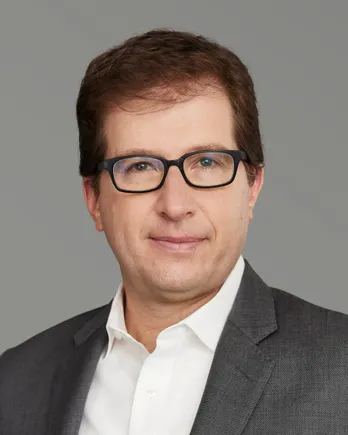
Welcome to the "First 90 Days" series, which focuses on how pharmaceutical executives plan for success in new roles. In this conversation, we speak with Dr. Juan Camilo Arjona Ferreira, Chief Medical Officer of Organon. This women's health company has hired the gynecologist-turned-executive to drive forward-looking change in a long-neglected field.
By all accounts, Organon stands out in the biopharmaceutical field. Dr. Juan Camilo Arjona Ferreira, who joined the company as Chief Medical Officer in September 2023, believes the pharmaceutical company has the potential not only for commercial success but also to become a catalyst for changing how the world views this overlooked medical field.
"We at Organon are at the right place at the right time," said Arjona Ferreira. "We are like a lighthouse in women's health, clearly visible."
Organon was spun off from Merck & Co. in 2021, inheriting the pharmaceutical giant's portfolio of nearly 50 women's health products, which generated $4.5 billion in revenue in 2020. The company has also developed plans to address some of the field's most challenging issues, such as ovarian cancer and endometriosis, and has been attracting funders seeking impact investment opportunities.
In terms of innovation, Arjona Ferreira believes creativity and agility are key. Early in his career, he worked at Merck, then served as Chief Medical Officer at the smaller women's health biotech company Myovant Sciences before assuming his current role. He brings diverse experience to Organon and says it will help him and his team think outside the box.
"We come from Merck, but we don't want to be another Merck—we need to be different," said Arjona Ferreira. "Understanding the challenge of navigating that complexity as we scale is fascinating and exciting because no one has ever attempted it this way before."
"We at Organon are at the right place at the right time. We are like a lighthouse in women's health, clearly visible."
—Dr. Juan Camilo Arjona Ferreira, Chief Medical Officer of Organon
Here, we spoke with Arjona Ferreira about his thoughts on the Chief Medical Officer role, the importance of a fresh perspective in women's health, and his outlook for the coming year.
This interview has been edited for length and style.
PHARMAVOICE: Tell us about your first few months at Organon. What were your priorities?
Dr. Juan Camilo Arjona Ferreira:Joining Organon has been exciting. I am trained as a gynecologist and have spent years in drug development, always focused on women's health. And Organon is the best platform to advance women's health. The first few months allowed me to go deep inside and understand our tactical and strategic operations. I see many opportunities to apply my experience, not only from a women's health drug development perspective but also from my time at a biotech startup (Myovant)—the agility and flexibility needed in a small company can help us move the pipeline faster. So, my priorities are to strengthen our excellent team, advance the pipeline, and remain creative when designing new studies. The field of women's health has a long way to go; it has been underappreciated and understudied for decades.
Early in your career, you led women's health programs at Merck for many years. Now, at Merck's women's health spinoff, what has remained the same, and what has changed?
My drug development career began at Merck, where I was fortunate to learn from very talented people in one of the world's top development organizations. I went through the 2009 merger of Merck and Schering-Plough, which brought Organon into Merck. So I am familiar with these products and know many of my colleagues. In a way, it feels like coming home to finish what I started back then. And Organon's spinoff from Merck also brings a mindset shift—from a large, highly structured organization to one that is more agile, nimble, and eager to innovate quickly. If we followed traditional approaches, it might take 100 years to bring women's health to where we want it to be, so we must think creatively.
Where do you envision Organon heading strategically in healthcare?
At Organon, we view women's health as a continuum of women's lives and health. From girls to puberty, to adulthood and reproductive years, to menopause and older age, there are opportunities and needs everywhere. We don't divide by condition or disease; instead, we think about how to improve women's lives comprehensively. Our approach is to see it as a three-dimensional matrix across the entire life cycle. Through education, prevention, diagnosis, and treatment, we focus on drugs and devices, but also go beyond that to include delivery platforms and data and digital solutions. However, we are not trying to do everything—we are also very focused on the greatest unmet needs, but it's not just commercially driven.
In women's health, what is the most important leadership quality for a Chief Medical Officer?
The first area is, of course, scientific leadership. We need to ensure high scientific standards, which have been somewhat lacking in women's health. Inspirational leadership is also important. We are bringing together people who care about women and are committed to changing women's health. There is clear evidence that improving women's lives improves families and society as a whole. We need to balance science, development, and commercial, and use that perspective to ensure the company's viewpoint is comprehensive and balanced.
What are the biggest obstacles Organon faces in tackling this long-neglected medical field?
That is the challenge itself and the core reason we exist. Gender bias is very prevalent. A UN report released this year noted that globally, regardless of gender, 9 out of 10 people hold negative views of women. That is the reality we face, and it is our biggest challenge. That is why we take an ecosystem approach to women's health. I was very excited about the new women's health initiative announced by the White House last week. That is exactly their perspective—the government needs to act and come up with initial ideas within 45 days, so it must be cross-departmental. We stand ready to contribute in any way we can.
Can you talk about your plans to make research more inclusive?
At Organon, we are fortunate because diversity, equity, and inclusion are at the core of our identity. It is part of our DNA and how we approach everything, and research is no exception. We want all our research to represent the populations who might use and benefit from our medicines. Not only because it is the right thing to do, but because we want to understand the benefits and risks of our drugs across all patient groups. We are making this a mission—and using different tools, rather than randomly recruiting patients. We have a clear plan, including how we select research sites, where we establish them, and how we engage with communities. This is central to our work.
How often do you discuss changing global perceptions of women's health?
Every day. In every conversation with anyone, it is a proactive effort. Mutual accountability is the only way because we are all on this journey together, and helping each other is how we do better.
What are you looking forward to in 2024?
We have gone through two growth periods and are stabilizing. Advancing the pipeline is key. For the OG-7191 program for polycystic ovary syndrome, we plan to start the first-in-human study next year. We are advancing the endometriosis program and look forward to enrollment in that study. Additionally, there are external milestones, such as government initiatives and a lot of work from academic institutions. Many factors in women's health continue to build momentum, and we are honored to be part of it.
