
Red Jacket Award Winner Adele Gulfo: The Key to Commercial Success Lies in Listening to Science
Adele Gulfo, who has repeatedly succeeded in launching blockbuster drugs, believes that commercialization does not rely solely on sales teams or advertising spend. She emphasizes that understanding product value, focusing on scientific evidence, and placing patients at the core of decision-making are the keys to winning. This article reviews her commercialization journey from Lipitor to Crestor and explores her new practices in driving data-driven commercialization at Sumitomo Pharma America.
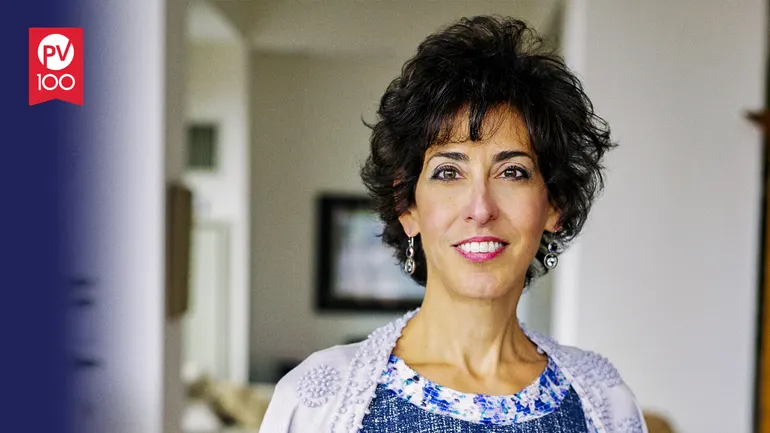
Editor's Note: This article ispart of the 2023 Red Jacket Awardspecial report.
For Adele Gulfo, the secret to successfully launching blockbuster drugs isn't about recruiting more sales representatives or spending heavily on direct-to-consumer advertising. The answer is simpler: listen to the science and "understand the value of the product you are selling."
This industry leader, a two-time PharmaVoice 100 honoree and 2023 Red Jacket Award winner, learned these lessons early in her career at Parke-Davis, where she helped launch one of the most successful blockbuster drugs in history, Lipitor. Parke-Davis was then the oldest and largest pharmaceutical company in the United States.
Although the cholesterol-lowering drug has generated cumulative sales of over $160 billion, bringing it to market was no easy feat. At the time, Lipitor was entering a highly competitive statin market, where rivals like Merck & Co.'s Zocor and Bristol Myers Squibb's Pravachol already had strong sales networks and advertising campaigns.
To stand out among those "super brands," Gulfo's team "had to think strategically," she said. So, they focused on scientific evidence, collaborating with drug developers on Lipitor's clinical studies—including research on patients with high cholesterol, diabetes, hypertriglyceridemia, and a rare chromosomal disorder called homozygous familial hypercholesterolemia (homozygous FH). Gulfo said their bet was: if Lipitor could treat the most challenging patients, then it could work for any patient walking into a doctor's office. Because other companies overlooked the patient populations Parke-Davis studied, Gulfo's team was able to build a new value proposition for Lipitor.
"We had to put the patient at the center of all decisions. When you put the patient first, it helps you prioritize your next steps."
Adele Gulfo
Chief Executive Officer, Biopharmaceutical Commercial Business, Sumitomo Pharma America
The bet ultimately paid off. Since then, Gulfo has applied these patient- and science-centric approaches while leading commercialization efforts for some of the world's largest drug brands. At AstraZeneca, she drove the cholesterol-lowering drug Crestor's sales to over $2 billion in 2009; at Pfizer's U.S. primary care business, as president and general manager, she led a $13 billion portfolio.
Throughout her career, Gulfo says she has always focused on answering two core questions: What does the science tell us? And how can we use that information to meet patient needs?
Most recently, as CEO of Sumitomo Pharma America's biopharmaceutical commercial business, she has applied these questions to drive advances in technology and data analytics—not only for drug development but also for commercialization, to better promote therapies to patients, physicians, and payers.
With its advanced analytics platform, the company aims to bring breakthrough therapies to multiple therapeutic areas, including psychiatry, neurology, oncology, urology, women's health, and rare diseases.
Here, Gulfo discusses why she believes integrating technology is the next frontier in pharmaceutical commercialization, why payers are an essential part of any marketing strategy, and how she continues to "harness the power of science" at Sumitomo Pharma.
This interview has been edited for length and style.
PHARMAVOICE: You are a strong advocate for using technology to drive commercialization. How are you applying technology at Sumitomo Pharma?
ADELE GULFO:Within Sumitomo Pharma, there is a team that is very advanced in data analytics, helping us understand the market and patients, and how to target specific physician groups or patient populations. For example, we have a drug for uterine fibroids and endometriosis. Women with these conditions are diverse. Some endometriosis patients manage their condition with over-the-counter pain relievers, some women need oral contraceptives, so we need to identify which women need our drug. Using advanced data and analytics tools, we are able to deliver the right information to the right patients and the right prescribers, thereby addressing unmet medical needs.
Where do you see the future application of advanced analytics in the life sciences industry?
I talked about commercialization, but you can also think about clinical development. You can search the literature and ask ChatGPT to "show all trials that studied endometriosis in this specific group of women and produced specific results," and it can do that. Advanced analytics can do much more; it can help us refine our thinking and improve efficiency. For clinical development, we can enroll patients earlier, understand who the prescribers are, and bring drugs to market faster. By doing so, we save costs for the healthcare system. Ultimately, I think leveraging advanced data and analytics will help us improve the overall healthcare cost equation and bring drugs to patients.
What challenges does the industry need to overcome to better reach patients?
We still face a huge challenge: patients not adhering to their medication. We call it patient persistence. If you start taking a chronic hypertension drug and need to stay on it long-term, the challenge is ensuring you recognize the necessity of taking it. When we educate patients, explaining what you are taking and its benefits, the likelihood of you persisting with treatment greatly increases.
Sumitomo Pharma describes its approach as patient-centric. What does that mean to you?
In our industry, we must put the patient at the center of all decisions. When you put the patient first, it helps you prioritize your next steps—whether it's deciding how to spend the next commercial budget or how to allocate R&D funds. If there are still patients with unmet medical needs, then we know there is an opportunity to help that patient, no matter how small that opportunity is.
What role do payers play in the access equation?
It's important to have medical conversations with payers well before a product launches, so they are prepared and understand the product's value. For example, we have a product for prostate cancer. During the COVID-19 pandemic, patients were reluctant to go to doctor's offices. And now, when you need to receive what's called ADT (androgen deprivation therapy) injections, you have to go to the office for the injection. Our drug is an oral medication that patients can take at home without going to the doctor. So, when we communicate with payers, we ensure they understand that patients will prefer oral over injection. We must explain the clinical profile and patient benefits. That's why it's important to engage payers early.
How are you working to overcome barriers to patient access at Sumitomo Pharma?
I can't communicate with a 25-year-old endometriosis patient the same way I would with a 65-year-old man with prostate cancer. So, first, understand your audience. The way I reach younger patients is very different from placing ads on fishing channels (because that might reach prostate cancer patients). That's why we use advanced analytics and data to help us identify zip code areas, patient populations, demographic characteristics, etc. They help us deliver the right information to the right patients at the right time.
View our full2023 PharmaVoice 100winners list.
