
Pharmaceutical industry 'firefighter' joins Gates MRI to tackle tuberculosis
Debra Weiss was persuaded to transition to GMP during her tenure at Shire, where she learned the essence of leadership. Now as COO of the Gates Medical Research Institute (Gates MRI), she applies this philosophy to global health projects such as tuberculosis vaccines, emphasizing the critical role of operations teams in scientific execution.
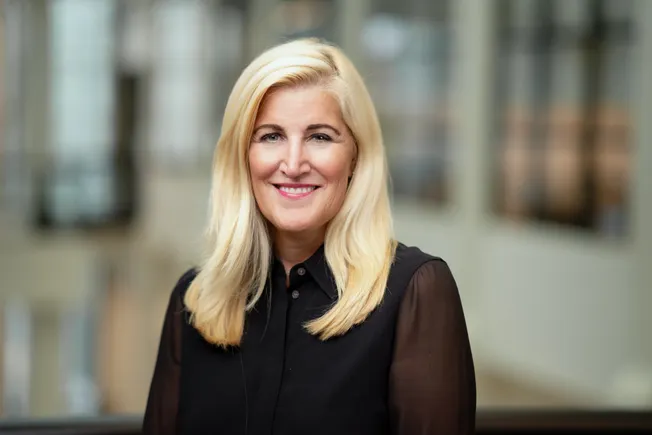
In the late 2000s, when Debra Weiss was responsible for research quality assurance at Shire, the head of supply chain approached her, hoping she would lead the company's Good Manufacturing Practice (GMP) quality assurance work. Initially, Weiss thought the idea was "crazy" for seven months. Although she already managed Shire's clinical and laboratory quality assurance, these were areas where she had experience, while GMP was different—she had never even worked in a manufacturing plant.
However, Weiss's colleague firmly believed she was suitable for the position. "I finally said to her: 'What do you see in me that I don't see in myself?'" Weiss recalled. "She said: 'You are a leader who can unite teams, solve problems, and inspire others. Yes, you need to know some manufacturing knowledge, but you can learn it.'"
Weiss eventually accepted the job and performed excellently in the role. She also learned a valuable leadership lesson: what made her suitable was not her own knowledge or expertise, but her ability to identify and cultivate these qualities in others.
"You can have amazing science, but without the operations team... you may not be able to execute."
—Debra Weiss, Chief Operating Officer at Gates MRI
"It's really about finding people with these qualities and giving them the best space to work. For me, that was life-changing," she said. "I realized that as a leader, the higher you go, the less it's about you and the more it's about the team." She still practices this philosophy today.
Focusing on areas of need such as tuberculosis
Weiss is currently the Chief Operating Officer of the Bill & Melinda Gates Medical Research Institute (Gates MRI). This nonprofit medical research organization focuses on new biomedical interventions for "major global health problems with limited investment incentives," covering malaria, tuberculosis (TB), and diarrheal diseases. Gates MRI isBill & Melinda Gates Foundation's affiliate, operating both independently and in collaboration withMerckand other partners. The two parties have reached acollaborative licensing agreementto evaluate two preclinical antibacterial drug candidates as possible components of combination tuberculosis treatment regimens. Currently, Gates MRI has nine assets across five programs ranging from preclinical to late-stage development.
Earlier this week, Gates MRI announced it has begundosing patients in a Phase 3 trial of a tuberculosis vaccineconducted in seven countries, including South Africa. It is also part of the Accelerating New Therapies for TB (PAN-TB) collaboration, which includes Otsuka Pharmaceutical and Johnson & Johnson.
When Gates MRI was starting up, all of Weiss's experience intersected with its emerging needs. She became the first employee of Gates MRI in 2018, serving as head of quality assurance and corporate operations. "What attracted me to MRI was that the mission was bigger than myself," she said. "I like being part of something and want to make an impact—not only on the patients we serve, but also on the people who work here and create change."
Weiss's path to the executive suite
Weiss assumed the role of Chief Operating Officer in October 2020. However, her path to the executive suite was unconventional. "I never thought I would become a COO," she said. "I could never have planned this path. Never."
In fact, Weiss's career began as a hospital nurse, eventually moving into the cardiac catheterization laboratory, where she participated in clinical research on device testing in collaboration with the University of Pennsylvania School of Medicine and companies like Merck. After serving as a senior research coordinator for several years, Merck recruited her. "They liked hiring nurses," Weiss noted. She first served as a research coordinator, then moved into quality assurance, helping ensure the company's research practices met standards. "My passion is in good clinical practice," she said.
She continued this interest at Shire, later serving as a quality and compliance consultant for pharmaceutical companies and as an adjunct assistant professor at Temple University, where she still teaches a graduate course on good clinical practice. When Gates MRI contacted Weiss, she liked its nonprofit nature and the new organization with a noble mission. "I was interested in the concept. It brought me back to my nursing days," she said. "During my 20 years in the pharmaceutical industry, I felt I was getting further away from patients."
However, it wasn't long before her disparate skills and experience—and her reputation as a "firefighter"—converged into the COO role. After rolling up her sleeves to write quality assurance standard operating procedures, she gradually took on more responsibilities, first compliance, then risk management, human resources, safety, and IT. The essence of an operations leader boils down to creating processes, solving problems, and team building, just like in clinical research. It's about building solid foundations to create an effectively functioning organization that can fulfill its mission. It's also about leadership, listening, and an always-open door.
"Little by little, they realized I could work with teams to build good processes," she said. "That's crucial for an organization like Gates MRI, because it not only works with its own staff but also with partners around the world. You can have amazing, amazing science, but without the operations team as enablers, you may not be able to execute that great science."
She also took away the leadership lessons learned at Shire. She may not be an expert in areas like finance, but as COO, she knows she doesn't need to be. It's what she tells everyone, especially women: don't focus on what you don't know, but on what you do know. "When you walk into a room, don't focus on what you don't bring, because that will destroy you. You'll immediately go down a rabbit hole," she said. "Focus on what you bring."
