
What the 2014 Ebola Outbreak Taught This Biotech CEO About Communication
Colleen Acosta, CEO of Freya Biosciences, served as a WHO epidemiologist during the 2014 Ebola outbreak in West Africa. She applies the communication and persuasion skills learned from that experience to biotech entrepreneurship, including explaining science to investors, addressing skepticism, and advancing the development of microbial immunotherapy for women's health.
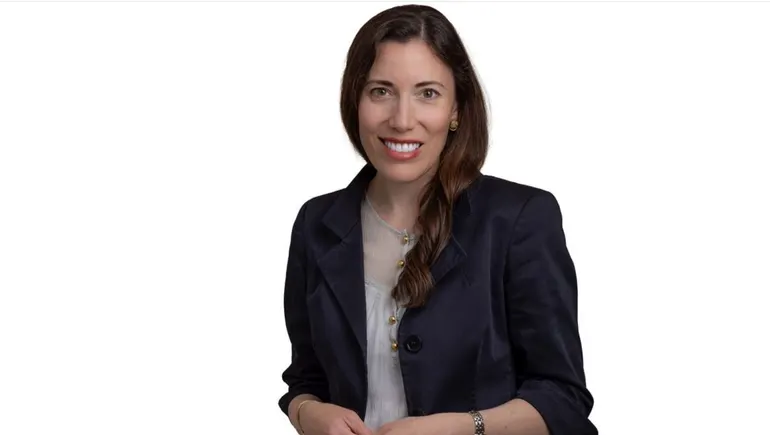
For a scientist-turned-CEO, fundraising, working with investors, and explaining new science are often the most challenging and unfamiliar parts of leading a biotech startup. But Colleen Acosta—CEO and co-founder of Freya Biosciences, a clinical-stage women's health biotech company—has experience in educating skeptics about science.
"I think being able to explain something and why it's important is critical," she said.
When the Ebola outbreak hit in 2014, Acosta was working as an epidemiologist at the World Health Organization (WHO), and she was then sent to the front lines.
"I was deployed to Sierra Leone, a hotspot for the outbreak," she said.
She had worked on controlling cholera and dengue outbreaks and received additional training while pursuing a master's degree at the Johns Hopkins Bloomberg School of Public Health. Now, Acosta is putting that experience into practice.

Acosta spent about two months on WHO's outbreak response, living in a town without paved roads or running water, sleeping on a straw mat. The work was not easy. Beyond the health threat of Ebola, Acosta faced skepticism and resistance from locals.
Many of the villages she visited were remote, with residents who had no schooling, were illiterate, and often did not understand what a virus was. The concept of isolation conflicted with their culture, as community was vital, especially during illness.
"Having to explain what this is and why they suddenly had to change—basically change their beliefs—to keep their families safe required very careful explanation," she said. "We told people: 'You need to stay home, away from others.' And in these societies, community is most important, so there was a lot of resistance."
Some situations were heartbreaking, like telling families who had just lost a child that they could not hold normal funeral rites due to the virus.
However, in the end, the team successfully explained these concepts and almost completely controlled the outbreak in the hotspot where Acosta worked.
Transition to startup life
Six years later, Acosta embarked on a new venture as a co-founder—Freya Biosciences. The company focuses on the link between the female reproductive system microbiome, inflammation, and reproductive health conditions such as infertility, preterm birth, IVF failure, and endometriosis-related infertility.
"There is a large body of literature linking the microbiome—the types of bacteria in the female reproductive tract—to inflammation, and then to many other issues women face," Acosta said.
By modulating the microbiome to reduce inflammation, Freya hopes to provide treatments for these conditions. Freya is one of the few companies studying microbiome drugs for women's health, along with others like Luca Biologics and Ferring Pharmaceuticals.
This differs from other women's health companies, which typically focus on hormonal pathways to treat diseases, and Acosta believes "the innovation opportunities in those areas seem saturated."
"We are pioneering these microbial immunotherapies," she explained. "As the name suggests, these microbial immunotherapies are basically bacteria or combinations of bacteria, and if we can change the bacteria in the reproductive tract ecosystem, we can correspondingly change the immune profile."
"There are striking similarities between working in emergency settings and working at a startup."

Colleen Acosta
CEO, Freya Biosciences
Earlier this year, the companyannouncedpositive top-line results from the Phase 1 clinical study of its lead asset, FB101. FB101 is an investigational vaginal microbial immunotherapy drug that Freya plans to use to improve fertility outcomes and increase IVF success rates.
"What we saw in the initial data is... by changing the bacterial flora, we were able to change the immune profile of women," Acosta said.
Next, the company will study whether changing the immune profile affects IVF success rates and improves fertility outcomes.
FB101 is one of Freya's first-generation drug products, derived from bacterial flora from healthy human donors, which is then transplanted into patients. However, there is a broader purpose to studying these donor-derived products.
"Freya has a human discovery platform that can de-risk and accelerate drug development," Acosta said. "We have proprietary methods to screen for strains known to colonize better in women, and these strains will be used in our next-generation strain-based combination products."
They can then use these second-generation products to target indications in larger populations, such as preterm birth, which affects 1 in 10 babies.
"We can efficiently scale these strain-based products to apply to very large populations," she said.
Connecting the dots
On the surface, there seems to be little overlap between working as a field epidemiologist during the Ebola outbreak in Sierra Leone and leading a biotech startup, but Acosta says there are similarities. For example, she finds parallels between pitching the company's technology to investors and explaining the reasons for quarantine to patients. Both require clear communication and persuasion.
In fact, interactions with investors have been both enjoyable and successful, Acosta said. Freya secured $8 million in seed funding in 2020 and is currently completing a Series A round, which will be announced in a few months.
"There are striking similarities between working in emergency settings and working at a startup," she said. "You have a mission you want to accomplish, with many moving parts around you, and people who need to execute in different focus areas."
In Freya's case, the mission is to improve women's health during a time when treatments and research are still lagging. For example,Bayer recently saidit would shift its clinical research focus away from women's health.
"There are very few clinical-stage companies and therapies focused on women's health," Acosta said. "I think Freya is one of the companies with a unique and novel approach, and if we can succeed in our mission... we can change the lives of women worldwide."