
Pandemic Response in Professional Sports Leagues Provides Key Insights for Real-World Data Research in the Pharmaceutical Industry
Christina Mack, Chief Scientific Officer of IQVIA Real-World Solutions, states that the COVID-19 pandemic forced public health practices to unfold in unprecedented ways, particularly in professional sports settings. Her research with the NFL and NBA has revealed key information on virus transmission, mitigation measures, and vaccine effectiveness. She believes that with richer data sources and advances in analytical technology, real-world data (RWD) holds immense potential in rare disease research, elderly patients with comorbidities, and patient experience assessment, placing the industry at the forefront of breakthrough learning.
When Christina Mack was in high school, she took an Advanced Placement computer science course purely because she "just liked it." The only problem: her all-girls school didn't offer the class, so she had to commute across town to the boys' school every day. That was in the 1990s.
"Obviously, I was the only girl in the class, and my all-girls high school didn't even offer the course," she said. "That kind of speaks to my journey along the way."

The course ignited Mack's love for "all things tech," but it wasn't until after she graduated from college—where she earned an engineering degree from the University of Notre Dame—and worked in information technology within Johnson & Johnson's leadership development program that she realized data could "change the world."
"When I discovered that I could apply deep technology to healthcare and truly make a difference for patients, it was like a fire was lit," she said.
Now, after more than two decades dedicated to transforming epidemiology with technology and data science—including collaborations with major professional sports leagues during the COVID-19 pandemic—Mack, as chief science officer of IQVIA's Real World Solutions business, aims to push the field toward deeper patient insights.
The role is a natural fit for Mack's career. Her professional trajectory has been closely tied to the rise of technology in the life sciences, often placing her at the forefront of major industry shifts.
"Interestingly, when I decided to pursue a PhD in epidemiology, that was around 2008, and people would say, 'Oh, you're changing careers. You're an engineer, you're in tech, and now you're moving into healthcare,'" she said. "And now, these disciplines are completely intertwined."
After years of slow adoption, she believes the time is ripe for broader acceptance of real-world data (RWD)—a central focus of her work—across the life sciences industry.
"Data is richer now than it was ten years ago because people have wearables, they interact with the healthcare system, and that information goes into electronic health records," said Mack, who took over the IQVIA role in June from her longtime mentor, PharmaVoice 100 honoree Dr. Nancy Dreyer. "We now have the ability to give clinical outcome assessments to patients and understand from the patient's perspective what matters most to them."
Data revolution
Mack attributes part of her professional success to having the right skills at the right time.
She entered the life sciences industry at the dawn of the new millennium, when the Y2K scare was real, computer programmers were in high demand, and pharmaceutical companies were figuring out how to submit clinical trial documents electronically to the FDA.
While she admits it wasn't the most glamorous work, creating encryption codes for those electronic records fascinated Mack.
"From that point on, I was fully committed to healthcare work, and later I went to Africa for global health work. I did a lot of HIV and AIDS research and collected non-identifying information for healthcare in resource-limited settings," she said.
Ultimately, that led her in 2007 to work on a first-of-its-kind project to build a global registry of avian flu cases. Her research team, which included Dreyer, collected and integrated data from more than a dozen countries with virus outbreaks, each with varying infrastructure for reporting cases, symptoms, and outcomes.
"What happened during COVID, especially in the sports setting, forced us to do real public health work in a way we haven't been forced to in a long time."
—Christina Mack, chief science officer of Real World Solutions at IQVIA
"All the technology and frameworks we used to harmonize the data were either in their infancy or didn't exist at all," Mack said. "So the processes we had to build to capture those cases and data, understand the impact on patients, and determine whether the indication was effective for that product were truly a different model."
Ultimately, the reporting systems and agile analytics models they developed laid the groundwork for scientists to understand the novel coronavirus more quickly a decade later—a role Mack played prominently. In fact, her real-world research with the National Football League (NFL) and the National Basketball Association (NBA) led to key findings on COVID-19 transmission, mitigation measures, and vaccine effectiveness.
For example, a study with the NFL early in the pandemic refined the understanding of what constituted high-risk virus exposure based on mask-wearing and duration of contact. Later, in 2021, insights from NBA transmission data showed that initial vaccine boosters were effective in preventing infection.
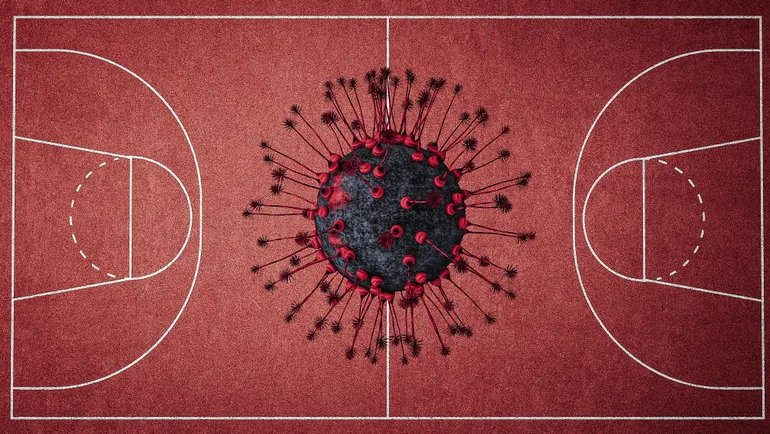
Because professional sports teams continued to play throughout the pandemic, they proved to be ideal environments for collecting high-quality longitudinal viral data. The data collected as part of that research also highlighted how RWD—gathered from patient health records, mobile devices, and elsewhere—can be used to complement traditional trial data.
"What happened during COVID, especially in the sports setting, forced us to do real public health work in a way we haven't been forced to in a long time," Mack said. "Because sports organizations invested heavily in testing, genomic sequencing, clinical management of cases, and data recording, we were able to follow patients."
Looking ahead, she believes the lessons learned and structures built from these settings can further transform future epidemiological research.
"When I look to the future and reflect on the work we've done over the past few years, what truly excites me is that we have data about populations, we have data about patients, and we can understand them well," Mack said.
The potential of RWD
In a recent report, McKinsey & Company estimated that from now through 2027, the top 20 pharmaceutical companies could,by adopting RWD strategies,potentially gain more than $300 million in additional revenue annually. Combined with increasingly diverse data sources and improved analytics, this could make the present an ideal time for RWD, and Mack believes the industry needs to be ready to embrace it fully.
"There's no question that real-world evidence plays a critical role in telling us how to make populations and patients healthier and serve patients better," Mack said. "What we need to figure out is: how do we use this data to deepen our knowledge?"
One area where she sees the greatest potential for RWD application is in rare disease trials, where patient populations are often small and geographically dispersed.
"We are on the edge of being able to make breakthroughs and learn in ways that are more relevant than ever before."
—Christina Mack, chief science officer of Real World Solutions at IQVIA
"We can't possibly enroll all those patients in clinical trials to learn everything we need to know," Mack noted, adding that collecting health record data from these patients could provide a simpler and potentially more cost-effective way to supplement trials.
It can also be used, she said, to better understand older patients who often have comorbidities and are typically excluded from clinical trial data. Her team at IQVIA is also exploring how to better use electronic clinical outcome assessments—reports directly from patients, physicians, or caregivers—to gather patient experience information.
"I think of it as giving patients a microphone, which is something you can't get from trial endpoints," Mack said. "This is a place where we can provide unprecedented value to patients."
As these possibilities with RWD continue to emerge, she credits the development of new research strategies to the convergence of fields that, not long ago, were considered unrelated. No longer the only girl in a computer science class, but now one of the few women in the locker room, Mack is excited about the road ahead for healthcare technology.
"We are on the edge of being able to make breakthroughs and learn in ways that are more relevant than ever before," she said. "The awareness is there, the technology is there, and the data is there. And what's exciting right now is that it's really moving forward."