
From Doctor to Trading Master: Uncovering David Hung's M&A Strategy
Nuvation Bio founder and CEO David Hung has repeatedly achieved success in biotech M&A through scientific rigor and financial discipline. This article analyzes his deal strategies from Medivation to Nuvation, covering asset selection, non-dilutive financing, and pipeline development.
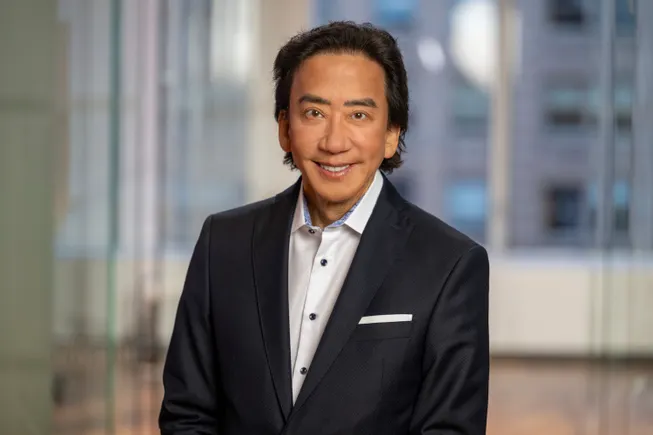
From sellingstartup Medivation to Pfizer for $14 billionto his new company's recent acquisition of AnHeart Therapeutics, Dr. David Hung is experienced in deal-making.
The founder and CEO of Nuvation Bio says that through a series of strategic moves, his oncology-focused company now has an enviable financial position.
"We are extremely well-funded at this stage," he said.
The company's first-quarter revenue exceeded analyst expectationsby nearly 26%, which is uncommon in the biotech industry, where many peers often operate on the edge of a tight cash runway.
"The rules of the game are: first, don't die; second, get to where you want to go," he said. "To get there, you need to have a certain cash runway."
Dr. Hung points out that the combination of science and financial strategy is the cornerstone of successful deals.
Although Dr. Hung was trained as a physician-scientist, as the son of a Harvard economics professor, the business and financial thinking he was exposed to early on has helped him make decisions in biotech leadership roles.
When building a biotech company, Dr. Hung relies on simple principles, such as finding the right team. But since Nuvation is built on in-licensed drugs, finding the right assets is equally critical.
"We are extremely objective about the data," Dr. Hung said. "I am passionate about the mission, but very dispassionate about the data. We try not to drink our own Kool-Aid. We make sure the science is truly compelling, sound, and rigorous."
Like many biotech companies, Nuvation also places a high priority on intellectual property rights and terms, regulatory pathways, manufacturing, and unmet medical needs.
"We will not touch projects that we do not believe are either first-in-class or best-in-class," Dr. Hung said.
The goal is to find that "diamond in the rough"—a drug with huge potential for patients, strong intellectual property, and financial soundness.
"We are very disciplined and patient," he said. They are willing to walk away from drugs that do not meet the criteria.
This strategy has paid off. The drugs from Medivation involved in the Pfizer deal have clearly proven their value. Xtandi is a global blockbuster in prostate cancer, and Talzenna, another drug approved for breast cancer, is now showing strong phase 3 results in combination with Xtandi for prostate cancer. The combination therapyimproved progression-free survival by 50%(compared to placebo).
Nuvation itself also has promising assets.The AnHeart Therapeutics dealincludes Ibtrozi (taletrectinib), a kinase inhibitor thatwas approved last Junefor non-small cell lung cancer.
"This is clearly a best-in-class asset and will become a major drug," Dr. Hung said.
He is even more optimistic about another drug, safusidenib, which inhibits the mutant IDH1 target that drives several brain tumors. In a phase 2 study in patients with a common and currently incurable brain tumor, the drug showed strong results. At 24 months,87.9% of patients with IDH1-mutant grade 2 gliomawere progression-free after treatment.
"That could become one of the most impactful oncology drugs ever," Dr. Hung said.
The company is currently conducting multiple pivotal studies of safusidenib.
But alongside the successes, there have been setbacks.A highly anticipated experimental Alzheimer's disease drug developed by Medivationfailed completely in a pivotal study, causing the company to lose $1 billion in value. This setback occurred before the successful pivot to oncology.
A multi-pronged financing strategy
Through it all, Dr. Hung has learned that many biotech companies, even with good assets, can fail because cash flow cannot keep up, so choosing the right financial path is crucial.
"Once we find (drug assets), we have to figure out how to acquire them in a way that minimizes dilution, while also finding ways to finance the development of these assets," Dr. Hung said. "The key is to extract maximum value with minimal expenditure."
Many small biotech companies have limited financing options, but Nuvation was able to strike a non-dilutive strategic deal with multiple components with AnHeart, Dr. Hung said.
"At that time, we decided that one of the most attractive options was to do a royalty financing," he said.
This included acquiring AnHeartin an all-stock deal, where AnHeart shareholders received 33% of the company's shares, with the remaining 67% going to Nuvation shareholders. This option was more attractive than cash because AnHeart's chairman was bullish on Nuvation's pipeline, Dr. Hung said.
"Now, two years later... our market cap has exceeded$2 billion. So, in the end, it was a good financial deal," he said.
Nuvation also chose to use royalty financing to fund the launch of Ibtrozi and the development of safusidenib.
"One of the most attractive options was to do a royalty financing," he said.
The company sold 5% of Ibtrozi's U.S. sales (valued at $3 billion) to raise $150 million, he said. The deal also included an additional$100 million loan. This gave them the flexibility to advance their development programs.
"I am extremely optimistic about our future," Dr. Hung said.