
What Does the FDA's Latest Batch of Complete Response Letters Reveal?
After a three-month pause, the FDA reissued a batch of Complete Response Letters (CRLs) on July 10, totaling 14 letters. According to an analysis by Pink Sheet, a Citeline publication, most rejection reasons involved product quality and facility deficiencies, with only three pointing to clinical issues. This article focuses on two of them: Ascelia Pharma's oral MRI contrast agent Orviglance was rejected due to issues with clinical image assessment methods, and Galderma's RelabotulinumtoxinA was rejected again due to facility deficiencies.
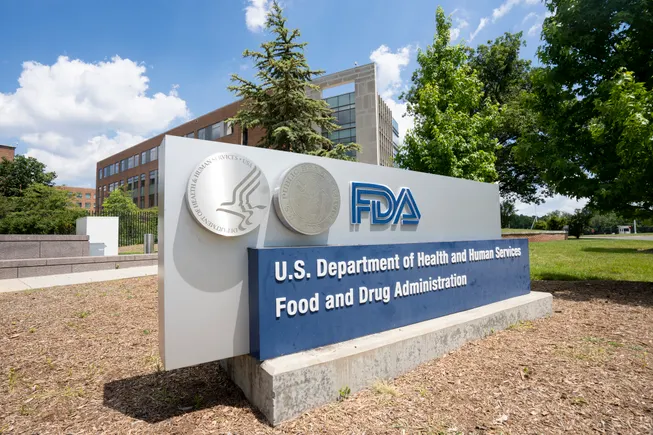
After a three-month pause, the U.S. Food and Drug Administration (FDA) has again released complete response letters (CRLs), despite lingering questions about whether these letters are being legally issued.
The reasons for FDA drug rejections are typically communicated to the public by pharmaceutical companies. But since last year, the FDA has begun publishing CRLs in large numbers as part of its "aggressive transparency" policy.
Earlier CRL releases revealed key information in high-profile rejection cases, including the FDA's insistence on a placebo-controlled trial arm for Regenxbio's Hunter syndrome gene therapy, and discrepancies between what Corcept Therapeutics disclosed to investors about its Cushing's syndrome drug rejection and what the FDA actually stated.
In contrast, among the latest batch of 14 CRLs released on July 10, most cited product quality and facility deficiencies. According to an analysis by Citeline's Pink Sheet, only three pointed to clinical issues. Some letters, such as the rejection letter the FDA sent to Grace Therapeutics for its injectable nimodipine for aneurysmal subarachnoid hemorrhage, are nearly unreadable due to extensive redactions.
This batch of letters was released shortly after the FDA confirmed it had paused its "aggressive transparency" initiative, which had been challenged by a citizen petition from an anonymous pharmaceutical company. Meanwhile, the FDA has proposed a new rule aimed at "eliminating the long-standing presumption that the existence of a marketing application constitutes confidential commercial information."
The following analyzes the FDA's reasons for rejection as revealed in two representative letters from the latest batch of CRLs.
Clinical Issues: Ascelia Pharma's MRI Contrast Agent
When Ascelia Pharma first reported earlier this month that the FDA had rejected its oral MRI contrast agent Orviglance, it only stated that the agency required additional clinical data and product documentation, offering few details.
But days after the FDA uploaded Ascelia's CRL, the company issued an "update" containing more specific rejection information, as well as responses and clarifications to some of the agency's concerns.
Orviglance is a novel oral MRI contrast agent designed to improve the detection and visualization of focal liver lesions in patients with severe renal impairment.
In the CRL, the FDA objected to the way radiologists evaluated study images. After the first set of readers did not find Orviglance to be superior, Ascelia attempted a new image reading process and brought in three new readers. The FDA believed that the re-evaluation "may have introduced bias into the training of the new readers due to their knowledge of the images and initial reading results." Based on this and other factors, the FDA determined that the re-evaluation did not meet the standards of being adequate and well-controlled.
Ascelia disputed these claims, stating that the new readers were independent, blinded, and "had no prior knowledge" of the images or previous reading results. Additionally, the company stated that the image re-read was not only conducted according to a pre-specified procedure, but that they had discussed the new approach with the FDA and incorporated the agency's feedback into the new drug application (NDA) submission.
Ascelia stated it plans to work with the FDA to "determine an accelerated path forward."
Facility Issues: Galderma's Botox Competitor
Facility-related issues were central to the FDA's rejection of Galderma's RelabotulinumtoxinA. The product, a competitor to Botox, has been approved in 33 markets and launched in more than 20, including the European Union (where it is sold under the brand name Relfydess).
Although the FDA issued a CRL, the letter contained few specific details about the rejection, merely stating that the agency "communicated facility deficiencies" after a pre-license inspection. Most other details were redacted.
Galderma's announcement earlier this month about receiving the CRL contained more information, including that the FDA cited concerns regarding "analytical method optimization." The announcement noted that none of the FDA's concerns were related to safety or efficacy.
Following Galderma's announcement of the rejection, its stock price fell nearly 6%. But the company noted that the dispute with the FDA would not affect its work in other markets, stating that "regulatory filings in other regions are ongoing and remain on track." The company also noted that since 2022, the manufacturing facility in question "has undergone 10 inspections by major global regulatory authorities, which laid the foundation for the international launch of Relfydess."
This is Galderma's second attempt to gain U.S. approval for the drug. The 2023 rejection was also due to chemistry, manufacturing, and controls (CMC) issues. Currently, the company says it is developing corrective and preventive actions and moving quickly to address the FDA's inspection observations.