
Eli Lilly leverages large pharma advantages to support emerging biotech companies
Leveraging its market-leading position, Eli Lilly and Company provides R&D support, resource connections, and strategic collaborations to biotech startups through the ExploR&D program, helping them overcome funding difficulties and accelerate the translation of scientific discoveries into medicines. The program, which evolved from the Chorus unit in 2002, has established over 90 collaborations with more than 65 biotech companies and has expanded into the Catalyze360 ecosystem, including Gateway Labs and Lilly Ventures.
No large pharmaceutical company can thrive in a vacuum. Giants like Eli Lilly grow through blockbuster product sales, but they also rely on a broad network of early-stage biotech companies to keep the innovation wheel turning.
As Lilly becomes the most valuable pharmaceutical company—becoming the first last monthto surpass a market value of one trillion dollars—it has also built an external drug discovery and development engine called ExploR&D, leveraging its big pharma capabilities to support biotech partners. With moreaccess to AI and supercomputing technologies, along with deep industry connections and platform resources, Lilly's program offers broad opportunities for early-stage research and an attractive path for biotech companies to overcome years of funding challenges.
It all began in 2002 with an autonomous unit called Chorus, initially focused on internal drug candidates. Today, ExploR&D not only supports young drug development companies but also provides Lilly with a way to keep its finger on the pulse of cutting-edge external pharmaceutical science.
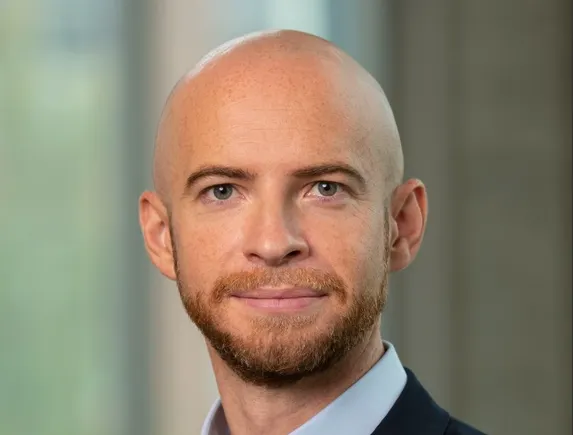
"Chorus was an experiment to explore how a large pharmaceutical company could operate like a biotech at the early stage, while recognizing that the needs of the early stage are vastly different from the late stage," said Dr. Thomas Hopkins, Vice President and Head of ExploR&D. "After applying that model to internal assets and practicing this biotech approach for several years, they realized the model was highly applicable to external collaborations."
The program's most notable success story is Lilly's first proof-of-concept for the molecule that later became the migraine drug Emgality (approved in 2018). The molecule was originally discovered by Lilly and licensed to Arteaus Therapeutics, after which Lillybrought the asset backfor clinical development.
According to Hopkins, the ExploR&D team has shown a "delightful exponential growth curve," having signed over 90 collaborations and working with more than 65 biotech companies under Lilly's Catalyze360 early research umbrella program, which also includes the co-working space Lilly Gateway Labs and the venture capital arm Lilly Ventures.
Here, Hopkins explains the origins of ExploR&D, the collaborative mindset, and why this pharmaceutical giant is uniquely positioned to help biotech companies.
This interview has been edited for length and style.
PHARMAVOICE: How did ExploR&D evolve from Chorus to its current form?
DR. THOMAS HOPKINS: The current form of expanding Chorus into ExploR&D and specifically serving biotech companies began over three years ago. At the time, we weren't sure if "we built it, would they come," but we believed we had unique capabilities to contribute and a strong desire to make bold, breakthrough science easier to translate into medicines. The Catalyze360 program launched around the time we pivoted to ExploR&D, integrating some existing resources. No one had ever attempted to use all these tools at the scale and with the resources and vision Lilly has invested, unified by the goal of helping founders advance their science.
We are still finding new ways to help—this year we announced a new addition to the Catalyze360 ecosystem, Lilly TuneLab, offering biotech companies the models we use internally for R&D. It's all about democratizing access to the tools that drive scientific progress.
How do you work with biotech companies to both achieve their vision and serve Lilly's own goals?
Our motto is "meet partners where they are." We deliberately remain flexible in the scope of our help, because it can range from limited consulting where a few people in a room solve a problem, all the way to creating multidisciplinary teams that replicate a biotech's design and execution capabilities, enabling them to operate leanly from discovery to clinical proof-of-concept. Our goal is for founders, investors, and Lilly all to be winners. This extends to risk-sharing models where we can take on economic and operational burdens while participating in some form of upside and getting priority access to data. We love having a first-mover advantage; working side-by-side with these companies and getting to know them is invaluable, so when the data cards flip, we want to be their first call.
For example, withcompanies like Insitro,we are conducting a molecular discovery collaboration. This biotech excels at creating targets but isn't necessarily a specialist in molecule creation—by licensing our intellectual property to them, we designed a model with no upfront costs, giving them access to Lilly-quality molecules while we share in the upside through limited back-end economic participation as the molecules advance.
How has Lilly's recent market success in weight-loss drugs fed back into this program?
A rising tide lifts all boats; we are in a privileged position to participate at the earliest, highest-risk stages. These are tough times for the biotech industry, and the biggest need right now is precisely in an environment of constrained capital, rising costs, and increasing complexity. We want to help companies pursuing bold ideas not just survive but thrive. Why should a company that excels at discovery science have to build from scratch what Lilly has optimized over 150 years, with 10,000 R&D professionals working on it daily? That scale and connectivity, if deployed into the innovation ecosystem, brings tremendous advantages.
Another unique part we added to the model is strategic agreements with hundreds of suppliers, which doesn't sound glamorous. But biotech companies can easily waste three to six months in the contracting phase. This is one way we think about providing value and empowerment to companies that need it.
Please explain how ExploR&D screens the science worth pursuing, separating the wheat from the chaff.
We are designed for broad coverage. Lilly certainly has its current therapeutic area focuses, and we are absolutely interested in those. But by design, we want to focus on future assets, platforms, and indications. Companies don't have to be within our focus areas to participate. There are also no barriers to entry, and we see the greatest opportunities for downstream benefits often at the very early stage. We work with companies from academic spin-out stage to post-IPO. We first ask: What do you need? What problem are you facing? We want companies to come to us with a problem statement, and if we are confident we can solve it, then we get to know their science, and our involvement typically increases over time.
Can you give an example of this model in action?
One of the first collaborations we signed when creating this new model was with Paradox Immunotherapeutics, whose CEO, Natalie Galant, is a brilliant first-time founder coming from postdoctoral research on breakthrough science around misfolded proteins. We had the privilege of getting involved at a very early stage, helping create molecules for their lead program and working together to bring it to patients. That culminated about nine months ago in a successful public funding round. Insitro is another example—they came to license our technology to help with oligonucleotide therapeutics and to develop a pharma-grade antibody candidate from their platform.
Given reduced public funding for early-stage science in the U.S., is this a private solution that can help fill some of the gap?
At any moment in biotech history, this model would have huge demand. The current ecosystem faces multiple challenges, including access to capital, soaring costs, and the fact that the low-hanging scientific fruit has been picked. Even medium-difficulty fruit is more complex and multi-component. So, how do we keep the pace of science moving forward in the face of this complexity? I believe the engine we have created is a way to overcome this obstacle and accelerate into the future.