
BeOne, with Brukinsa, tops the blood cancer field—can it achieve further glory?
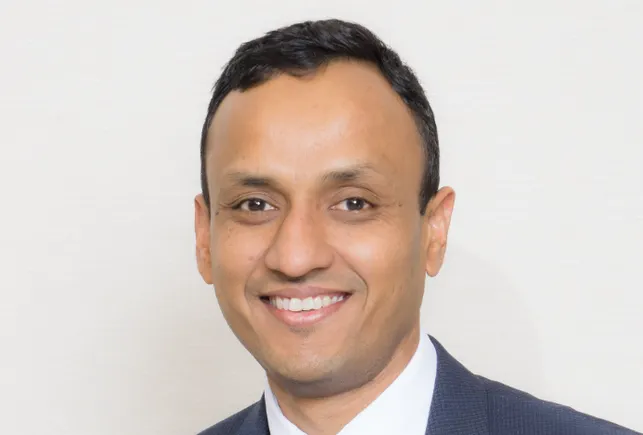
BeOne's blockbuster drug Brukinsa has performed strongly in the blood cancer market, surpassing competitors in both clinical trials and sales. The company is advancing next-generation therapies such as sonrotoclax and accumulating long-term data, with the goal of providing functional cures for patients. This article is an excerpt from an interview with Dr. Amit Agarwal, Chief Medical Officer of Hematology at BeOne.
BeOne's blockbuster drug Brukinsa is making waves in the blood cancer market, in clinical trialssurpassingstrong competitors like Johnson & Johnson and AbbVie's Imbruvica, andin salesleading AstraZeneca's Calquence.
For BeOne, this is just the beginning. The drugmaker, which originated in China and last yearrebrandedas a Swiss company, is striving to make a greater impact in the highly competitive leukemia and lymphoma treatment space with a pipeline of candidates expected to follow Brukinsa.
The highly anticipated sonrotoclax accelerated approvalcould come by mid-next year, part of a wave of moreeffective therapies. Brukinsa works by inhibiting the BTK protein to stop blood cancer from spreading, while sonrotoclax takes a different approach, acting in a more potent and selective manner.
The focus on B-cell malignancies such as chronic lymphocytic leukemia and small lymphocytic lymphoma puts BeOne in fierce competition with large pharmaceutical companies. The company is compiling long-term results for Brukinsa while preparing pivotal studies for sonrotoclax's accelerated approval.
Additionally, earlier-stage candidates may also offer first-in-class potential.
Here, we spoke with Dr. Amit Agarwal, Chief Medical Officer of Hematology at BeOne, about the challenges and opportunities in blood cancer, the company's unique positioning as an oncology-focused drugmaker, and the clinical trials driving innovation in hematology.
This interview has been edited for length and style.
PHARMAVOICE: First, how do you view the current state of the blood cancer treatment landscape? How have the main forces driving the field changed compared to a few years ago?
Dr. Amit Agarwal: The progress has been quite remarkable. Looking back at the treatment landscape for many blood cancers 10 or 15 years ago compared to today, several factors have contributed to this change. First, blood cancers are often easier to study because tissue samples are readily accessible. In terms of treatment, the results from technology have been impressive—from the small molecule inhibitor revolution in the era of Novartis's Gleevec to the use of cell therapies and biologics. Regulatory aspects have also driven these advances, especially in accepting surrogate endpoints. Clearly, there is still work to be done, but much progress has been made along the way.
What are the biggest challenges in the coming years?
The next major challenge or wave may be moving toward functional cures—either keeping patients on maintenance therapy or giving them a normal lifespan. We are close in some areas, but there is still a huge unmet need. Take acute myeloid leukemia, for example; there has been progress, but outcomes have not improved enough. So, certain disease subtypes have not seen the same level of improvement; and in areas where we have seen efficacy, we are beginning to bring patients closer to a normal lifespan and quality of life.
BeOne is highly focused on B-cell malignancies. What are the specific challenges in this area?
With Brukinsa, we have had a tremendous impact on B-cell malignancies across five different indications. It has become a backbone therapy in several diseases, stemming from a deep understanding of the biology. But we need to look at these patients over six, seven, eight years long-term to truly understand the impact. Brukinsa has allowed us to do that in diseases like chronic lymphocytic leukemia.
We have all the assets needed to make progress in the overall blood cancer space, which puts us in a unique position. From Brukinsa as a foundational treatment, to sonrotoclax with broader indications, to degrader agents, we are able to build on our knowledge and expertise.
You mentioned the overall goal of long-term survival. Can you tell us about the Sequoia trial in patients with chronic lymphocytic leukemia or small lymphocytic lymphoma?
Sequoia is a study with a median follow-up of six years, where we look at how patients are doing over the long term. We look at disease progression events and also at subsequent lines of therapy. If we can get elderly patients through the remainder of their natural lifespan, that would be a very powerful result. Most importantly, pointing out the consistency of the results, we are beginning to see the advantage become more pronounced.
Brukinsa is one of the few BTK inhibitors on the market, and in the Alpine study you compared it head-to-head with the original drug—Johnson & Johnson and AbbVie's Imbruvica. What opportunities were you trying to capture?
The key point of the study design was that Imbruvica was considered the standard of care at the time, and we wanted to prove head-to-head that Brukinsa was superior. We have demonstrated that, which also speaks to the importance of choosing the right BTK inhibitor for patients.
What makes one BTK inhibitor better or more effective than another?
It goes back to pharmacology. In B-cell malignancies, continuous inhibition is crucial. The biggest challenge with Imbruvica is off-target effects because it inhibits many other proteins besides BTK. Brukinsa is much 'cleaner,' which is why it has become the leading BTK inhibitor.
Sonrotoclax is BeOne's lead pipeline candidate. Can you talk about its performance as a monotherapy in mantle cell lymphoma, especially in the current treatment landscape?
This is the first time we are disclosing results in mantle cell lymphoma. From an accelerated approval perspective, the patients enrolled have typically received all available standard treatments. In this context, we are encouraged by the results—high response rates, with multiple patients achieving complete responses with good durability. For patients with limited options, this could be an important option. The FDA has granted it Breakthrough Therapy designation and Priority Review, which is external validation of our belief—we believe it will become a very important treatment option for MCL patients.
With that potency comes certain toxicity challenges. How are you addressing these in discussions with regulators ahead of the decision next year?
Sonrotoclax is much more potent than another BCL-2 inhibitor (AbbVie and Genentech's Venclexta), but it is also more selective and has a shorter half-life. These two points make it safer than Venclexta, and the data from over 2,000 patients treated confirms this. Unfortunately, in these types of studies, if a patient dies—even if related to disease progression—it is not uncommon and is recorded as a treatment-emergent death. Regulators are familiar with this standard reporting method, so they can clearly distinguish between deaths related to disease progression and those related to treatment.
That reflects the difficulty of this therapeutic area. Now, you are also combining Brukinsa and sonrotoclax in CLL and SLL. Why are they a good combination?
There is very interesting science behind this. Brukinsa effectively drives cancer cells out of their 'hiding' microenvironment (such as lymph nodes or bone marrow), pushing them into the peripheral blood, where sonrotoclax exerts its killing mechanism. The data show that patients achieve minimal residual disease negativity faster than with any BTK and BCL inhibitor combination, so it could become the backbone of future CLL treatment.