
The New Normal of Biotech Investment: What This Investor Focuses On
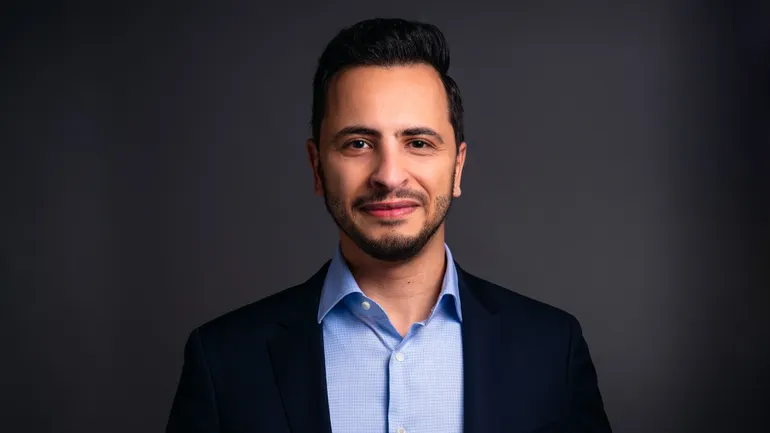
Biotech investment is entering a new normal after the capital influx of 2021 and the downturn of 2022. Mubadala Capital Partner Ayman AlAbdallah states that investment should be based on fundamentals rather than chasing trends, emphasizing platform companies that address major problems, and noting that precision oncology and AI applications in drug development are areas deserving more innovation.
After the dramatic downturn following the pandemic, the biotech industry has returned to a stable state. According to a survey released by Global Data in March, a growing number of healthcare professionals are optimistic about market recovery this yearfeeling optimistic. However, the scars left by recent market volatility remain.
In 2021, a large amount of capital flowed into the biotech sector, but many overvalued companies failed to achieve key milestones, leading to an industry downturn the following year. Now, with macroeconomic pressures such as high inflation and high interest rates looming, investors have become more discerning.
In this new normal, which technologies and companies are attracting market attention? For Ayman AlAbdallah, a partner at Mubadala Capital, choosing investment targets is not about following the "wave" of investment trends, but rather adhering to sound fundamentals.
"We invest in areas where there is unmet need and where companies have a clear regulatory path," said AlAbdallah.
Mubadala Capital manages over $24 billion in assets across industries, with approximately 45 companies in its life sciences portfolio. Its emerging investments include AI-focused Recursion Pharmaceuticals, which uses multiple datasets to map human biology and identify new drugs for various diseases. Currently, the company has five drugs in clinical stages and has set a goal ofidentifying 100 drug candidateswithin 10 years.
"We are interested in investing in companies that solve major problems."

Ayman AlAbdallah
Partner, Mubadala Capital
Mubadala has also invested in another AI-focused startup, Iambic Therapeutics, which aims to accelerate drug development through a platform applicable to multiple therapeutic areas. Currently, Iambic has advanced one of its internally discovered drug candidates—atyrosine kinase inhibitor targeting HER2 and HER2 mutations—into Phase 1 clinical trials.
Here, AlAbdallah shares his views on market recovery and the therapeutic areas where he hopes to see more innovation.
This interview has been edited for brevity and style.
PHARMAVOICE: How do you assess the current biotech investment market?
AYMAN ALABDALLAH:We continue to be excited about investing in the biotech and healthcare sectors, driven by strong developments occurring month over month and quarter over quarter, as well as the progress demonstrated by the data generated.
The market is showing good signs of recovery, stemming from sustained investor interest in healthcare, continued momentum in partnerships driven by strong fundamentals, and compelling data generated by technologies and licensed companies in the field.
What unique factors do you look at when deciding which companies to invest in?
We are interested in investing in companies that solve major problems. For example, you can see in our portfolio companies that use platforms to map a dimension of biology and then develop therapies for highly unmet needs in one or more areas. Platforms and technologies are tools that can accumulate value, but the ultimate proof lies in clinical outcomes.
We also invest at the company formation or concept stage. Our sweet spot is late preclinical or early clinical stage. We always keep our finger on the pulse of science and research.
Most investors seem more interested in late-stage assets. Why do you prefer early-stage companies?
I like early-stage companies because the technology platforms they are advancing can generate data faster than traditional manual laboratory methods and can map new dimensions of biology that traditional bioassays cannot track.
But in reality, our investments are a mix of early-stage formations, preclinical companies, and some clinical-stage companies. We work closely with management teams to help them diversify and manage risk across their pipelines. So, when building a portfolio, we consider all these factors together.
In which areas have you not yet invested but would like to?
The lens I take is: where is there high unmet need, and where is the industry underinvesting in solutions? I would highlight precision oncology as an area where we would like to see more companies and innovation.
Most oncology drugs currently in development still have room for improvement in response rates. We still face toxicity issues and suboptimal efficacy, stemming from tumor heterogeneity that we cannot control, but what we can control is developing drugs that account for this, as well as tools that can apply drugs to high-response-rate populations.
Another area is the application of AI in drug development. While AI companies are innovating the way we discover and develop drugs, I still see a weakness in our workflow: the animal models used for testing do not translate to humans. This is the weakest link in the entire chain.
At this year's BIO convention in San Diego, you participated in a panel on extending cash runway and discussed strategic milestone planning. Do companies typically not use this strategy?
I think most companies do use it. Another very critical topic, especially for early-stage companies, is prioritizing pipeline positioning to generate datasets and leveraging partnerships to attract investor interest. This is a series of decisions in the early stages of a company that have a substantial impact on the future of the business.
We roll up our sleeves and work with management teams to sift through different clinical data and potential scenarios or possibilities to prioritize the right programs.
This strategy is crucial for startups to alleviate financial constraints brought by the macro market, with a focus on concentrating on the most advanced candidates closer to the value inflection point. Second is targeting high-value therapeutic indications. Third is considering synergies within the pipeline, whether in underlying biology or modality. Last but not least, adopting creative structures, such as in-licensing or out-licensing assets.
Some biotech leaders believe that companies should diversify their pipelines to spread risk. Others argue that companies should focus on their strengths and specialize in one area. What is your stance?
It depends on the situation, and my view is a combination of both approaches.
The traditional view of building a pipeline by therapeutic area is good, but nowadays, platform technologies allow underlying disease biology to span across traditional therapeutic areas, covering multiple fields, as well as across different modalities. At the same time, there is a risk of companies overextending beyond their expertise. Therefore, our preference is not a binary outcome or a single asset, but deep specialization in underlying biology.
Are there any clinical data readouts you are eagerly anticipating this year?
Personally, I look forward to the data readout from Biogen's lupus trial (for dapirolizumab pegol), which is in Phase 3. This is a disease area that affects many patients, including many people I personally know, and is an area of high unmet need, so I am pleased to see progress there.