
Avian flu outbreak pushes BARDA back into the spotlight
As H5N1 avian flu cases slowly increase, the U.S. government has injected $176 million into Moderna's mRNA vaccine program. BARDA Director Gary Disbrow explains that the program began in October 2023 and is not a direct response to the current outbreak. Over its 15 years, BARDA has facilitated 61 FDA approvals, invested approximately $1.6 billion to address antimicrobial resistance, and supported companies of various sizes through multiple pathways. This article also explores how companies can partner with BARDA and its emphasis on platform technologies.
Earlier this month, the U.S. government's Biomedical Advanced Research and Development Authority (BARDA) provided Moderna's avian influenza vaccine development program with$176 million in fundingto support the development of mRNA-based influenza vaccines.

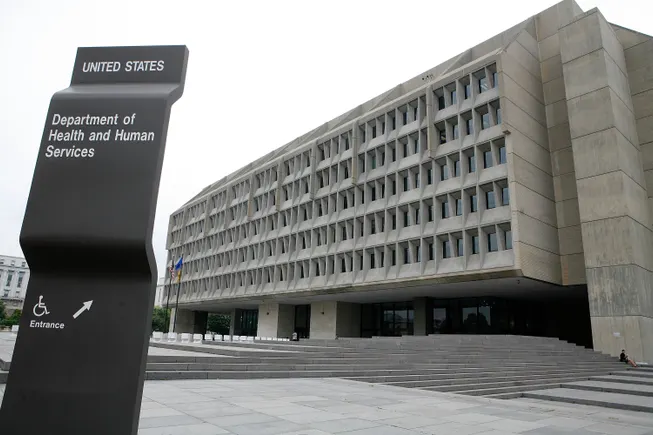
AsH5N1 avian influenza casesslowly rise in number, this funding comes from the Biomedical Advanced Research and Development Authority, part of the U.S. Department of Health and Human Services (HHS). The H5N1 influenza strain has been spreading amongcattle and poultry in the United States, and recent human infections have raised concerns in the scientific community. But the surprising cow-to-human transmission event is not the reason BARDA is funding Moderna.
"Many people think we are responding to the H5N1 outbreak," said BARDA Director Gary Disbrow. "But in reality, this work began in October 2023."
This funding is part of BARDA's long-standing mission to collaborate with the private sector in developing medical countermeasures for public health medical emergencies.
"Congress has tasked us with supporting advanced research and development innovation, FDA licensure approvals, and procuring products to address national security threats," Disbrow said.
Since its founding 15 years ago, this mission has kept BARDA at the forefront of major U.S. public health events. Throughoutits history, BARDA has achieved numerous milestones, including 61 FDA approvals, an Ebola vaccine and two treatments, approximately $1.6 billion in investments for products addressing antimicrobial resistance, and more. Although BARDA makes headlines when well-known companies receive funding for high-profile diseases like avian influenza, its mission extends far beyond that. And part of Disbrow's job is to convey that message to potential industry partners.
"Many people don't understand what BARDA is or how to work with BARDA. BARDA has multiple funding pathways, covering startups, mid-sized companies, and large enterprises," Disbrow said. "Most outside companies don't know how to get started, how to make initial contact with the federal government."
"People always talk about 'one pathogen, one drug,' which is a very expensive approach. What we are trying to build is rapid response capability."

Gary Disbrow
Director of BARDA
With the latest funding to Moderna, BARDA aims to enhance preparedness against H5 influenza viruses, including the H5N1 strain causing the current livestock outbreak. The funding supports the development of mRNA-based seasonal and pandemic influenza vaccines.
This is also an example of BARDA supporting platform technologies that can adapt to different disease strains. "As a preparedness organization, we are very focused on how to leverage the success of mRNA vaccines and expand it, so that we can have another option alongside vaccines based on egg, cell, and recombinant technologies," Disbrow said.
The funding to Moderna is notable, but most BARDA grants are much smaller. BARDA works with companies of all sizes through various pathways. These include theBlue Knightprogram, a joint collaboration between BARDA and Johnson & Johnson's life sciences incubator JLABS, aimed at supporting startups focused on public health threats and emerging infectious diseases.
"We have supported 46 companies," Disbrow said. "Additionally, these companies have raised over $933 million in follow-on investment from private equity because the government de-risked the early stages of product development. Some of these products have successfully reached the market."
Other opportunities includeBARDA Venturesand theBiopharmaceutical Manufacturing Preparedness Consortium, which focuses on countermeasures for anthrax, botulism, radiation poisoning, and other emerging threats.
For companies hoping to work with BARDA, the first step is to apply for a "TechWatch" meeting, so that BARDA, along with other agencies at HHS and the Department of Defense, can evaluate their technology.
"They can share confidential business information with us, and we will provide honest feedback," he said. "Our interagency colleagues will also be present, because if the technology is not a fit for BARDA, we want to ensure they can access other potential funding pathways."
Here, Disbrow further explains how companies can work with BARDA and what they hope to gain from the pharmaceutical industry.
This interview has been edited for length and style.
PHARMAVOICE: Beyond funding, why would companies want to work with BARDA?
GARY DISBROW:Whether you receive a grant of less than $1 million or more than $100 million, we bring our scientific, clinical, non-clinical, regulatory, and manufacturing experts to establish a partnership with the company to maximize its chances of success.
Often the funding is less than $1 million. But for companies with truly innovative technology, this funding can support them in completing a trial they might need to apply for Series A financing, thereby truly attracting private sector attention.
We not only provide non-dilutive capital. We build partnerships. The U.S. government gains access to the technology, and we are able to work with these companies to improve their overall chances of success and ultimately hope to obtain a product that can be available to the American public when needed.
During the COVID-19 pandemic, interest in infectious diseases surged. Is this area still attractive to companies, or is it waning?
I think it has waned in several respects. There is some vaccine fatigue among the public. As people see the global COVID market shrink, private equity investment has decreased. The demand for staying vaccinated is not as high as we would like.
But it is precisely for this reason... we received $5 billion in support to establishProject NextGen, in collaboration with NIH. They work with us to support the development of next-generation COVID vaccines and therapeutics, as well as what we call 'enabling technologies.' This is not 'Operation Warp Speed.' We do not have enough funding to take a project from start to finish and then have the U.S. government purchase it. But some of the most expensive and highest-risk aspects these companies face are clinical trials. So, the U.S. government will de-risk those clinical trials.
What else does BARDA want from the pharmaceutical industry?
People always talk about 'one pathogen, one drug,' which is a very expensive approach.
What we are trying to build is rapid response capability, so that we can not only be prepared, but also quickly respond to any threat that emerges... and invest in technologies and platforms. I know people have different interpretations of 'platform.' These refer to vaccine technologies, new therapeutic manufacturing technologies that can be quickly used to respond to emerging threats.
Because again, the fastest response is having an FDA-licensed product. We learned this through Ebola,mpox, and other emerging infectious diseases we have had to face. If we do not have these products, we will not have time to complete all the foundational research and development through traditional pathways. [For example] the Ebola vaccine, which was the first licensed vaccine... we supported it with Merck and interagency and global partners, and it is a platform. It is a viral vector expressing the Ebola Zaire glycoprotein. We hope to take the glycoprotein from Marburg or Ebola Sudan, replace the Zaire glycoprotein, and thus obtain a vaccine against Marburg or Sudan.
This vaccine technology can serve as a platform. The safety of this vaccine is well known, with hundreds of thousands of people vaccinated globally, and the manufacturing process is controlled. So, when you swap the glycoprotein, you can hopefully leverage the established safety and manufacturing processes.