
The Enhertu Effect: How Daiichi Sankyo Is Building Its Oncology Landscape Around a Core Product
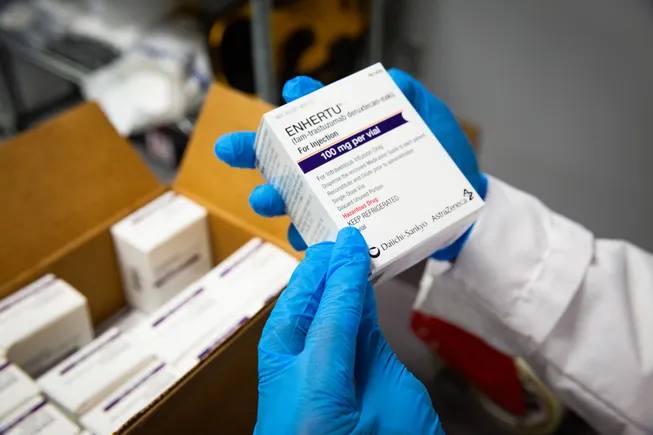
Daiichi Sankyo is experiencing the 'most exciting moment' in its century-long history. With the blockbuster ADC drug Enhertu, developed in partnership with AstraZeneca, the company has established a leading position in the antibody-drug conjugate field and plans to achieve its goal of ranking among the global top-10 oncology companies ahead of schedule through multiple new drug approvals and collaborations.
Ken Keller, CEO and President of Daiichi Sankyo's U.S. business and head of global oncology, said this is a "unique and most exciting moment" in the company's century-long history.
With the help of partner AstraZeneca, the blockbuster oncology drug Enhertu has achieved great success. In October this year, the company announced a deal with Merck & Co. valued atup to $22 billionWith multiple new drug approvals potentially coming this year, Daiichi Sankyo is on track to achieve its stated goal of becoming an oncology powerhouse ahead of schedule.
The company was born in 2005 from the merger of two Japanese pharmaceutical companies—Sankyo Co. and Daiichi Pharmaceutical Co. Keller noted that for most of its history, the company's business was "centered on cardiovascular diseases." Today, as Japan's second-largest pharmaceutical company, its diversified pipeline also includes vaccines, migraine drugs, and other areas.
In 2020, Daiichi Sankyo formally entered oncology with Enhertu (for HER2-positive unresectable or metastatic breast cancer) and set a goal of "becoming one of the top ten oncology pharmaceutical companies globally within ten years."
"Starting from zero, this was an ambitious aspiration," Keller said. "Five years later, we have changed the way cancer is treated."
The company's core technology is its proprietary antibody-drug conjugate (ADC) platform—DXd, which has been used to develop six drug candidates targeting various cancers. Since its initial approval for breast cancer, Enhertu has received approvals for multiple HER2-related indications, includingin April 2024granted by the U.S. FDAthe first ADC tumor-agnostic indication。
Daiichi Sankyo and its development and commercialization partner for Enhertu, AstraZeneca, recently also announced positive topline results from a Phase III clinical trial in patients with HER2-low expression. The companies stated that the results showed "statistically significant and clinically meaningful benefit" in progression-free survival, which could advance the ADC to earlier lines of treatment.

Meanwhile, the company has three key PDUFA (Prescription Drug User Fee Act) review dates within the next nine months. In June this year, the FDA will rule on aHER3-targeted therapyfor non-small cell lung cancer, which is now part of the company's three-drug collaboration with Merck. Additionally, the FDA is scheduled to make decisions on the TROP2-targeted ADC developed jointly by Daiichi Sankyo and AstraZeneca—first with a review for non-squamous non-small cell lung cancer in December this year, followed by a review for breast cancer in January 2025.
Keller said that if these approvals materialize, Daiichi Sankyo could achieve its "top ten oncology company" goal byfiscal year 2026.
Competition is equally fierce. As ADCs have become one of the hottest areas in the pharmaceutical industry, Pfizer acquired the ADC specialist company Seagen last year for$43 billionHowever, according to GlobalData analysis, Daiichi Sankyo is expected to continue dominating the ADC market through2029based on peak sales.
The following is Keller's discussion on Enhertu's growth prospects and the potential for ADCs to become curative cancer therapies in the future.
This interview has been edited for brevity and style.
PHARMAVOICE: Enhertu's sales doubled last year from approximately $1.25 billion in 2022 to $2.5 billion. Please discuss the drug's long-term prospects.
KEN KELLER:We currently have five approved indications. We just announced positive results from a pivotal trial, which will be another indication—a fairly remarkable potential indication in the HER2-low space. The study evaluated using it instead of chemotherapy rather than after chemotherapy, and we also demonstrated efficacy in the HER2-ultralow population.
Looking at breast cancer, HER2-positive accounts for about 20% of cases, HER2-low accounts for about 50%, and if you include ultralow expression, we have the potential to help nearly 90% of women with breast cancer. This could be the most impactful drug ever in breast cancer. That gives you an idea of where this program is heading.
Enhertu has been a major contributor to Daiichi Sankyo, but is the company overly reliant on this single drug for future growth?
Enhertu is the cornerstone of everything we do. Currently, we are developing ADCs in collaboration with Merck and AstraZeneca, two additional DXd therapeutics have entered clinical stages, and we are also leveraging our leadership in the ADC field. We are developing second- and third-generation therapeutics.
We have a clear ten-year growth period, and we hope our technology will continue to advance and improve.
Are there any significant new collaboration plans in the future?
It depends on the specific molecule or ADC. If we believe a drug is only suitable for a few indications, we can advance it independently. If a drug has the potential to be used in a dozen different cancers, we consider how to develop it as quickly as possible and benefit as many patients as we can.
I've been working here for about 10 years and was the first employee in the oncology business. In 2015, we had only one oncologist—now the oncology division has more than 2,000 employees. We are much stronger now, but we know we must remain open to collaboration.
A major criticism of emerging oncology technologies is that the blockbuster drugs pharmaceutical companies launch often only extend patients' lives by a few months. Do you have development programs aimed at improving the efficacy of ADCs?
This is what makes the DXd platform unique. In Enhertu's first indication, we compared it with Genentech's Kadcyla, and what we delivered was not months of extended survival—but years. In second-line breast cancer, we added 28 months of progression-free survival, compared to 6 months in the control arm.
When I started the oncology business within the company, you couldn't find a drug with more profound benefit than this. But two things will bring change in the future.
First, we will move into earlier stages of disease, intervening earlier with potent drugs.
Second, we will move into combination settings with immuno-oncology drugs like Keytruda. We started with monotherapy in late-stage disease. As we move earlier and examine the potential of combining ADCs with immuno-oncology, we believe this could change the treatment landscape.
In earlier stages and in adjuvant or neoadjuvant settings, the goal is cure.