
AstraZeneca Oncology Head: AI Holds Promise to Crack the 'Postcode Lottery' Dilemma in Cancer Care
Amid persistent health inequities, AstraZeneca is leveraging AI collaborations and screening programs to tackle the 'postcode lottery' problem in cancer care. Mohit Manrao, its U.S. oncology head, notes that innovation has outpaced equitable access, and AI could help reveal disparities and improve screening and accessibility through data. However, he also stresses the need to guard against algorithmic bias and ensure AI fairness through diverse biological samples and community partnerships.
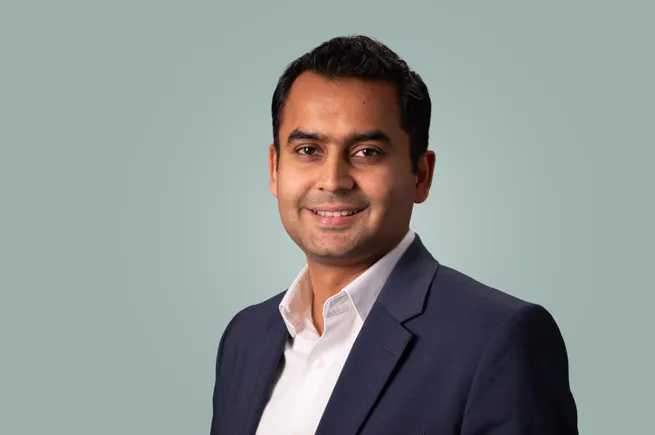
Artificial intelligence is playing an increasingly important role in the strategies of large pharmaceutical companies to achieve more equitable health outcomes. For AstraZeneca, a series of AI-based collaborations and screening programs are laying the groundwork for collecting and utilizing data on cancer patients in neglected postal code areas.
Mohit Manrao, Senior Vice President and Head of U.S. Oncology at AstraZeneca, stated that the current pace of innovation has outpaced the advancement of health equity, leading to a widening gap in oncology care between patients who have access to new drugs and those who do not.
The National Cancer Institute (part of the NIH) notes that in many cancer types, African Americans have higher mortality rates than any other racial group. Additionally, those without access to healthcare are more likely to be diagnosed at later stages of the disease, facing higher mortality risks.
"Science is advancing so rapidly, but the work doesn't end there," Manrao said. "The challenge we face at the local level is that the gap is widening, and more people are being left behind. Everyone in the system has good intentions, but it's important that as an industry, we seize the opportunity to work together to solve this problem."
Manrao believes AI is one of the most promising opportunities to improve health equity. Through collaborations with diagnostic device manufacturers and AI companies, AstraZeneca aims to use data to reveal gaps in care and address the screening and accessibility issues that exacerbate these disparities. Manrao stated that AstraZeneca's mission extends beyond developing blockbuster oncology drugs like Enhertu—initially approved in 2019 for breast cancer and recently granted new expanded indications—AI can help identify patients who need these medications.
"Our secret—which isn't really a secret—lies in external collaboration. For us and for anyone who wants to make a difference for patients, the key is that we cannot work in silos."
—Mohit Manrao, Head of U.S. Oncology at AstraZeneca
"There's no reason why a Black breast cancer patient in New York should have different outcomes than a white woman in California or Atlanta—the 'zip code lottery' still exists today," Manrao said.
Here, Manrao discusses the impact of data-driven AI in understanding and mitigating cancer care disparities, the partnerships AstraZeneca seeks to bring in AI, and how feedback loops can help drive more equitable R&D outcomes in the future.
This interview has been edited for brevity and clarity.
PHARMAVOICE: How do you assess AI's impact on patients, particularly from a health equity perspective?
Mohit Manrao:The availability of data has grown exponentially in many areas, including patient-level genomic data, multi-omics data, and customer interaction data. Likewise, science, technology, and data are rapidly converging, which gives us confidence that we can impact patients at multiple levels. From a health equity perspective, beyond our core business in biopharmaceutical innovation, we want to start examining the entire patient journey and asking new questions: Are patients being screened? What are the risk factors? Are they going to screening centers? Are they being followed up promptly at appropriate intervals within the system to enable early detection?
Due to social and economic determinants of health, we need to take individualized interventions tailored to the specific barriers of particular patients.
Since AI is trained on historical cases, bias often seeps into algorithms. How do you advance AI so that it truly drives progress rather than maintaining the status quo?
This is a very important question. Being aware of the biases that can enter the system and building checks and balances around them helps us examine health equity. Across the pharmaceutical value chain, this starts with inclusive R&D. The drugs we develop are based on biological samples, and we are working to create diverse biological samples that represent the populations we serve. Of course, we cannot do this alone. Therefore, working at the grassroots and community level to incorporate these diverse biological samples into drug development helps ensure patient recruitment meets these goals.
For example, in a clinical trial conducted in a New Jersey community where African Americans make up 18% of the population, we partnered with them to ensure not only that we recruited 18% of subjects from that community, but also that we could help dig deeper and collect data. All of this helps AI make predictions without bias.
Your AI strategy relies heavily on partnerships. In the AI boom, how do potential partners stand out?
When ChatGPT emerged, it shook the world in a visible way, but we have already been applying AI to different parts of the value chain. We have over 700 data scientists who are AI experts, distributed across everything from early drug discovery to development, commercial organizations, and operations. We encourage them to work with a partner-seeking mindset—we cannot move forward alone. Therefore, finding partners whose capabilities, values, and vision align with ours in transforming cancer care is crucial. For example, there are numerous challenges in the early detection space. If we identify difficulties in tissue-based testing, we collaborate with blood-based testing companies to explore how to improve their methods. This led to our partnership with Grail in this area.
Companies like Qure.ai can use technology to detect lung nodules on X-rays that are invisible to the naked eye, while companies like Clinithink have natural language processing technology that can read electronic medical records. These are important steps.
Meanwhile, take lung cancer as an example—lung cancer screening has been approved in the U.S. since 2013, but a decade later, screening rates remain as low as 5% to 6%. Socioeconomic factors are barriers to lung cancer screening, and we partner with the Association of Community Cancer Centers to understand and work with local communities, using this rich data to identify areas where problems are concentrated, such as lung cancer screening programs in rural Appalachia, Kentucky.
Similarly, we just announced a collaboration with the University System of Maryland across counties in the state to identify high-risk populations. These academic and community institutions play a vital role in the data collection process.
As you collect data, how does this data feed back into the drug discovery and development process?
Putting patients at the core of drug discovery and development is essential. All this data reveals to us, in many ways, the true unmet needs of patients, and the bigger picture is that we want to eliminate cancer as a cause of death. By understanding the causes of disease progression in these datasets, and by identifying patients earlier, we guide R&D. For example, the partnership with Grail not only helps us identify patients but also allows us to examine the data to determine which patients in that group are high-risk and what interventions they need. Therefore, this is integrated into the internal value chain.
Our secret—which isn't really a secret—lies in external collaboration. We don't shy away from partnering with the right allies. For us and for anyone who wants to make a difference for patients, the key is that we cannot work in silos.
