
How Biotech Executives Can Leverage Big Pharma Experience to Advance tRNA Therapies
Michelle Werner is currently CEO Partner at Flagship Pioneering and CEO of Alltrna, having previously held positions at Bristol-Myers Squibb, AstraZeneca, and Novartis. She is leading Alltrna in advancing tRNA therapies, a platform with the potential to treat thousands of diseases, though it has not yet entered the clinical stage. Werner combines her personal experience with rare diseases and pharmaceutical expertise to drive the company's growth.
In the biopharmaceutical field, Michelle Werner is a leader who combines macro-level vision with micro-level insight, capable of navigating venture capital while delving into scientific details.
She currently serves as CEO Partner at Flagship Pioneering, a leading biotechnology venture capital firm, while also holding the role of CEO at Alltrna, a preclinical biotech company backed by the firm. Previously, her career spanned major pharmaceutical companies including Bristol Myers Squibb, AstraZeneca, and Novartis. After joining Alltrna in 2022 to enter the biotech startup space, Werner now stands at the forefront of leveraging tRNA biology to develop novel therapeutic modalities.

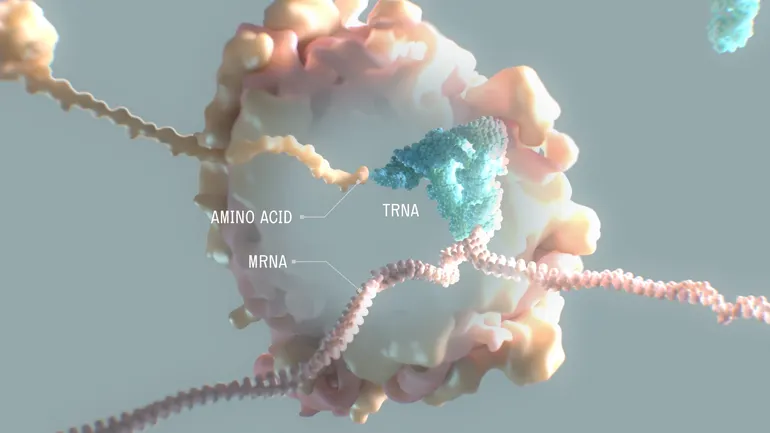
After completing a $109 million Series B financing round in 2023, Alltrna is preparing to advance its "most promising" molecules into the clinical stage, using the raised funds for next steps. The company's platform revolves around transfer RNA (tRNA), which is involved in translating genetic instructions into proteins.
According to the company, many diseases "stem from the same type of nonsense mutation, where an amino acid-coding mutation changes into a 'stop' codon." Alltrna states that tRNA therapies could work by reading through stop codons and delivering "the required amino acid, thereby restoring production of full-length proteins."
Alltrna claims its tRNA technology platform has the potential to "treat thousands of diseases," but the potential of this emerging therapeutic category has yet to be validated clinically. Alltrna has also not disclosed its initial disease targets.
"We haven't yet defined which diseases will be in the first basket of indications," Werner said. "However, we are formulating tRNA with lipid nanoparticles as part of the first program."
Werner said Alltrna will explore rare genetic liver diseases among its first set of diseases, aiming to validate the company's concept. Although the preclinical platform differs from Werner's big pharma background, her personal experience with rare diseases and her understanding of the pharmaceutical industry may be key to her leadership success.
Here, Werner—a 2023 PharmaVoice 100 honoree—reflects on her extensive career and how her work experience and personal familiarity with rare diseases have influenced her journey in the startup space.
This interview has been edited for length and clarity.
PHARMAVOICE:Compared to your executive roles in big pharma, what is the biggest difference for you as a leader in heading a preclinical platform like Alltrna?
MICHELLE WERNER:At the end of the day, what excites me most is the opportunity to put innovative science into practice and achieve breakthroughs along the way. That's what we're doing here. We're currently a preclinical-stage company, but that doesn't matter because these elements are already in place. We have abundant resources in this regard. This is similar to some of my experiences in late-stage drug development and commercial roles.
What was your "why" for joining Alltrna?
My personal connection to the rare genetic disease space is a huge driver. When my son was diagnosed with Duchenne muscular dystrophy in 2020, it became a catalyst for thinking about how to redirect my career. For the previous 20 years, I had primarily focused on oncology and had the opportunity to make contributions. I realized that progress in the rare disease field could have been greater, and I want to dedicate the next 20 years to this area because these patients equally deserve innovation, just like everyone else.
You also serve at Flagship Pioneering. What advice do you have for leaders who, like you, juggle multiple roles?
I am a CEO Partner at Flagship Pioneering, and this role is essentially about ensuring the success of the broader Flagship ecosystem. The experience I bring can also be an asset to other companies. Conversely, I can learn from others in the ecosystem. We need to drive innovation forward; we can't wait for it to happen.
I spent a long time in big pharma, exposed to both the cutting edge of science and some more peripheral, less innovative work. But I believe that bold experimentation and risk-taking can ultimately lead to transformative changes for patients. This is advice I genuinely wish I had embraced earlier in my career, and looking ahead, it will be crucial.
At the same time, I think the key is to stay authentic and true to yourself. I only now feel comfortable with that. Rather than trying to be the leader others expect, or imitating people I admire—like mentors or sponsors—I should become the leader I can be and want to be. This is something we can all do, but it takes courage to stay true to yourself and be authentic. And authenticity sometimes requires showing vulnerability, which may be uncomfortable for some. But I encourage people to try to become comfortable with vulnerability, because I believe that's when we become our best selves.
As you advance toward the clinical stage, what lessons have you learned? What's new?
I think the startup environment is fresher for me than previous settings. When we consider the external macro environment, it's important for me to understand it and translate it into information that our small company of about 60 people can grasp. Sometimes it takes more effort to interpret environmental changes and their impact on us, and how we can use that information or understanding to shape platform strategy and future planning. And being able to share this transparently with the Alltrna team... Over the past few years, this has been crucial for helping employees understand the company's direction and the reasoning behind certain decisions we make.
What does being named to the PharmaVoice 100 mean to you?
First, I am deeply honored to receive this recognition. I think there are so many outstanding leaders, and the PharmaVoice 100 is an excellent representation of those from diverse backgrounds who have achieved greatly. They inspire me, and I hope that as a member of the PharmaVoice 100, I can demonstrate that being a patient advocate, or a parent of someone with a disability or rare disease, can also mean being a successful leader in pharmaceutical and biotech companies, and turning all of that into unique and impactful contributions. I hope this inspires others.
Editor's note: Nominations for the 2024 PharmaVoice 100 are now open. If you know an outstanding leader in the life sciences, please let us know by May 5 through ournomination form.