
Former BMS Executive on New CEO Role: 'Unfinished Business' in Oncology
Mural Oncology's new CEO Caroline Loew says her new role represents 'unfinished business' in oncology drug development. The company spun off from Alkermes in November, focusing on cytokine immunotherapy. Loew emphasizes that the bottleneck of approximately 30% response rates in immuno-oncology urgently needs to be overcome, and plans to drive next-generation therapies through strategic focus, science-first approach, and an inclusive culture.
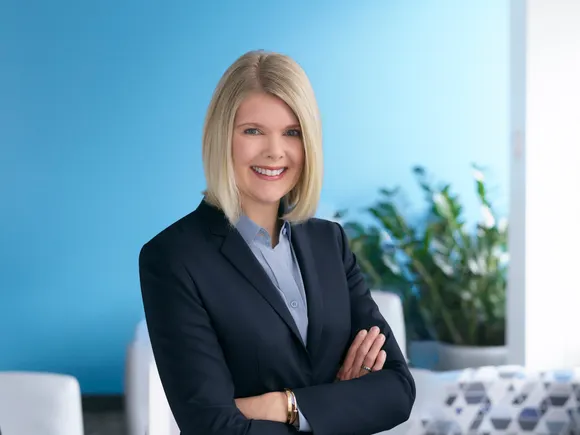
New CEOs often need to integrate into companies with deeply entrenched existing cultures, where change is frequently difficult. However, at Mural Oncology, CEO Caroline Loew is seizing the opportunity to shape the company's culture from scratch. Alkermes officially spun off Mural as an independent, publicly traded, clinical-stage immuno-oncology company in November, committing $275 million in funding. This move made Alkermes a pure-play neuroscience company, while Mural focuses on cytokine immunotherapy, particularly for cancers with limited treatment options.
Mural's lead candidate, nemvaleukin, is currently in registrational trials for advanced melanoma and platinum-resistant ovarian cancer. Nemvaleukin is an engineered variant of the immunotherapy interleukin-2 (IL-2), designed to treat cancer while avoiding the toxicities commonly associated with IL-2 therapy. The U.S. Food and Drug Administration (FDA) has granted nemvaleukin Orphan Drug Designation and Fast Track designation for mucosal melanoma, as well as Fast Track designation for its combination with pembrolizumab in platinum-resistant ovarian cancer. Additionally, nemvaleukin is being studied in clinical trials for advanced solid tumors, and the company has two other programs in the discovery stage.
Leading a spin-off means Loew can have the best of both worlds: mature drug candidates and the opportunity to build culture from the ground up. "We are turning a 'company in flight' into a fully mature independent biotech," she says. "It's an interesting hybrid situation."
Loew has the leadership credentials for the role. In fact, she calls her "superpower" the ability to think and act strategically. A scientist CEO with a background in organic chemistry, Loew most recently led Glympse Bio, which merged with Sunbird Bio in August. Previously, she served as Vice President of R&D Strategy and Planning at Bristol-Myers Squibb and held leadership roles at Merck & Co. and the Pharmaceutical Research and Manufacturers of America (PhRMA).
During her tenure at BMS, Loew was deeply involved in the company's refocusing of its cancer treatment strategy. Although she describes her experience in oncology drug development and witnessing the rise of immuno-oncology therapies as "thrilling," she also views the plateau in response rates as an opportunity for the next generation of cancer drugs.
"That's an example of big-picture thinking: How do you fundamentally change what an organization does and how it positions itself?"
— Caroline Loew, CEO of Mural Oncology
Joining Mural stems precisely from this "unfinished business" and her desire to advance new mechanisms. "I have very deep experience in building R&D strategy and managing a portfolio of large programs," she says. "Coming in, I'm spending a lot of my energy on strategy... thinking about where we're going, what our next steps are, and how we position ourselves for the future."
She views the CEO role as comprising three pillars—internal operations, external engagement, and culture building—and deliberately focuses on each while maintaining a patient-centric approach. "This is a company that can deliver the next wave of immuno-oncology drugs. It's not just about nemvaleukin; it's about opening up future possibilities for patients. We are building a great future company, and we have a strong belief in that."
PharmaVoice spoke with Loew about her leadership philosophy and her strategy for building culture at a new company. The following interview has been edited for length and style.
PharmaVoice: How do you approach your responsibilities as CEO?
Caroline Loew:I think very deliberately about how much time I spend each week on specific tasks. It may sound rigid, but it helps me ensure that as CEO, I'm investing appropriate energy in the pillars of responsibility I consider important. I'm a classic results-oriented person who prioritizes key activities. I think that regardless of company size, when you're working on cutting-edge science, there's a huge temptation to get distracted by shiny new things. I think it's very important to be able to say, 'That's interesting, but it's not what we have to do today.' Stay focused on executing priorities. It sounds simple, but you'd be surprised how many organizations stumble due to distraction.
You've said that as a leader, your superpower is thinking and acting strategically. When have you applied this in previous roles?
Caroline Loew:One of the things I'm most proud of in my career is having the opportunity to look at the strategic opportunities of the organizations I served with a blank sheet of paper, identifying key points that hadn't been seen before but could significantly change the company's direction. When I joined BMS, I was tasked with reviewing portfolio strategy. At the time, BMS wasn't deeply involved in oncology. One of the first things I did was assess the entire BMS portfolio and propose a reprioritization plan. Ultimately, BMS increased its oncology investment by about 30%, which contributed to its leadership position today. It's like turning a supertanker—it wasn't just the decision to change investment direction. We had to reprioritize because the organization didn't have the capabilities to operate in oncology at the time, so we rebuilt the operating model. That's an example of big-picture thinking: How do you fundamentally change what an organization does and how it positions itself?
Why do you believe in Mural's science and approach?
Caroline Loew:Immuno-oncology has truly revolutionized cancer treatment, but response rates have plateaued at around 30%. I see this as the unfinished business of oncology drug development. When I saw Mural's data and our approach to protein engineering, I realized we could be a great fit to address this problem. The core of our work is actually quite simple—leveraging the 'known knowns' of natural cytokines, using protein engineering to harness their potency while overcoming issues like tolerability. Our recombinant IL-2 candidate, nemvaleukin, is a prime example. We've generated compelling data in both monotherapy and combination settings, replicating the responses seen with high-dose IL-2. We're applying the same approach to our preclinical programs—IL-18 and IL-12—and expect to nominate candidates this year.
You place great emphasis on culture building. How are you doing that at Mural?
Caroline Loew:First, this is a science-first, patient-first organization. Those words can sound clichéd—many people say them. But what it really means is that decisions are guided entirely by science and patient needs. In drug development, you sometimes have to make extremely difficult decisions, like whether to advance an asset. When you're always guided by scientific evidence and patient benefit, it brings a very clear perspective. Second, this is a collaborative environment. Drug development is a team sport; it requires many people to come together without bias and work collectively. They need to sit around a table and make decisions on some very complex scientific questions. We need these teams to function at high efficiency. Third, this is an inclusive organization. When I talk about inclusion, I don't just mean diversity and inclusion. Listening to every voice is critical. Sometimes the best ideas are precisely the contrarian ones. When a research associate feels they can say, 'I noticed something in the data worth flagging,' they are often closest to the research front lines. Every voice matters, every voice should be heard, and those voices should be brought into the discussion. You have to do all of this: not exclude anyone from meetings, ensure information is shared transparently, and ensure that when people speak, you listen carefully and act. I lead by example—my door is always open for people to come and talk. This isn't a slogan written on paper; it's lived every day, and I expect everyone to do the same while holding each other accountable. There are no shortcuts—you live the culture and help others live it too.
