
"1 plus 1 equals 3" - The Co-CEO Model in the Pharmaceutical Industry
Amylyx Pharmaceuticals gained significant attention with the approval of its ALS drug Relyvrio in 2022, behind which lies the partnership of co-CEOs Josh Cohen and Justin Klee. In large pharmaceutical companies, the co-CEO model is uncommon, but the two founders believe that the complexity and long-term nature of the pharmaceutical industry precisely require this kind of team-based top leadership. This article explores the operational logic of this model, how disagreements are handled, and its performance during crises through an exclusive interview.
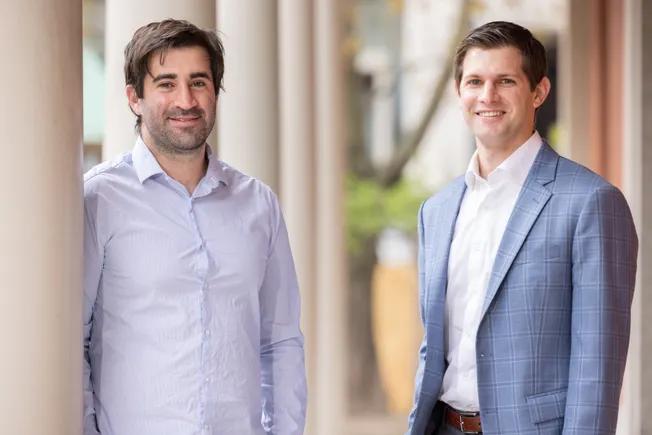
Amylyx Pharmaceuticals drew industry attention in 2022 when its ALS drug Relyvrio became the first FDA-approved treatment with evidence suggesting it could slow disease progression.
After gaining approval in Canada, Relyvrio impressed Wall Street in its first year on the market, with second-quarter 2023 revenue reaching $98.2 million,exceeding expectations。
The company's profile was also boosted by its connection to the viral "Ice Bucket Challenge" of 2014, which raised$115 million in donationsfor the ALS Association, some of which later funded Relyvrio's development.
Behind this success is not one CEO but two: Josh Cohen and Justin Klee.
Dual leadership is not uncommon in small startups (e.g., two friends co-founding a local business), but in the larger, more complex corporate world, the co-CEO model is rarely chosen.
A Harvard Business Review analysis of 2,200 companies in the S&P 1200 and Russell 1000 indices found that fewer than 100 companies hadco-leadersbetween 1996 and 2020. Many high-profiledual-CEO leadershipcases come from the tech industry, such as Netflix and BlackBerry.
"The co-CEO model and organizational structure fit our industry very well precisely because it is extremely complex and requires the integration of multiple areas of expertise."

Justin Klee
Co-CEO and Co-Founder, Amylyx Pharmaceuticals
Not everyone endorses this leadership style. Some point to major business failures—includingBlackBerry—as examples of co-CEO disasters, while others argue that sharing power anddecision-making responsibilitiesis too complex to work effectively.
However, a review of 87 public companies with co-CEOs found that nearly60% performed better in delivering shareholder value. Some who haveheld the co-CEO positionbelieve the model brings broader expertise to the top and increases efficiency by allowing leadership to be present in two places at once.
How well does this model work in the pharmaceutical industry?
In an interview with Cohen and Klee (who met as undergraduates at Brown University), the pair said it has been a successful approach at Amylyx—even when the company faced difficulties elsewhere.
Beyond challenges during Relyvrio's clinical development, European regulators in Octoberrefused to approvethe drug, citing doubts about survival outcomes and stating that a "positive benefit-risk balance" could not be established.
Through these ups and downs, Cohen and Klee say their ability to solve problems together and their continued focus on patients have kept Amylyx steady.
"It's been an exciting 10 years," Cohen said of the company's journey from targeting neuronal destruction with experimental drugs in neurodegenerative disease,shifting from Alzheimer's to ALS, running trials at institutions like Massachusetts General Hospital, and ultimately gaining FDA approval for a disease that typically claims patients' lives within a few years of diagnosis. "But we won't stop until this disease is completely conquered."
Looking ahead, Cohen said Amylyx is not "resting on its laurels" but is focused on expanding access to Relyvrio while advancing more ALS trials and clinical development in progressive supranuclear palsy, Wolfram syndrome, and Alzheimer's disease.
Even as Amylyx balances commercialization and research efforts, Cohen and Klee believe the co-CEO model fits the company well. Here's why they think two CEOs can be better than one in the pharmaceutical industry.
This interview has been edited for length and style.
PHARMAVOICE: What was it like co-founding Amylyx together?
JUSTIN KLEE:When [Cohen] and I read startup stories, they're often described as founders having a grand vision, knowing everything, and being clear on direction. But in our experience, we didn't know what we were doing. Our only advantage was being willing to admit we didn't know. So we sought advice, learned how to turn a concept into a drug candidate, and then build a company around it. We figured it out as we went.
Did you plan to become co-CEOs? Were you inspired by other companies' models?
JOSH COHEN:We didn't plan it, but... [it's] more common in single-CEO companies than people realize. The CEO job is lonely, so many CEOs choose a partner, like a COO or CFO, for candid conversations. When we talk to other [biotech] companies, this dynamic isn't rare. It's just more explicit at Amylyx.
How do you make this model work?
COHEN:It all comes down to communication. By now, we can almost always predict what the other is thinking. If we sent two different messages to the company, this model might not be as effective.
KLEE:From the start, we shared a common vision and values. That's very important, and we've now institutionalized it.
When it comes to decisions, we keep it simple. We think about what's best for the people we're trying to help—ALS patients and their families. We never deviate from that, and that's why we're so aligned.
How do you divide responsibilities?
COHEN:We don't have strict divisions of what we do and don't do. Naturally, there are things we do more of, but it's not fixed. At the start and end of each day, we divide the day's or week's work based on where we need to go. It's more of a daily and weekly dynamic decision.
KLEE:[Cohen] and I see ourselves as one entity, hoping one plus one equals three. That's how we approach problems, not by functional division.
What happens when you disagree?
KLEE:About 99.9% of the time, [Cohen] and I reach the same conclusion. We often say the same thing almost word for word. But in those rare moments of disagreement, we step back and discuss and debate. It might mean this isn't a clear-cut decision, and maybe one of us sees something the other doesn't. Ultimately, when you have the chance to debate, you make better decisions.
COHEN:That's when the co-CEO model is strongest. In those moments when we disagree despite the data or circumstances... the right thing is to get more data... [because] the data isn't leading us to a clear path.
We've never had an impasse we couldn't resolve. We share the same mission—and that's also related to our personalities.
Why do you think the co-CEO model is particularly effective in the pharmaceutical industry?
KLEE:Drug development is very hard. It requires many different types of expertise, and the process is long, so you face various challenges. [Cohen] and I [hold] the view that in industries with faster cycles and lower complexity, teamwork isn't as important as it is here. I don't mean to disparage—some industries might build a business model in 12 to 18 months. But pharma isn't like that. It took us 10 years to get our first approval, and people still think that was fast.
For us, the co-CEO model and organizational structure fit our industry very well precisely because it's extremely complex and requires multiple areas of expertise. When making important decisions, the more voices involved in the discussion, the stronger the company ultimately becomes.
COHEN:I agree. In pharma, a company's biggest competitive advantage is teamwork—not just good science. It's about people who can collaborate well and pivot together. [The co-CEO model] exemplifies teamwork at the top, and you want that spirit throughout the company. When pharma companies don't run well, it's often because "the emperor has no clothes," and people get siloed and don't raise issues—which can happen when products involve regulatory, clinical, manufacturing, and other complex aspects. Getting the whole orchestra to play well together is hard, but that's key to a pharma company running well.
How does the co-CEO model perform in a crisis?
KLEE:To give an example, I don't credit ourselves but the team. We were a newly public company and had promised to go public with an NDA filing, indicating a clear path to approval. Then an advisory committee meeting questioned whether the treatment should be approved. We raised money in the IPO on the premise of preparing for commercialization, and suddenly all of that became very uncertain.
[But] we had an excellent and passionate field team and commercial operations team. Fortunately, we had a second advisory committee meeting... and ultimately got approved.
But during that uncertain period, an organization can easily lose its way. We missed milestones, Wall Street was unhappy, and the stock price fell. [But] we're proud that the team stayed focused on the mission. We returned to what was within our control—doing the right thing for the ALS community. Even though it was hard for us, it was a thousand times harder for them and their families. We wanted to ensure we remained transparent, focused on their needs, and prepared for launch.
Maybe that was partly thanks to the co-CEO model. It goes back to teamwork, and hopefully our model shows how we collaborate from the top.
If you both stepped down from Amylyx, would you recommend the company keep the co-CEO model?
COHEN:It's hard to force it, and hard to... conduct an executive search for it. This model tends to emerge naturally from co-founders. I think it's a good model, but it's difficult to establish later in a company's life cycle.
KLEE:[Cohen] and I plan to stay here until we cure these diseases. We hope to do that within a few years, but it might take longer. So we plan to stay for the long term.