
Bristol Myers Squibb Business Leader Discusses 27 Years of 'Sea Changes' in the Industry and Future Directions
Adam Lenkowsky, who has spent over 26 years at Bristol Myers Squibb, rose from a sales representative to Chief Commercial Officer. He has witnessed multiple strategic shifts as the company transitioned from a diversified conglomerate to a pure biopharmaceutical firm, and has observed profound changes in industry innovation speed, market access policies, and digital marketing. In light of the portfolio expansion from the Mirati acquisition, he outlines the evolution of future commercialization models and his predictions regarding the impact of the Inflation Reduction Act in 2024.
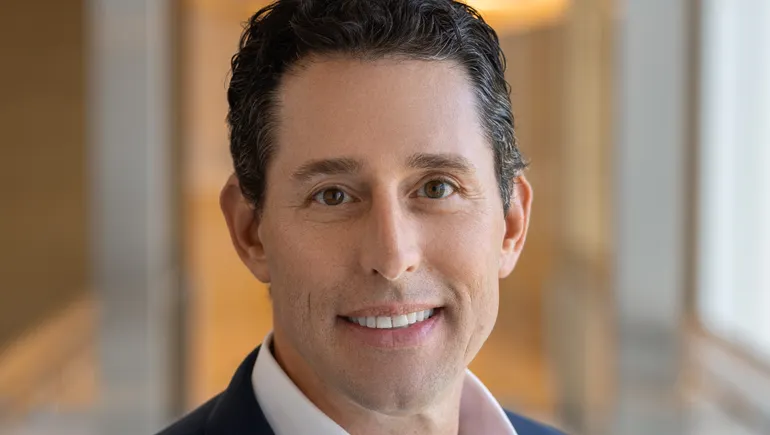
For more than a quarter of a century, Bristol Myers Squibb has undergone multiple transformations from a diversified company to a pure-play biopharmaceutical company. And Adam Lenkowsky, who has spent over two decades at Bristol Myers, has grown alongside the company through numerous major mergers and strategic shifts.
In October 2023, the pharmaceutical giant acquired immuno-oncology specialist Mirati Therapeutics for $5.8 billion, gaining an approved lung cancer drug and a pipeline of potential future products. Combined with the massive 2019 merger with Celgene, Lenkowsky, now executive vice president and chief commercial officer, says the rapidly expanding portfolio at one of the world's largest pharmaceutical companies coincides with a unique historical moment for the industry.
"Nearly 27 years later, I still carry the same passion I had when I first left school," Lenkowsky says. "This is the most exciting period in the history of our industry and our company."
Here, we spoke with this 2023 PharmaVoice 100 honoree about his career and the future prospects for the company and the biopharmaceutical industry.
This interview has been edited for length and style.
PHARMAVOICE: You've been at Bristol Myers for over 26 years. What does dedicating your entire career to one company mean to you?
ADAM LENKOWSKY:Starting as a sales representative and rising to chief commercial officer has been an incredible journey. This was something I never dreamed of in 1997. It's a tremendous opportunity to work for a company so focused on patients and employees. I've had a front-row seat to the company's evolution—undergoing perhaps four or five major transformations over the past two-plus decades. We were once a diversified company with businesses far beyond pharmaceuticals, including infant formula, medical devices, generics, and over-the-counter products. In 2007, we divested all non-pharmaceutical businesses, which was seen as highly risky at the time, but now we see most companies following suit, doing many of the things we did 16 years ago.
In your view, how has the pharmaceutical industry changed during this period?
Over the past few years, we've witnessed three "seismic" trends in the industry. The first is the pace of innovation. In terms of our company's leadership in immuno-oncology and being the first to bring two cell therapies to market, we're talking about the possibility of curing the deadliest cancers at an astonishing speed.
The second major change revolves around a highly dynamic access and policy environment that is more challenging than ever. This shift requires us to engage earlier in the R&D cycle, assessing the economic and clinical value of products at an earlier stage.
Finally, the COVID-19 pandemic fundamentally changed how we all live and work, but for the biopharmaceutical industry, it posed a serious question we had never considered: What if we can't meet doctors face-to-face? We essentially transformed how we commercialize products, doing many things we never needed to do before. Now, we are in the midst of a true digital revolution in pharmaceutical commercialization.
How have pharmaceutical customers changed since you joined Bristol Myers?
In the late '90s and early 2000s, the customer was essentially the physician. That was the consensus among all of us, but that perspective was too narrow and has now expanded beyond physicians. Patients play a more critical role in their own decisions than ever before. Meanwhile, the sphere of influence extends to policymakers and advocates, so the network of influencers in the pharmaceutical environment has become much more complex.
When you take on an entire portfolio from an acquisition like Mirati, is that an exciting challenge for you?
For a commercial person like me, this is the most exciting thing. It's all about launching new products. At Bristol Myers, we launched nine new products in just four years. This requires commercial leaders to continually evolve our business model to be more agile and reach more patients as quickly as possible. We're moving from a company with nine new products to one with 15 to 20 products by the end of this decade.
With so many product launches, what role do drug pricing discussions play in your work?
Drug pricing is certainly important, but I think what matters more is the affordability of medicines. When we launch a product, we must ensure patients can afford it and stay on treatment. Over the years, I've invested a lot of time at Bristol Myers in access and reimbursement functions and building capabilities that may give us one of the best market access systems in the industry. We want to ensure no patient is left behind.
In your view, what does 2024 hold for Bristol Myers and the pharmaceutical industry as a whole?
We are continuously shifting our portfolio from some of the more mature brands to these newly launched brands and strengthening our pipeline. Strengthening the commercial organization will also help us focus on business growth. As for the industry in 2024, we will begin to see the impact of the Inflation Reduction Act in February, with apixaban being one of the 10 products selected, so we are on the threshold of significant change. Additionally, across the industry, multiple products will lose exclusivity, and several biosimilars will launch, making the access environment even more challenging. In a sense, this is truly a golden age for the biopharmaceutical industry, but the challenges that come with it require us to address them together.