
Former CDC Director on Key R&D Areas, Public Trust, and Pandemic Lessons
Dr. Julie Gerberding, CEO of the Foundation for the National Institutes of Health and former CDC Director, shares insights in an exclusive interview on R&D hotspots such as cancer immunotherapy, women's health, ALS, preeclampsia, and mental health, as well as topics including rebuilding public health trust and PAHPA reauthorization.
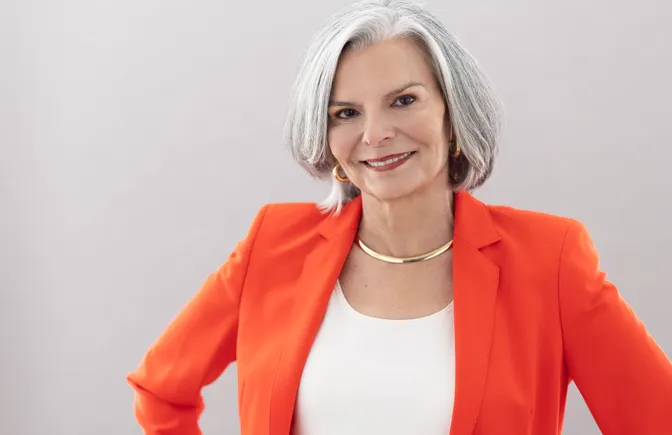
When Dr. Julie Gerberding took the helm of the Foundation for the National Institutes of Health (FNIH), multiple paths in her career converged at exactly the right place.
As an infectious disease physician, Gerberding rose through academia and government, eventually becoming a significant figure in U.S. healthcare. In 2002, she was appointed director of the CDC (the first woman to hold the position); in 2010, she joined Merck, holding several executive roles including president of vaccines.
"Now, I find myself in a position that combines an academic perspective, observations of U.S. and global health challenges during my time at the CDC, and an understanding of how industry operates and how science is translated at scale," Gerberding said.
In her role as CEO of the FNIH, which she began last year, Gerberding has a front-row seat to many rapidly evolving trends in the biopharmaceutical sector. The FNIH is a public-private nonprofit focused on advancing biomedical breakthroughs, having raised $1.55 billion to date to support 122 active research collaborations, educational programs, and more. Its projects include cross-sector biomarker validation, HIV research, and the "longest continuously monitored Alzheimer's disease study."
"My view is that health security is just as important as the other pillars of national security."
— Dr. Julie Gerberding, CEO and President of FNIH
Recently, the FNIH selected eight rare diseases for its gene therapy clinical trial program through a consortium of NIH institutes, life sciences companies, and patient organizations.
Looking ahead, Gerberding draws on lessons from her journey from resident at UCSF to tenured associate professor, to the public health spotlight and vaccine development at a major pharmaceutical company.
"Building trust among the three sectors—academia, government, and industry—has always been challenging," she said. "But by building these relationships and leveraging scientific progress, we are limited only by our imagination and willingness to invest."
When PharmaVoice recently spoke with Gerberding, we explored many topics: her reflections on 40 public health emergencies during her tenure at the CDC, how the agency is recovering from pandemic struggles, the most active areas of pharmaceutical research, and what 2024 might bring.
This interview has been edited for length and style.
PharmaVoice: In your current role at FNIH, you have a close view of many exciting innovations. What areas are getting the most attention right now?
Dr. Julie Gerberding:(In cancer) immunotherapies and the like have brought dramatic changes. This scientific capability, discovery science, and translational science have been transformative for many cancers, but not all. So, the field still needs more investment.
Another important perspective I focus on is gender equity. When (the White House recently launched) an initiative on women's health research, I was very excited. It focuses on diseases unique to women and those that are more common or present differently in women.
In 2024, we will launch a major ALS initiative. We need scientific breakthroughs to validate biomarkers that predict disease progression. It's a broad exploration of targets and pathways, but we want to precisely understand the cause of ALS and why it differs among patients. This area may also require combination therapies.
Another area we're focusing on is preeclampsia. The maternal mortality rate in the U.S. is unacceptably high, and it's also a huge global problem. We've learned how to prevent bleeding complications and infections in resource-limited settings, and now we're tackling preeclampsia—the third leading cause of preventable maternal death.
The biggest challenge area is mental health. There has been little progress in discovery science in generating new targets or treatment classes. Accurate diagnosis is a major challenge. Diagnosing "depression" is like diagnosing "chest pain"—there may be many underlying causes, but treatments lack specificity and mostly rely on trial and error. The new postpartum depression therapy is a breakthrough targeting a specific cause and brings hope for other precision therapies.
What is the current collaborative environment like around these issues?
One advantage of the current environment is that science is on our side. We are seeing an abundance of tools and technologies emerging to address unmet medical needs that have long plagued humanity. The downside is that the society we live in is not so convinced we are on the right track, and we face significant trust issues regarding the effectiveness and practicality of our work. We also need sustained investment in implementation research to build a health framework that benefits everyone.
 Dr. Julie Gerberding, then CDC director, prepares to testify on avian flu before the Senate Committee on Agriculture, Nutrition, and Forestry on November 17, 2005.
Image credit: Win McNamee via Getty Images
You mentioned the lack of public trust. What was your experience dealing with reputation issues during your time at the CDC?
I was fortunate when I was CDC director not to be plagued by major reputation issues. When I left, according to national polling data, the CDC was the most trusted agency in government. Part of the reason may have been our response to the first SARS outbreak. Despite its high mortality rate and enormous economic impact, society did not completely shut down. It was still a frightening outbreak and a wake-up call because people were not prepared. The CDC was at the forefront. But I was lucky because the administration delegated the management of public health decision-making mechanisms to the CDC, and we were allowed to hold press conferences at our Atlanta headquarters rather than at the White House.
Fast forward to now—not because of any particular party, but due to the way our government operates—everything has been centralized to the White House, which has exacerbated the politicization of (public health emergencies). Once trust is lost, as with the CDC in the early days of COVID—partly due to missteps and also because they were not leading the communication—it is difficult to recover during a crisis. Rebuilding trust takes time and a lot of transparency, not only from the CDC director and their team but also from the entire public health ecosystem at state and local community levels.
Have these reputation issues affected your work at FNIH?
From feedback from research leaders at life sciences companies and academic medical centers, we all share a common concern about trust in science and scientists. It is a shared concern.
How can the pharmaceutical industry help restore trust in science?
This is a complex question because the nature of the private sector is private. A lot of knowledge and resources within companies are not easily shared due to priorities and commercial interests. (But) the most notable thing about the pre-competitive collaborations we participate in is that scientists are very willing to collaborate and share information. This allows all ships to rise with the tide.
We have learned that through tools and databases that maintain confidentiality, we can share data without revealing anti-competitive or intellectual property information.
There is always room for improvement. The industry can always increase transparency, advocate for fairer and more affordable access, and more inclusive and innovative clinical trial models.
You have publicly called for strengthening pandemic preparedness and urged Congress to reauthorize the Pandemic and All-Hazards Preparedness Act (PAHPA). Do you sense a willingness among lawmakers to achieve this?
Years of experience—dating back to the early days of the HIV pandemic—tell me that when people are in crisis, they go all out; once the crisis subsides, we fall into complacency. Just look at the CDC's budget over the years to see this pattern. This is not the way to build a resilient biopreparedness nation. From a policy perspective, we need to demand that leaders continuously invest in pandemic preparedness. Therefore, I place this responsibility on government leadership. The government must play the primary role. My view is that health security is just as important as the other pillars of national security.
Despite the enormous toll of COVID, momentum for pandemic preparedness seems to be waning. Do you think it will be different this time?
No. I appreciate some of the ongoing efforts, and I think PAHPA is the right direction. The question is: Will Congress provide the necessary funding to implement the strategy? Providing funding is crucial... but I am not optimistic about sustained efforts to advance biosecurity.
If we haven't learned this lesson from COVID, I don't know what it will take to wake us up.