
Red Jacket Award Winner Helen Sabzevari: Persistence and Breakthroughs of an Immunotherapy Pioneer
When Helen Sabzevari pursued her PhD in the 1980s and 1990s, she was determined to harness the immune system to fight cancer, amid widespread skepticism. Today, as CEO of clinical-stage biotechnology company Precigen, she leads her team in using the UltraCAR-T non-viral platform to compress autologous T-cell manufacturing to within 24 hours and advancing multiple gene therapy pipelines. This article reviews her journey from Iran to New York, from the NIH to industry, and her commitment to 'leaving no patient behind.'
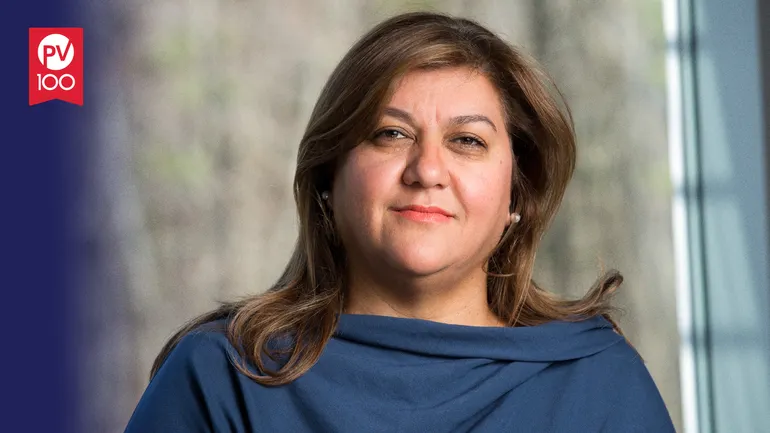
Editor's Note: This story is part of our2023 Red Jacket Awardfeature coverage.
When Helen Sabzevari began researching how to harness the immune system to fight cancer as a PhD student in the 1980s and 1990s, the skepticism around her was intense.
"Many people told me I was wasting my life because it would never work," she recalls. "But that's where innovation comes from. I always understood that once you accept something is impossible, innovation stops."
Sabzevari didn't stop. After a productive academic career, she eventually moved into biopharma and witnessed firsthand the explosive growth of immunotherapy—which proved her early skeptics wrong.
For the CEO of clinical-stage company Precigen, overcoming challenges is routine. Her unyielding resilience can be traced back to her family roots.
Sabzevari grew up in Iran, where her parents always emphasized the importance of education for their children—even for their daughter, which she says was not common "in that culture." After the Iranian Revolution in 1979, fearing the turmoil would interrupt her high school education, her parents sent her to live in the United States.
After settling in New York, Sabzevari was told her education level was sufficient to enter university directly. So, at just 16 years old and with limited English, she began her college career.
Her desire for scientific work quickly found direction. At the Sloan Kettering Institute, Sabzevari was deeply moved by a research team and promised the lab head she would do any work available. She eventually got a volunteer position, and her scientific career began.
"We need tailored medicines so we don't leave any patient behind."

Helen Sabzevari
CEO of Precigen
Since then, Sabzevari earned her PhD, completed postdoctoral work at the Scripps Research Institute, and advanced immunotherapy research at the National Institutes of Health. Her first industry role was at Merck KGaA, where she served as Senior Vice President and Global Head of Immuno-Oncology. During this time, she played a key role in developing Bavencio (a monoclonal antibody targeting PD-L1), which became the first FDA-approved immunotherapy for metastatic Merkel cell carcinoma.
Now at the helm of Precigen, which focuses on precision cell and gene therapies, Sabzevari is working to push the field of immunotherapy to its next major milestone. Her CAR-T cell platform aims to reduce therapy manufacturing time from weeks to hours. Precigen spent years optimizing a platform called UltraCAR-T so it can be used in hospital clean rooms, and it is currently being tested in multiple solid tumors and hematologic malignancies.
"We developed a system that changes the manufacturing process, allowing us to genetically modify a patient's T cells overnight, without off-site centralized manufacturing... and without taking weeks, because patients often don't have that time," she says. "We believe this manufacturing approach can significantly reduce costs and, in the future, make treatment more accessible to more patients."
The company's clinical pipeline also leverages precision immunology, using its AdenoVerse platform to develop multifunctional gene therapies for oncology and infectious diseases. Its lead asset, PRGN-2012, aims to treat a rare and debilitating disease called recurrent respiratory papillomatosis and has received FDA Orphan Drug designation and Breakthrough Therapy designation.
These milestones are a fitting summary of Sabzevari's long-standing commitment to immunotherapy research and development. She describes this work as a "calling"—using what she has learned to make a difference in patients' lives while proving that women—especially Iranian women—"can and should do this kind of work."
As a multiple PharmaVoice 100 and Red Jacket Award winner, Sabzevari shares here the advice that inspires her drug development, her leadership style, and what she has yet to accomplish in the industry.
This interview has been edited for length and style.
PharmaVoice: Why did you transition from academia to industry?
Helen Sabzevari:The transition began while I was at the NIH. I had completed my postdoc, had a PhD in basic research, and my mentor challenged me: "You've studied some of the most fundamental mechanisms and worked with thousands of mice. But for your own kind, what have you done to translate your research into applications?" That prompted my shift to translational medicine.
I am very grateful for the training and success I had at the NIH leading the Molecular Immunology Group and working on cancer vaccines. When Merck KGaA (Darmstadt, Germany) approached me in 2008, it took me some time to accept that I would be leaving academia and institutional research. But I understood one thing—I was on the path of translational medicine. Although I loved basic research and its contributions to humanity, I wanted to move closer to bringing new therapies to patients.
How do you view the potential of the cell and gene therapy field?
I believe the next frontier of immunotherapy is cell and gene therapy because we haven't fully harnessed the immune system as a weapon against disease. Checkpoint inhibitors have played a significant role in treating many patients, but there is still a long way to go. In the best-case scenario, we only benefit a small subset of patients. Despite great progress in indications like lung cancer, melanoma, and bladder cancer, there is still a need for innovation in ovarian cancer, pancreatic cancer, and many difficult-to-treat hematologic cancers. I believe that innovation in cell and gene therapy is the next sword to conquer these difficult diseases.
How does the UltraCAR-T platform work?
With UltraCAR-T, we have developed an unprecedented non-viral platform. We overcame the shortcomings of existing platforms and differentiated ourselves from traditional CAR-T manufacturing that uses lentiviruses. Academia had evaluated non-viral platforms but couldn't successfully modify large numbers of cells, so everyone concluded the non-viral route wouldn't work and turned to lentiviral manufacturing. We took an older non-viral platform, spent years advancing it, addressing its deficiencies, and created a device that can genetically modify a patient's autologous cells overnight.
With UltraCAR-T, a patient can come to the clinic for apheresis, their T cells are isolated, and are transfected using our proprietary non-viral UltraVectors and our proprietary device, the UltraPorator, in the hospital's clean room, which is designed to complete genetic modification in minutes. In less than 12 minutes, our UltraPorator system can genetically modify over 4 billion autologous T cells. The modified cells are then placed in an incubator in the clean room overnight. The next morning, after quality control testing, the personalized UltraCAR-T cells are released and infused back into the patient. The entire process can be completed within 24 hours, eliminating the expensive and slow off-site manufacturing.
How would you describe your leadership style?
I lead from the ground up, not from the top down. That means you have to be one with the team—walking side by side, mentoring, inspiring, celebrating, and facing challenges together as a team.
Another thing that is very important to me is having courage and confidence, but also anticipating the next step or potential challenges—having Plan B and Plan C ready. Some people think this means you don't think Plan A is good enough and see it as a weakness. But I see it as being well-prepared and grounded. You understand that nothing is 100% certain and unexpected challenges will always arise. I think that's the difference between successful and unsuccessful leaders.
What mark do you hope to leave on the industry?
If I can bring curative therapies to patients and not leave any patient behind—that would be my ultimate goal. I know that's a high bar in pharma, but we shouldn't shy away from challenges.
Of all the things I've experienced in my career, one stands out: I spoke with a patient in a clinical trial who, unfortunately, was among the 40% to 50% who didn't respond. The patient said, "I'm sorry I failed the trial." That moment struck me deeply because it wasn't the patient's failure. It was our failure—we failed to make the drug truly precise for that patient. We need tailored medicines so we don't leave any patient behind.
View our full2023 PharmaVoice 100winners list.