
Red Jacket Interview: Ovid Therapeutics CEO Jeremy Levin on Transformative Leadership and Industry Innovation
In the 2023 PharmaVoice Red Jacket Awards feature, Dr. Jeremy Levin, CEO and Chairman of Ovid Therapeutics, reflects on his career, sharing profound insights into innovation in the biopharmaceutical industry, leadership blind spots, and personal legacy.
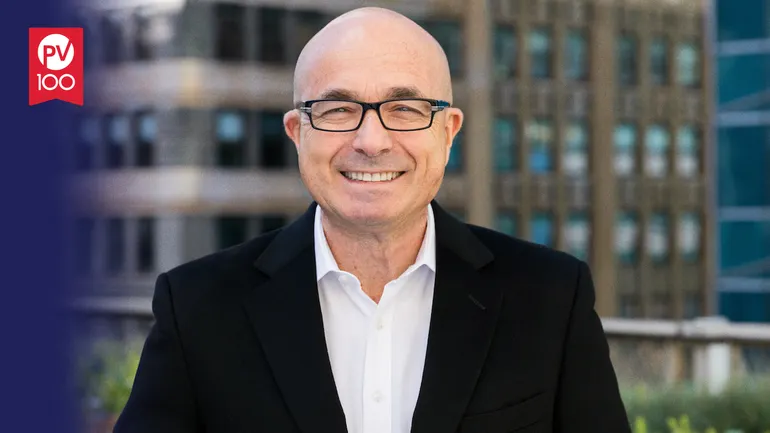
Editor's Note: This story is part of our2023 Red Jacket Awardfeature.
When Dr. Jeremy Levin reflects on his career and the profound impact he has had on the biopharmaceutical industry, his mind does not linger on professional accolades.
To be sure, Levin is CEO and Chairman of Ovid Therapeutics, a neuroscience biotech. He served as CEO of Teva Pharmaceutical, the world's largest generic drugmaker, during turbulent times. At Bristol-Myers Squibb, he drove transformation as head of business development and is the architect of the "string of pearls" M&A concept, a strategy that brought the company back from the brink.
Yet, Levin prefers to focus on what he has achieved as a "participant" rather than a leader. He sees himself as part of the biopharmaceutical machine, and what the industry could become if leaders and scientists dare to "think big" in innovative approaches.
"It's not enough to just survive in the industry—I want to leave people with the idea that they can build this industry."
Dr. Jeremy Levin
CEO and Chairman of Ovid Therapeutics
"No one can change an entire industry single-handedly," Levin says. "But what you can do is set the tone, and I think the most exciting thing is to realize and act on it—the colleagues around me need to see that you can set an example."
Today, Ovid is dedicated to "opening the biological doors of neuroscience" by advancing new compounds targeting known targets in the brain. The company's lead candidate, soticlestat, is in two late-stage studies for rare forms of epilepsy, and Levin, as always, is looking to the next step.
"Rare diseases provide a window into broader diseases," says Levin, harking back to his work during the introduction of immuno-oncology, a field that has become one of the industry's busiest corners over the past decade. "Looking back at oncology, we initially faced patients with rare cancers, and by breaking down that barrier, it is now tackling lymphoma, breast cancer, lung cancer, and more."
Here, Levin, now a PharmaVoice Red Jacket Award winner, reflects on his career, explains how he defines innovation, and reveals the legacy he hopes to leave.
This interview has been edited for brevity and style.
PHARMAVOICE: If you could go back in time and give young Jeremy, just starting out, some advice about the biopharmaceutical industry, what would it be?
DR. JEREMY LEVIN:First, truly understand how much this industry will grow. The growth I have experienced since 1987 has been extraordinary. What I could have done differently is better understand how to accelerate growth in areas that may not have been mature yet. The vast majority of investment during this period was concentrated in oncology—and the areas where we lagged included cardiology, or making repeated mistakes on Alzheimer's disease. In fields like virology, some dared to think big and achieved brilliance, but I think I should have dared to be different a little earlier. So my advice to young Jeremy is: do what you are doing, learn, understand where you can contribute—but be bold, even bolder, in pursuing areas that will never be noticed.
Second, quickly realize that although all these wonderful technologies can make a difference, the key interface is connecting with patients and the people around us. The important three things are not the old directives of cost, competition, and customer, but purpose, patients, and product. By doing so, build a connection with the entire population, so we do not end up where we are today—when great discoveries are made and the whole country is saved in the fight against COVID, yet the industry is met with extreme antipathy from the population and targeted by policymakers.
At Bristol-Myers Squibb, you initiated the still-active"string of pearls"M&A concept. Do you now view Ovid as a pearl in that metaphor?
It is a lovely metaphor, and Ovid has indeed created its own small string of pearls. Everything we choose is not a bet-the-company move—each one represents part of a strategy to open the biology of neuroscience, building key products in different pathways that together provide a deeper understanding of the brain. Every level of the company is dedicated to this, so I think rather than Ovid being a pearl, it is itself a string of pearls.
You are making significant strides in rare neurological diseases and building on prior knowledge. In the life sciences, what does the term "innovation" mean to you?
Innovation is the willingness to ask questions others do not ask, to take on projects others do not take on. For example. When [Bristol] acquired Medarex, we were not buying products—we were buying a way of thinking. [Medarex's chief scientific officer and immunotherapy pioneer] Nils Lonberg was thinking in the lab: How can I think differently about changing the way white blood cells fight cancer cells? How do cancer cells evade the white blood cells in the immune system? That question was daring to think big, and it led to enormous innovation. Once you crack open that particular eggshell, you can make an omelet because you begin to understand the dimensions of white blood cells' ability to attack cancer. But you have to start with that first question, and that is innovation.
Between these pearls and omelets, have you ever had to overcome blind spots in your own leadership? How did you do it?
Yes, on many occasions, and it has been extremely important to me—I would advise everyone to look in the mirror and ask themselves: Why is what I am doing not working? Am I a contributing factor to the lack of progress? Put aside ego; put aside confidence; put aside arrogance; make sure you examine yourself with clear eyes. Yes, I have had to do that.
Perhaps the most difficult moment for me was when dealing with that wonderful, exciting, interesting company. When I was leading Teva, the company was at a turning point, and when the board asked me to do things I could not understand, and then I was told there would be consequences if I did not, I had to ask myself that difficult question: Am I doing the right thing? Am I doing it for the right business reasons? Did I establish the right value system for that decision-making process? Did I bring together the best answers? When I did that and found myself on the right side, I had to make a decision, and I was convinced I would be forced out of the company. I knew I could make a difference, but I had to interrogate myself harshly, and that was a painful process.
What attracted you to founding Ovid and defining its focus today?
When I returned to the United States, I saw a wave of innovation beginning to emerge in neuroscience, just like immuno-oncology before it, and I felt very strongly that we could meaningfully open up this field. What you see now is that what I predicted is happening. Today there is a rich diversity of emerging neuroscience companies, and my view is that we will be part of it. I knew the science behind neuroscience was converging. When we entered immuno-oncology, everyone shied away. Now people are shying away from neuroscience in the same way, and staying is not crazy—it is just a matter of reading the science.
What do you want your legacy to be?
We all pass through this world, and we all hope to make a difference. But what matters to me is that I can leave the idea that what every executive does matters, and they too can make a difference. They need to dare to make a difference. It is not enough to just survive in the industry—I want to leave people with the idea that they can build this industry. Then, perhaps, just perhaps, you and I or my children will see a complete cure for cancer, a cure for Alzheimer's, cures for all our various diseases, but we need to be bold. If that is a legacy I can be part of, then I will feel I truly made a difference. I believe that when I die, I want to leave behind many friends who will say: Gosh, we want to do that—and we will do it better than he did.
View our full2023 PharmaVoice 100winners list.
