
Red Jacket Interview: Clinical Innovator Dr. Mark Goldberg
After a brief retirement, Dr. Mark Goldberg returned to the industry and now leads the CRO company Allucent. He reflects on his 21 years at Parexel, early medical imaging applications, and discusses technology trends in clinical trials, including decentralized trials and AI applications.
Editor's note: This article is part of the 2023 Red Jacket Awardseries.
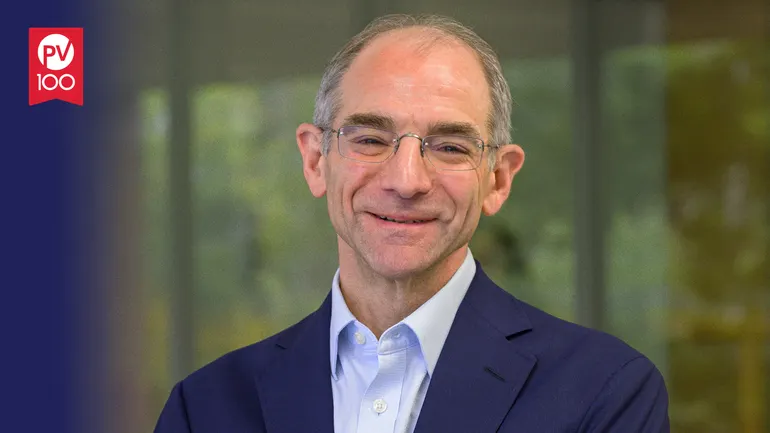
Dr. Mark Goldberg, Chairman and CEO of Allucent, once retired, but that retirement didn't last long.
"I was retired for about two and a half weeks when I realized I couldn't just sit around," he said. "That wasn't going to work."
He was fully qualified to retire. Goldberg spent 21 years at biopharmaceutical services company Parexel International, including a decade as President and COO. In 2017, after the company (formerly public) was acquired by private equity, Goldberg decided to retire but quickly became restless.
"I'm not someone who can stay still, so that wasn't entirely unexpected," he said. "What was surprising was how quickly I wanted to get back to work."
However, it wasn't really surprising. Throughout his career, Goldberg has been at the forefront of emerging technologies and ideas. He served as President and Director of WorldCare, a telemedicine company he helped incubate as a spinoff from Massachusetts General Hospital in the early 1990s, aiming to bring digital imaging into clinical trials. The company partnered with Procter & Gamble to digitally capture X-rays of women worldwide for an osteoporosis trial and used those images as clinical endpoints—which was not common practice at the time.
"It was already clear then that there was a huge opportunity to use imaging more broadly as an endpoint in clinical trials," he said.
Today, he leads Allucent—a contract research organization (CRO) focused on serving small and mid-sized biotechnology companies.
"Decentralized trials really have the opportunity to overcome the biggest challenge in conducting clinical trials—patient recruitment and retention."

Dr. Mark Goldberg
CEO and Chairman of Allucent
Since its founding in 2018, Allucent has conducted approximately 1,000 clinical trials in about 70 countries and has been involved in more than 50 marketing authorization applications in the U.S. or Europe. The company recently signed an agreement with the Biomedical Advanced Research and Development Authority (BARDA) to initiate and conduct a 10,000-subject Phase 2b clinical trial to evaluate the relative efficacy of a next-generation COVID-19 vaccine candidate versus existing vaccines.
Allucent was founded from an opportunity Goldberg saw that was large and underserved: serving small and mid-sized biotech companies that often have the most cutting-edge science but limited resources.
These limited resources extend to the CRO space as well. Although more than 80% of intellectual property in the biotech industry is held by smaller companies, most CROs serve large pharmaceutical companies, whose needs are vastly different from those of small biotech startups.
"When large pharma companies hire a CRO, most decisions have already been made, the roadmap is largely set, and you're essentially just executing," Goldberg said.
In contrast, the relationship between a CRO and smaller companies must be strategic—not only assisting with clinical trials but also advising on clinical design, providing expertise in regulatory communications, offering input on publication of results, and other services.
"They have to be more efficient, more agile, and move faster—and the CROs they work with must be too," he said. "You're really an extension of their molecule's path to success."
Goldberg has always had a strong interest in technology and its application in medicine—he studied computer science and technology at MIT before entering medical school—and now he's applying that interest and expertise at Allucent.
Here, this PharmaVoice 100 honoree and current Red Jacket winner discusses his career, trends he's watching, and the significant technological changes in clinical research.
This interview has been edited for length and style.
PHARMAVOICE: What are you most proud of in your career?
Dr. Mark Goldberg:A few things stand out. One is our early work applying imaging technology in clinical trials. Like many good ideas, there were others exploring in that direction at the time; it wasn't unique to me. But we expanded the application of that field, using it more broadly across different diseases, and built experience with the FDA—discussing how to achieve it, how to get regulators to accept an endpoint, and how they wanted the data presented, which wasn't common practice then.
So, in terms of industry impact, I think some of the things we did then were truly pioneering.
Another highlight was being part of Parexel's 21-year journey. The company was already substantial when I joined, but it grew significantly during those 21 years, and eventually I had the opportunity to manage an organization of about 20,000 people. Having that opportunity was an honor and a privilege. Being part of that journey, shaping strategy together, and driving the company's globalization—it meant a lot to me.
What technology trends in clinical trials are you watching?
Decentralized trialsreally have the opportunity to overcome the biggest challenge in conducting clinical trials—patient recruitment and retention. I also think it has great potential in helping the FDA address racial and ethnic diversity. If you can recruit patients from a broader geographic area, it's easier to achieve diversity in trials.
Another area I've been watching for decades—since early in my drug development career—is model-based or model-informed drug development. Allucent acquired a company called Nuventra , which brings quantitative methods to guide trial design and help predict outcomes. If trials are designed better, perhaps fewer trials are needed, saving significant time and money. You can also select doses more precisely and adjust dosing based on cross-population data to accommodate a broader population. For example, instead of conducting separate trials for patients with renal or hepatic impairment, you might use modeling to show how doses should be adjusted; in some cases, results from such analyses can be accepted for product labeling. Pediatrics is a similar example.
Can you talk about the use of AI and automation in clinical trials?
I take a very pragmatic view of technology. I don't think there's magic here. But I do see some "low-hanging fruit"—repetitive activities in drug development, data cleaning and analysis processes, and so on—that are well-suited for automation.
I don't expect miracles in the short term; I just want to improve efficiency. Some AI applications or robots, used to analyze safety or efficacy data, can detect patterns. These algorithms are very good at pattern recognition. There are even opportunities in writing—think about the written materials we submit to regulators; these documents are highly structured.