
Epilepsy Advocate, Actor Greg Grunberg: Making the World 'Talk About It'
Actor Greg Grunberg, whose 27-year-old son Jake has epilepsy, has long been dedicated to patient advocacy. He launched the 'Talk About It' and 'The Care Giver' video series with Jazz Pharmaceuticals to eliminate epilepsy stigma and connect the caregiver community. Grunberg emphasizes that patient experiences should be a core consideration in pharmaceutical R&D and calls on more people to join the conversation.
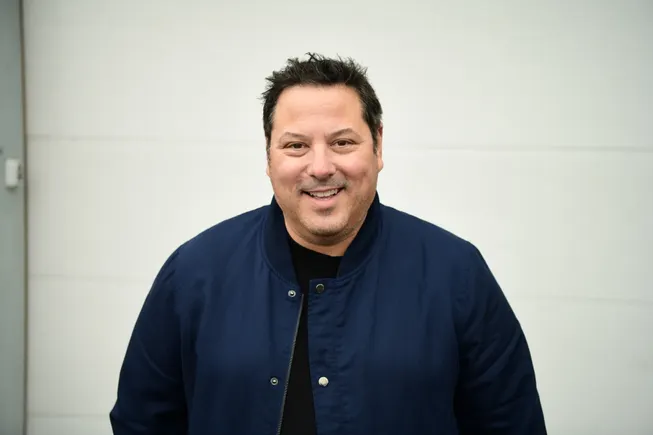
Greg Grunberg has played a mind-reading superhero, a starfighter pilot, and the creative best friend on Keri Russell's "Felicity" on screen. But beyond his successful acting career, Grunberg's most proud role is as a patient advocate for people with epilepsy, including his 27-year-old son, Jake.
Grunberg says epilepsy, while not a rare disease, is an area that is not fully understood and rarely discussed publicly. To that end, the actor and producer has embarked on a journey. He has partnered with Jazz Pharmaceuticals to help drive a broader conversation around the condition. Jazz Pharmaceuticals gained rights to the epilepsy drug Epidiolex through its 2021 acquisition of GW Pharmaceuticals.
In 2018, Epidiolex became the first drug containing cannabidiol oil derived from cannabis to be approved by the U.S. Food and Drug Administration (FDA). Grunberg says the drug has been effective in controlling three rare and severe types of seizures.
"At first, I wished I had someone to turn to. Now, I strive to be that person for others."
— Greg Grunberg, actor and epilepsy advocate
Today, Jazz and Grunberg are connecting the epilepsy community through a video series called "Talk About It," in which numerous celebrities speak out about the real issues faced by people with epilepsy. Additionally, he has partnered with Jazz to produce the well-crafted series "The Care Giver," in which he tells the stories of epilepsy caregivers, to "remind us all that no matter what you're going through, you are not alone."
"People who care for those with epilepsy are heroes," says Grunberg, who also starred in the TV series "Heroes." "They face this every day, whether they tell you or not. It's always on their minds. I'm proud to stand by them and say, 'You are doing an incredibly, incredibly good job.'"
We spoke with Grunberg about how he got into epilepsy advocacy, how he uses his voice and platform for more effective advocacy, and how his partnership with Jazz Pharmaceuticals has benefited all parties involved.
This interview has been edited for length and style.
PHARMAVOICE: First, how is your son Jake doing these days?
GREG GRUNBERG:Jake is doing great! He's what you'd call a normal young man. Well, he's 27—so not that young anymore. He has epilepsy, which is a terrible disease because it's somewhat 'invisible.' Unless you see him have a seizure, you wouldn't know someone has epilepsy or another seizure disorder. It's always hanging over our heads; it can strike at any time if not managed properly. But by building a strong support network around him and us, we've created a community. Over the years, through projects my wife and I have been involved in, we've connected with a community of incredibly resilient, wonderful people who are gradually breaking down the stigma that has long been associated with epilepsy and seizures.
What made you initially realize that this was something that required your voice and platform?
I had spoken at events to raise funds for local hospitals and the comprehensive epilepsy center at Children's Hospital Los Angeles. After telling my story again and again, I met some remarkable people in national organizations, especially Phil Gattone, former CEO of the Epilepsy Foundation, and Ken Lowenberg, vice president of communications and digital strategy at the Epilepsy Foundation. The three of us co-founded an organization called 'Talk About It' to amplify the message and advocate for a variety of related causes. Epilepsy is certainly the most important issue. I kept hearing people say the same thing: nobody wants to talk about it. For example, never put anything in someone's mouth during a seizure. So, I went back and mobilized every actor, athlete, and musician I knew. The way I could truly help was by using my face and voice.
This caregiver series is largely about that—because in this community I'm part of, we can all learn so much from each other. I'll sit down with someone completely different from me, but who is also a parent of a child or person with epilepsy. I learn that as a caregiver, you have to take care of yourself first before you can take care of others.
As a father and advocate, what does the epilepsy treatment journey look like in your eyes? What would you want pharmaceutical companies to understand during clinical development?
When I have the opportunity to talk with people who actually develop drugs, the conversation always centers on the patient experience. Whether it's providing a tablet form, a specific device, or simply understanding and hope. I've worked with several pharmaceutical companies on charity events and programs and have never been disappointed. There's a strong willingness among pharma companies to reach out to patients or caregivers and understand their perspectives.
As for the community itself... we look at each other and understand without words. We make jokes that others might not get, but we know we're in this together.
How has your partnership with Jazz Pharmaceuticals been in developing the caregiver series?
Usually, I'm the creative one, having written and produced TV shows, always trying to push the limits of what we can do. But with Jazz, it's them pushing me to do more. They're very inspiring creatively. In one episode, we interviewed a caregiver who loves British monarchy and tradition, and they went out of their way to create an escape from reality for her. They found a small island in the middle of a pond and arranged an afternoon tea. The two of us got to talk about what matters to us.
As far as you know, what exciting medical advances are on the horizon in epilepsy?
I don't have a scientific background, but people often say that if you had this disease 20 years ago, the drug pipeline was far less rich than it is today. We see that with the drugs Jazz has brought forward, and in other areas too. You have to be very cautious, but I think the medical community is more open to any therapy that can help patients. Our goal isn't just to reduce seizures to two or three a month—we want to stop them entirely.
Rare diseases overall are getting more attention than ever before. With National Epilepsy Awareness Month approaching in November, what's key to maintaining this momentum?
There are many conditions rarer than epilepsy that are related to it, such as Lennox-Gastaut syndrome. We're doing meaningful things to bring attention to these conditions. Every week, pharmaceutical companies or charitable organizations reach out to us to explore how to amplify these issues. I just want to help everyone as much as I can. Through the partnership with Jazz, it has truly helped the epilepsy community and those around it.
Looking back at when you first got into patient advocacy, what do you wish someone had told you?
At first, I wished I had someone to turn to. Now, I strive to be that person for others. When I found Phil, what he said to me was very important: It's going to be okay. Everyone defines 'okay' differently, but as long as you keep advocating, keep pushing, and find the right epilepsy specialist and other experts, you'll find your version of 'okay.' So, find someone you can talk to—that's the most important lesson.
