
Rare disease giant executive: My daughter's illness taught me how to develop drugs
Gianluca Pirozzi is a senior vice president at Alexion Pharmaceuticals (AstraZeneca's rare disease unit), and his 10-year-old daughter Valentina has Smith-Magenis syndrome. This personal experience has given him a deep understanding of the struggles faced by families with rare diseases and has shaped his patient-centered approach to drug development.
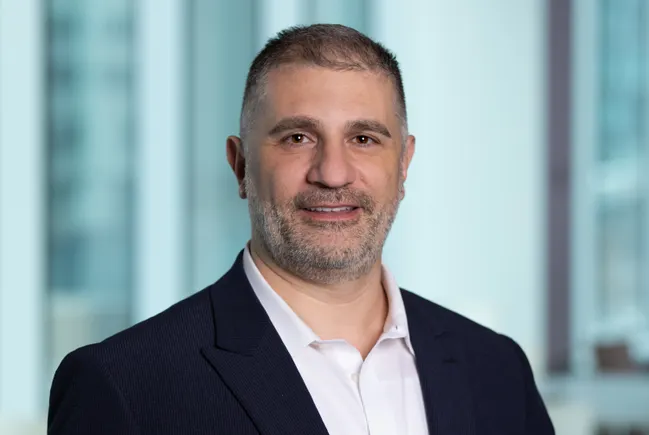
Gianluca Pirozzi calls his 10-year-old daughter Valentina a "force of nature" and the joy of his life. Yet, as her father, some experiences are unique to a very small group of parents.
"The impact of a rare disease is extremely difficult," says Pirozzi, Senior Vice President of Development, Regulatory, and Safety at Alexion Pharmaceuticals, AstraZeneca's rare disease unit. "You are alone. No one understands you."
Valentina has Smith-Magenis syndrome (SMS), a rare genetic disorder characterized by cognitive impairment, sleep problems, and behavioral challenges, including unpredictable and sometimes aggressive tantrums that can be triggered by anything and happen anytime, anywhere.
"When I say tantrum, imagine a child basically lying on the floor, banging their head, screaming. It can last from five minutes to an hour. There is frequent nail picking, so she almost tears off her nails and they start bleeding," Pirozzi says. "It is difficult to control. When you start to restrain her, she starts aggressive behavior, biting, spitting, kicking. So imagine you are in a supermarket or a public place... people around you don't understand. They judge. It is very hard."
"This is one of the biggest lessons I've had in the rare disease field. Actually, looking at things through my daughter's experience."

Gianluca Pirozzi
Senior Vice President of Development, Regulatory, and Safety at Alexion Pharmaceuticals, AstraZeneca's rare disease unit
The sleep disorder accompanying Valentina's SMS is equally challenging. Because she may wake up throughout the night, Valentina sleeps in an enclosed bed for safety. She requires constant care, including special needs schooling and specialized pediatric care support, costing tens of thousands of dollars annually. Everyone in the family is affected, including Valentina's younger sister. Her rare disease touches every aspect of their lives.
"Unless you live it, it is hard to appreciate how profound the impact is," says Pirozzi, a 2023 PharmaVoice 100 honoree. "There is a whole psychological impact, work impact, financial impact."
Understanding the impact of rare diseases has shaped Pirozzi not only as a person and father but also in his role as a drug developer.
"This is one of the biggest lessons I've had in the rare disease field," he says. "Actually, looking at things through my daughter's experience."
Finding a calling
Pirozzi, a physician and immunologist, had his life and career shaped by rare disease early on. Growing up in Italy, Pirozzi was inspired to study medicine because his best friend Antonio had a rare form of anemia with an average life expectancy of only 20 years.
"He used to live as if it was going to end tomorrow, or knowing it would end soon," Pirozzi says, adding that he still thinks of Antonio often.
"So, I went into medicine," he says.
However, Pirozzi did not want to be a clinician. Instead, he was drawn to research and eventually to the pharmaceutical industry because of the promise of bringing new medicines and therapies to patients.
"The pharmaceutical industry is the fastest way to get there because the goal of pharma is to produce new medicines, new therapies," he says. "I quickly realized that in pharma, we are the ones changing the world in terms of delivering new medicines."
Pirozzi spent nearly 14 years at Sanofi, including as global program head for the blockbuster drug Dupixent, eventually becoming head of rare disease and gene therapy development at Sanofi's subsidiary Genzyme.
While his friend Antonio inspired Pirozzi to go into medicine, it was Valentina who sparked his focus on rare disease. That role at Genzyme "opened up the whole universe of rare diseases" for him, and his move to Alexion in 2019, a company entirely dedicated to rare diseases, broadened his perspective further.
"I joined Alexion fundamentally because it was the perfect place to merge my passion for rare disease with immunology," he says.
The following year, AstraZeneca announced a $39 billion acquisition of Alexion, the industry's largest deal of 2020. Alexion was already a commercial-stage company with multiple marketed products and a deep pipeline, and the deal made it an even stronger player in rare disease. Despite being in a large pharma, Pirozzi insists that the company's fundamental approach to drug development comes down to the details of individual patients' lives.
Living rare
Valentina was diagnosed with SMS at age one and a half, but there had been "all these little signals" that something was wrong before that. She was born with coloboma, a rare malformation of the iris often associated with genetic conditions, and later missed developmental milestones. There were also signs of reduced sensitivity to pain. Valentina did not cry in freezing seawater or when she got her ears pierced at a few months old.
Because of his medical expertise, Pirozzi knew they needed to seek answers from specialists, including a neurologist who suggested whole-genome testing. That testing revealed a problem on chromosome 17 and the SMS diagnosis. But the news only brought more questions. The results came in the mail, with no call from a doctor, so Pirozzi did what any parent would do: he went online and searched.
Even with a medical background, and having secured an accurate diagnosis years earlier than most families, he initially struggled to understand the condition.
"I am a PhD, MD, but I knew nothing about Smith-Magenis syndrome," he says.
He eventually found guidance and support, including from a colleague at Genzyme and later from other SMS families. He now serves as a scientific advisor to the Smith-Magenis Syndrome Research Foundation.
Applying personal experience
Understanding how rare diseases affect the daily practical lives of patients, families, and caregivers is central to how the company develops rare disease drugs, even within a large pharma like AstraZeneca's Alexion. "We try to engage with them early in the development process," asking about their daily challenges and needs, and then designing clinical trials with endpoints that address those needs, Pirozzi says.
"I hope and pray that what we do in rare disease can be applied more generally to medicine."
Gianluca Pirozzi
Senior Vice President of Development, Regulatory, and Safety at Alexion Pharmaceuticals, AstraZeneca's rare disease unit
For example, a doctor might consider improving general motor skills, but a person with a rare disease will be much more specific.
"Patients and families will tell you, my child cannot hold a fork, they cannot actually eat," Pirozzi says.
Alexion also tries to apply these lessons later on. For example, Pirozzi points to the rare disease hypophosphatasia. Although Alexion's drug Strensiq is an approved treatment for hypophosphatasia, the company is developing ALXN1850, a next-generation treatment with greater potency, less frequent dosing, and other improvements, many based on patient feedback.
"It is a better product, and we are now running a series of new clinical studies globally to expand our development and bring this drug to more patients around the world," he says.
Whether as a father or a drug developer, Pirozzi will continue to prioritize the needs and perspectives of rare disease patients, and he hopes the rest of the industry will too.
"When you really dig into the issues, talk to patients, families, and caregivers, it is more powerful," he says. "I hope and pray that what we do in rare disease can be applied more generally to medicine and that we systematically incorporate the patient voice in drug development."
Editor's note: Nominations for the 2024 PharmaVoice 100 are now open. Do you know an outstanding leader in the life sciences? Let us know by May 5th through ournomination form.