
The Rise of the Chief Investment Officer Role: Why Roivant's Unique Model Works
The biopharmaceutical industry generally has business development leads, but the Chief Investment Officer (CIO) title is uncommon. Dr. Mayukh Sukhatme, President and Chief Investment Officer of Roivant, said in an interview that this atypical title precisely matches the company's atypical 'hub-and-spoke' operating model. This asset-centric, therapy-area-agnostic model has led to ten positive Phase 3 studies and multiple multi-billion-dollar deals. Sukhatme, combining a Wall Street investment background with medical training, explains how to track potential partners over the long term, strike at the right time, and emphasizes that 'the only way to guarantee being in the right place at the right time is to always be present.'
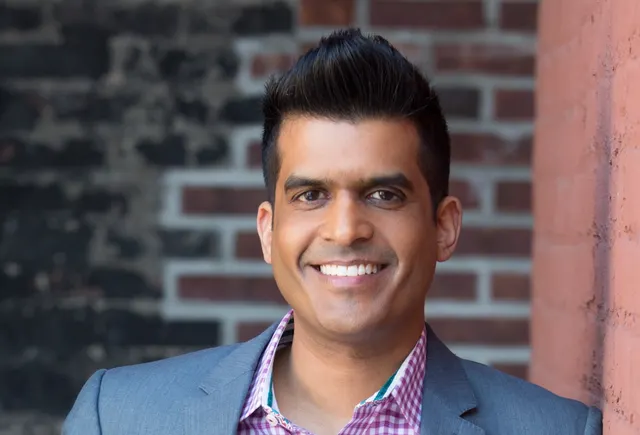
In the pharmaceutical and biotechnology industry, the head of business development is a common position, especially in an industry landscape where M&A and licensing deals are highly concentrated. However, the Chief Investment Officer is not common.
"The Chief Investment Officer is by no means a typical title in our industry," said Dr. Mayukh Sukhatme, President and Chief Investment Officer of Roivant.
Sukhatme'sunconventional titlealigns perfectly with the unconventional path of this commercial-stage biotechnology company. Roivant employs a "hub-and-spoke" business model, identifying new therapeutic programs through acquisitions, licensing, or other collaborations, and then developing and commercializing them. The company was founded in 2014 by current U.S. presidential candidate and former CEO Vivek Ramaswamy, and subsequently spun out subsidiaries focused on specific programs or therapeutic areas, while also incubating discovery-stage companies and health tech startups.
Beyond allowing small, highly focused teams to operate each subsidiary independently, the hub-and-spoke model also enables Roivant to adhere to another important operating principle: taking an "asset-centric" view of deals, rather than being limited to therapeutic areas where the company already has experience.
"At the core of our approach is: not constrained by therapeutic area, not constrained by development stage, not constrained by drug modality," Sukhatme said. "We deliberately avoid being categorized, but rather are guided by the program itself and its ultimate impact on patients, even if it's an area we've never ventured into before."
As Roivant's Chief Investment Officer, Sukhatme's responsibility is to seek out the company's next program. To date, his track record is quite impressive.
"The only way to ensure you're in the right place at the right time is to always be present."
— Dr. Mayukh Sukhatme, President and Chief Investment Officer of Roivant
The programs he has in-licensed or acquired have produced all 10 of the company's positive Phase 3 studies. In 2019, Roivantsold five subsidiaries in a $3 billion dealto Sumitomo Dainippon Pharma, which included assets that later received FDA approval. Since then, subsidiary growth and transactions have continued.
Among Roivant's current subsidiaries, Dermavant markets Vtama for plaque psoriasis and develops other psoriasis therapies. Another subsidiary, Telavant, was justacquired by Roche for $7 billion, and Rochethereby obtaineda potential first-in-class candidate for inflammatory bowel disease.
"My main focus is on identifying and bringing in new programs. Essentially, it's making new investments, but often it's not just a financial investment, but an investment of focus," he said. "What really needs to be done is to find the direction the company will tackle next, then reach an agreement with the relevant institution—whether it's a large pharmaceutical company, a small biotech, or an academic institution—and bring it in in a way that is truly beneficial to all parties."
In this process, Sukhatme's background is highly aligned with this role.
Wall Street wisdom enters the biotech field
Before joining Roivant, Sukhatme spent 15 years in New York's investment community, analyzing development-stage biotech companies and leading due diligence and investment decisions.
"As an investor, the core of my work was judging whether a drug could succeed in subsequent clinical studies and ultimately be commercialized," he said. "If you get that right, the company's value will naturally follow."
Investments he considers to have judged correctly include the hepatitis C field—where treatment shifted from long-term injection regimens to shorter-duration, higher-cure-rate oral therapies. Another key investment was Alexion, which developed Soliris for the rare disease paroxysmal nocturnal hemoglobinuria (PNH). He calls it a "case where patient impact may have been underestimated—because without prior effective treatments, people underestimated the impact the drug could have and its potential for commercial success."
Now as Chief Investment Officer, Sukhatme still draws on his investment and medical background, but he says the time scale for developing deals for Roivant is vastly different. He no longer measures success by how each event moves the company's stock price over months or years, but rather needs to develop deals that withstand the test of time and require years of human and capital resources.
"We have to hold these programs for the long term. We don't consider anything other than holding them all the way through to commercialization," he said. "The cost of getting it wrong is very high."
Searching for the next blockbuster program
"Ideas are everywhere," he said, citing medical conferences, early data observations, and tracking across multiple therapeutic areas as examples. The company also emphasizes internal due diligence, assessing how data might evolve over the years to ensure as comprehensive a learning as possible.
"I think it's intellectually very appealing because we're looking at programs from all sorts of therapeutic areas," he said.
Additionally, much of the work is relationship-driven and builds up over time. He says it's not uncommon to observe a program or engage with a potential partner for years until "the stars align" and it develops from a seed into a collaboration. For this reason, he believes it's crucial to demonstrate to potential partners the value of working with Roivant. Maintaining these relationships can also lead to repeat collaborations.
"We have a saying internally: the only way to ensure you're in the right place at the right time is to always be present, always close to the basket," Sukhatme said.
Whether an investment is successful often takes years to determine, and as with many business deals in the biotech field, there's no sure thing. Late last month,the company announcedit was abandoning a systemic lupus erythematosus program after the candidate drug failed to meet its primary endpoint in a mid-stage study.
However, Sukhatme cited several collaborations he is proud of, including one withPfizer to develop brepocitinib— a potential first-in-class TYK2/JAK1 dual inhibitor for severe autoimmune diseases.
"There's a lot of biological validation for both targets, but inhibiting both simultaneously is quite rare," he said.
As for next steps, Sukhatme didn't reveal specifics, but he hasn't limited himself, his team, or the company in pursuing programs with high patient impact.
"The scope of programs we're looking at now is broader than ever," he said. "As a company with ample capital and resources, and an excellent track record in late-stage studies, we're in a fairly unique position."
