
Rare disease researcher challenges disability discrimination in new lawsuit
Dr. Vivian Cheung is a rare disease researcher who herself has a rare disease, and she has filed a discrimination lawsuit against the Howard Hughes Medical Institute after her contract was not renewed in 2018. The case will go to trial on December 4. This article recounts her personal experiences, her laboratory's discoveries in RNA research, and the systemic neglect of disabled scientists in academia.
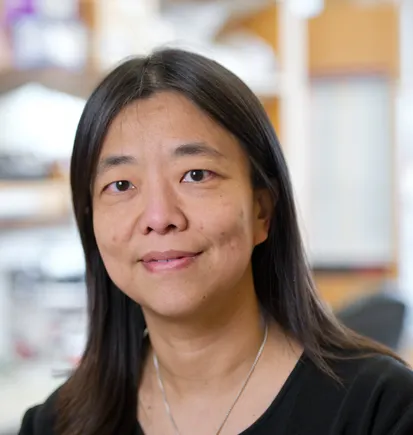
Dr. Vivian Cheung is in a relatively unique position: she is a rare disease researcher, and she is also a rare disease patient. In many professions, personal experience only enhances professional ability—but for scientists, clinical researchers, and doctors, outside perceptions may differ.
"I think in medicine and science, there is this idea that people should be perfect, and somehow that extends to the body being perfect as well. This makes people very reluctant to disclose disabilities," Cheung said. She is a pediatric neurologist and professor of pediatrics at the University of Michigan, and she leads the university'sVivian Cheung Lab。
"In a way, we want to be different from the patients we care for, which is truly unfortunate," she said.
Cheung carries a very rare mutation in the LTBP4 gene, which affects her vision and balance. She has also personally experienced the challenges that come with such a diagnosis, which most scientists and doctors have not.
In 2018, after she was diagnosed, the research organization Howard Hughes Medical Institute (HHMI) decided not to renew her contract, and she subsequently filed a discrimination lawsuit. The trial is scheduled to begin on December 4th. The Maryland Circuit Courtrecently denied HHMI's motion for summary judgment. Cheung's team studies "the shape and structure of RNA and related rare diseases, mainly neurological disorders affecting children," and they have discovered differences in RNA-DNA sequences beyond known ranges.
"As a scientist with a disability, I certainly have to work harder... to prove that I deserve that seat. Being a woman, a woman of color, and having a disability, it's difficult."

Dr. Vivian Cheung
Pediatric neurologist and professor of pediatrics at the University of Michigan
"My lab studies how RNA sequences affect function. We used to think of DNA as the blueprint for everything, so when we go from DNA to RNA to protein, all the sequences are the same. But my lab has found that RNA is actually much more complex," she said. "The sequence and structure of RNA are very important because unless we know the sequence and shape of these RNA 'arms,' we cannot use RNA to make drugs."
However, in some ways, perceptions of Cheung's disability have overshadowed her work. During the diagnostic process, a medical procedure she underwent accidentally caused a spinal cord injury, requiring her to use a wheelchair for about a year or more.
As a result, it became difficult for Cheung to commute between Maryland (where she was building a program with NIH collaborators for children with ALS) and her lab at the University of Michigan. Eventually, Cheung says HHMI offered her a medical retirement option.
She says HHMI "told me I should accept the medical retirement offer." At the time, she was under 50.
"I didn't accept their retirement offer—I applied for renewal, but they didn't renew it," she said.
A spokesperson for HHMI said in an email that "the record clearly supports our position that Dr. Vivian Cheung's allegations are unfounded." The organization uses a "rigorous peer review process" for renewals, including written materials, oral presentations, and evaluations of scientific achievements and breakthroughs, the spokesperson said. "HHMI firmly believes that science needs to include scientists from all backgrounds and perspectives, including scientists with disabilities."
Personal Experience
Throughout her career as a pediatric neurologist, Cheung has helped many patients into wheelchairs, but it wasn't until she herself began using one that she truly understood what that meant in practical life.
Of course, there are challenges like discrimination and physical inaccessibility, but there are also more subtle things, like "getting used to society viewing us differently."
"I still remember the first time I showed up at work in a wheelchair, and all eyes were on me," she said, adding that she had to learn to "deflect those looks... knowing that the person in the wheelchair is the same person as the one standing."
However, despite the difficulties that rare disease and disability bring, it has also given her professional advantages.
"I think in medicine and science, there is this idea that people should be perfect, and somehow that extends to the body being perfect as well."
Dr. Vivian Cheung
Pediatric neurologist and professor of pediatrics at the University of Michigan
"I think it makes me more acutely aware of why understanding disease is so important," she said. "It's no longer just a career; I... am closer to my patients because I understand the daily challenges."
She feels the same way about her work as a researcher.
"Compared to when I was younger, I am definitely more focused and feel a sense of urgency to solve problems," she said.
An Industry-Wide Issue
Cheung's experience highlights a larger issue in academia and research:the lack of disability representation.
Increasing diversity in the life sciences is a hot topic, and rightly so. But disability often gets forgotten in the conversation, whether inclinical trial participationor among researchers themselves.
"As a scientist with a disability, I certainly have to work harder... to prove that I deserve that seat," she said. "Being a woman, a woman of color, and having a disability, it's difficult."
New research in the journal PLOS Global Public Health calls for the introduction of a "diversity factor" to evaluate scientific journals and research papers. This metric considers the demographic characteristics of the researchers conducting the study, as well as the patients involved in the research.
The authors note that today, most researchers are white, male, and from wealthy countries.
"When all authors of a project are similar, they have the same blind spots. They all view problems from the same angle," co-author and senior research scientist at the MIT Institute for Medical Engineering and Science,Leo Anthony Celi,said ina statement. "What we need is cognitive diversity, and that is built on life experiences."
They are also mostly able-bodied, and even the new "diversity factor" does not explicitly mention disability.
The value of lived experience extends to disability, but Cheung points out that it is difficult to determine how many scientists and researchers fall into this category, especially because manyfear disclosing their disabilities。
However, the available numbers paint a bleak picture. Cheung citesa study showingthat only 1.2% of principal investigators on NIH grant applications report having a disability. And in the United States,up to 27% of adultshave some type of disability.
By filing a lawsuit and defending herself, Cheung hopes to "make a difference for scientists with disabilities," especially because she often sees students and trainees with disabilities questioning whether they belong in the field, or even leaving to pursue other areas.
"I think it's very important to keep us in the biomedical field," she said. "I hope this will give us an opportunity to think about what can really be done so that we truly have a more diverse biomedical workforce."