
Purpose Beyond Profit: This Pharmaceutical Company Tackles Critical Issues in Women's Health
On the first anniversary of the overturning of Roe v. Wade, Afaxys, a privately held pharmaceutical company named for 'affordability and accessibility,' is supplying oral contraceptives and other products to 8,400 health centers within the U.S. public health system through its unique low-margin, high-coverage model. CEO Ronda Dean, drawing from her own adolescent healthcare experiences, emphasizes the urgency of preserving the FDA approval system and the accessibility of reproductive health services.
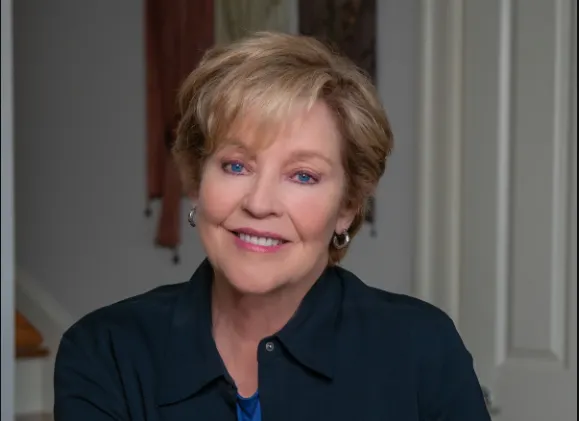
Ronda Dean is no stranger to the waiting rooms of community health clinics. As a teenager, she walked into a public health facility across from her college campus seeking contraceptive services, without her parents' knowledge.
"It was that personal experience that made me deeply realize the importance of these service providers within the entire healthcare system," she says. "I was lucky that there was a Planned Parenthood just across the street, where I received excellent care, and they looked after me throughout my college years."
Today, as President, CEO, and co-founder of Afaxys, Dean still regularly steps into those waiting rooms—the company supplies oral contraceptives to public health department clinics across the United States. She insists on doing so to stay connected to the patient population she serves.
"When I travel across the country visiting those health centers—whether they are Planned Parenthood, health departments, or community health centers—I always sit in the waiting room for a while," she says. "It brings me back to the fear I felt as a patient back then. And when I sit down to talk with the healthcare providers, I am better able to support the important work they are doing."
"If we weaken the FDA's authority in one category, it will shake the entire system, thereby putting the whole landscape of medical interventions at risk."
— Ronda Dean, CEO and co-founder of Afaxys
This work now carries a new sense of urgency. One year after the U.S. Supreme Court overturned Roe v. Wade, the consequences of that ruling are already stark. The New York Times reported that dozens of clinics across the country have closed or stopped providing abortion services; according to the Office of the United Nations High Commissioner for Human Rights, as of January 2023, 14 U.S. states had banned abortion. The agency also noted that overturning Roe v. Wade "puts millions of women and girls at serious risk."
Women's health takes center stage
Over the years, investment, treatment, and research focused on women's health have alternately surged and lagged. For example, Bayer recently stated that its drug development priorities would no longer focus on women's health.
Dean points out that beyond the "devastating impact" of overturning the law on women's lives, there are also "19 million patients living in America's 'contraceptive deserts,' meaning they cannot access quality reproductive health services within an hour's drive."
"I am obviously a strong advocate for access to reproductive health services in all forms, because pregnancy-related complications are not to be taken lightly. Ensuring comprehensive access to reproductive health services means that patients across the country can receive the care they need when they want to start a family," she says.
The private company Afaxys is somewhat unique because it focuses on patients served by the public health sector—its name is a combination of the words "affordable" and "access." Through its two subsidiaries, the company serves 8,400 health centers nationwide. Dean calls it a "first-of-its-kind 'socially responsible healthcare company'" that provides high-quality medical products at low prices without an excessive focus on profit margins.
"This sometimes contrasts with what I call the 'big pharma model'—which pursues the highest prices and highest profit margins," she says. "I think you have to flip that model on its head and think more along the lines of: how much volume do you need to achieve to sustain operations at a lower profit margin."
Afaxys' subsidiary, Afaxys Pharma, licenses products and supplies them to the public healthcare market under its own brand. It currently offers 12 different products: 10 oral contraceptives, 1 emergency contraceptive, and the injectable anesthetic lidocaine—its first non-contraceptive product. Afaxys also has a self-developed drug in the pipeline—although Dean is reluctant to share too many details, she says it is a "novel form of contraception" that "will generate significant interest."
Another subsidiary, Afaxys Group Services, operates a group purchasing organization. Dean says the organization "goes far beyond the contraceptive category," negotiating prices for every product a health center needs, "from pills to paperclips."
Delivering healthcare where it's needed
Dean studied medical microbiology and bacteriology at The Ohio State University and earned an MBA from Duke University. She spent 16 years as Vice President and General Manager of the women's health division at Parke-Davis, a Warner-Lambert company, until it merged with Pfizer.
"The pharmaceutical industry I was trained in did not pay particular attention to low-income populations and the products they needed," she says. "When I discovered and clearly saw this gap in demand, I realized it was an opportunity I could act on."
This need was revealed to her through a series of interconnected life experiences: from using public health clinics as a teenager, to leading Parke-Davis's women's health division, to witnessing her father struggle because he could not afford the diabetes medication her own company produced, and later serving as Vice President of the Planned Parenthood Federation of America. These experiences ultimately led her to co-found Afaxys.
Even so, she says entrepreneurship was still an "accident," because before Afaxys was founded in 2008, she had never harbored entrepreneurial ambitions.
"The unmet need was so obvious, and we did not see anyone stepping up to fill the gap," she says. "I realized that what was needed was the practical ability to bring it all together."
Although overturning Roe v. Wade came as a shock to some, it was not so for Dean—she had been observing the "gradual erosion of reproductive rights" for years.
Still, she finds it hard to believe that people like judges can restrict access to FDA-approved products. For example, in April of this year, a Texas judge attempted to suspend the FDA's 20-year approval of the abortion drug mifepristone.
"I have been in the pharmaceutical industry for nearly 30 years. I find it hard to imagine the FDA being weakened in such a way that it limits the nation's ability to access safe and effective drugs for various diseases," she says. "Reproductive health is just one category. If we weaken the FDA's authority in one category, it will shake the entire system, thereby putting the whole landscape of medical interventions at risk. This deeply worries me."
Facing these challenges, Dean is not discouraged; instead, she is more driven than ever.
"It makes me even more passionate," she says.
