
BeiGene: The Path from a Chinese Oncology Rising Star to a Global Biopharmaceutical Powerhouse
BeiGene is accelerating its international expansion. Christiane Langer, Senior Vice President of Global Medical Affairs, shares her career journey, the company's clinical data advantages, and strategies for addressing controversies over the quality of clinical trials in China.
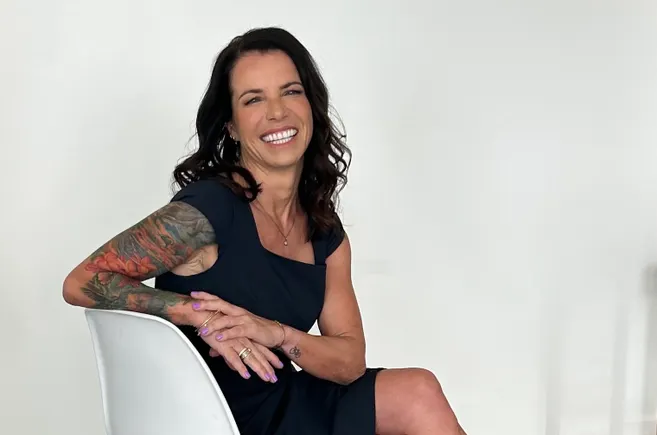
For Dr. Christiane Langer, Senior Vice President of Global Medical Affairs at BeiGene, the core of leadership lies in connection. This biopharmaceutical company originating from China is gradually becoming a significant force in the international biopharmaceutical field through deep connections with the global market.

It can be said that the two complement each other perfectly.
Langer's career did not begin in medical affairs. She grew up in Germany and attended medical school there, where her interest in obstetrics and gynecology guided her toward treating women with cancer. After witnessing the U.S. approval of Genentech's Herceptin—the first targeted therapy for women with HER2-positive metastatic breast cancer—followed by its approval in Germany, Langer gained a deeper appreciation for the impact of drug innovation.
"I was there on the ground, as a junior doctor, and we were treating the first breast cancer patients with Herceptin in Germany," Langer recalled. "After decades of chemotherapy, seeing how this drug changed patients' lives, how it changed the entire treatment landscape, was truly eye-opening."
Langer said she realized that through biopharmaceutical innovation, she could help patients in a broader way.
"For me, the most important part of leadership is authenticity."

Christiane Langer
Senior Vice President, Global Medical Affairs (ex-China), BeiGene
Today, this former junior doctor is leading the medical affairs team of one of China's largest cancer biopharmaceutical companies as it expands onto the international stage. This comes at an opportune time for BeiGene—the company received U.S. approval in 2019 for its cancer drug Brukinsaregulatory approval。
"My scope is truly global," Langer said. "We are expanding, and that is very attractive to me—it's work I haven't been involved in at this depth before."
A strong medical affairs team needs to communicate the mechanism of action and value of drugs to stakeholders. For BeiGene, founded in 2010, connecting these messages globally is key to achieving growth.
Understanding the competitive landscape
Understanding competitors, as well as the shortcomings and potential of one's own portfolio, is crucial to this work.
"It was deliberate—Brukinsa is not a brand-new drug class," Langer said of the BTK inhibitor. "But there are deficiencies and toxicities in that class, and we aimed to make it more effective and less toxic."
BeiGene also has the advantage of data from head-to-head studies. One of themcomparedagainst Janssen's well-known drug Imbruvica, showing that Brukinsa reduced the risk of disease progression by 35%.
For medical affairs professionals, such data is a goldmine.
"The data makes the work very simple," Langer said with a smile. "It's a very easy story to tell and understand."
Despite these achievements, BeiGene still has to contend with negative perceptions abroad regarding the quality of clinical trials in China. Last year, an advisory committee of the U.S. Food and Drug Administration (FDA) recommended against approvinga cancer drug from Eli Lillybecause Richard Pazdur, then head of oncology at the FDA, said clinical trial standards in China could be "regressing."
BeiGene has also been part of these discussions. But the company has consistently worked to position itself as an international company, not just a Chinese one. For Langer, the lower cost of conducting internal clinical trials outside China and the U.S. is an opportunity.
"We are confident in the quality of our data," Langer said. "When such public discussions arise, we have internal deliberations—these are important considerations. Now that our business is global, enrolling subjects from various regions is a key strategy."
BeiGene has 29 offices worldwide and employs more than 9,000 people. The company conducts clinical trials in over 40 countries, with more than 20,000 patients enrolled.
To meet global demand, Langer's team also needs to cover the globe—including North America, Europe, Asia-Pacific, as well as South America, the Middle East, and Africa. She says focusing on this expansion is one of the reasons the job attracted her.
Role models
Early in her career, when asked about role models, Langer struggled to think of a name, especially a female one. But she was always looking for a certain quality.
"For me, the most important part of leadership is authenticity," Langer said. "Over the years, I have continuously learned about my style, increased my self-awareness, always looking for moments where I am different and how to leverage my unique strengths."
Today, Langer has many female role models who bring the kind of authenticity she lacked early on.
"I have never felt such a strong sense of belonging in other companies, and I still feel that way now," Langer said. "I guess I found my home, didn't I?"
Langer says it is this awareness that brought her here, and awareness comes from connection. She also emphasizes that a sense of inclusion is vital to the work at BeiGene.
"I feel tremendous support from my colleagues and team; it's a very inclusive, welcoming culture," Langer said.
Another way to build connection is by understanding what patients are going through. This led BeiGene to launch a program called "Talk About It," which connects cancer patients with mental health professionals—an aspect of the patient experience that Langer believes is often overlooked.
"Engaging patients and talking about their experiences is very important," Langer said. "We are always brainstorming: 'What else?' or 'What's missing?'—because there are many drugs and significant progress, but we always miss something."