
The Power of Connections: A Startup CEO's Approach to Networking
Priyanka Dutta-Passecker, CEO and co-founder of Swiss biotech startup Healiva, deeply realized the importance of personal connections after visiting patients in India. She leverages her long-standing network spanning from the US to Europe to drive her company forward, emphasizing the critical role of connections in fundraising and innovation.
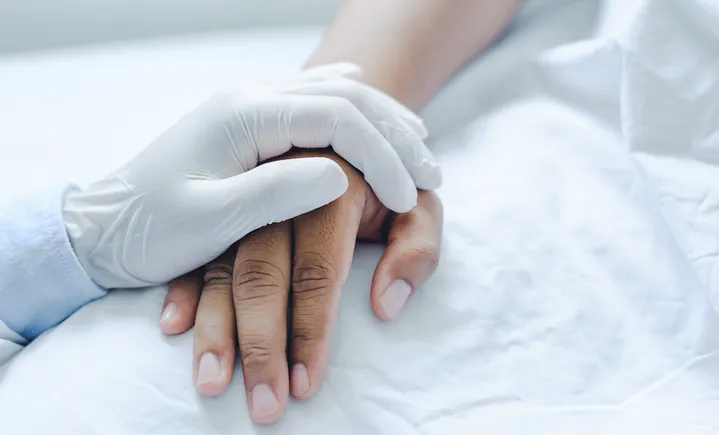
When Priyanka Dutta-Passecker recently traveled to her home country of India for business, she didn't immediately board a return flight after her meetings concluded. Instead, she extended her trip to meet with acquaintances from her personal network. One of them was her sister's neighbor, a patient with venous leg ulcers who had spent thousands of dollars on failed treatments, including a laser treatment she should never have received.
"My sister mentioned her to me, and I called her while I was in India to ask about her experience," Dutta-Passecker said. "She still hasn't healed, and unfortunately, she now has two ulcers."
Dutta-Passecker is the CEO and co-founder of Healiva, a Swiss biotech startup that treats chronic and acute wounds using cell therapy, medical devices, and enzyme technology. For her, this visit was eye-opening.

Wound care is a massive market with a huge amount of unmet need.Researchers estimatethat chronic wounds affect 5.7 million patients in the U.S. alone, costing about $20 billion annually. Globally, Healiva estimates the market encompasses 36 million people.
The scale of the global patient population is hard to grasp. But for Dutta-Passecker, meeting a patient face-to-face gave her a new perspective on the problem.
"Listening to people and doing something for them... can have a huge impact," she said.
Personal connections have always been extremely important throughout Dutta-Passecker's life, both personally and professionally. Her sister's neighbor wasn't the only person she visited in India. She also visited her biology teacher, who taught her from age 8 to 18, sparked her interest in science, and with whom she has remained close since childhood.
"I've been building networks from the U.S. to Europe," she said.
Now, she is leveraging her carefully cultivated connections to help build her company.
Building a biotech business
Dutta-Passecker co-founded Healiva in 2020 with Bioseutica, an ingredients company where she worked for five years as director of corporate sales and business development, and which currently provides funding for Healiva.
After working on an enzyme project there, she presented Bioseutica with a business case for using enzymes in wound care. Dutta-Passecker says enzymes are particularly well-suited for this kind of next-generation technology because they act quickly, are painless, and can be produced at low cost using sustainable materials. She also drew on her scientific and pharmaceutical background, including stints at Novartis, UCB Pharma, and Axol Bioscience, to expand the work into cell therapy.
"Cell therapy has been tried in wound care before but didn't succeed or didn't make it to market," Dutta-Passecker said. But over the past decade, three major factors have changed the landscape: cell therapy is now scalable; patients and providers are more accepting of the technology; and the regulatory environment is clearer, including reimbursement, Dutta-Passecker said.
Reimbursement is especially important to the company and to her personally, especially since she grew up in India and witnessed the vast health inequalities between those who could afford expensive treatments and those who couldn't. Dutta-Passecker says that if a technology can't reach the mass market, it isn't truly innovative, no matter how novel it is.
"Technology itself is not innovative. If you think you have novel technology, it should impact everyone's life, not just a specific group of people," she said.
In June 2022, Healiva acquired two key cell therapy assets from medical device company Smith+Nephew. One is EpiDex, an autologous epidermal equivalent that provides a surgical-free healing method for chronic venous leg ulcers. The product is already approved for the Swiss market, and Healiva is launching it in the country.
"At the end of the day, you can't raise money if people don't know you."

Priyanka Dutta-Passecker
CEO, Healiva
The second is an allogeneic cell therapy for treating venous leg ulcers resistant to standard care, like the case of her sister's neighbor. The product is expected to enter Phase 3 trials soon and will also be studied for diabetic foot ulcers.
The company is also developing an enzymatic debridement spray to remove dead tissue from chronic wounds, as well as a first-of-its-kind medical device for wound debridement.
Beyond the Swiss market, Healiva plans to target patients globally, including the U.S. and India, Dutta-Passecker said.
The power of networks
When Dutta-Passecker earned her MBA in 2018, she said it gave her not only business training but also a deep appreciation for the power of personal and professional networks, which have helped her in her role as CEO.
"An MBA makes you think logically in a structured way," she said. "But at the same time, you have to have a good network so you can always seek guidance from friends and colleagues."
Since then, she has sought advice from people she admires on leading a company, including a former Novartis colleague who encouraged her to pursue an MBA. She even turned to an MBA classmate—now a CFO—when developing Healiva's business plan.
Passecker has also learned to give back to her personal network: she meets with friends from her MBA program every year; she is the founder of the WU EA Women Leaders Network; and she is the president of the Austrian-Indian Arts and Culture Association.
She is also happy to use her network to help others. If someone she knows needs a chief commercial officer, "through my network, I could probably find five people within 24 hours," she said.
Networks are also helpful for raising money and finding investors, she added.
"At the end of the day, you can't raise money if people don't know you," she said.
As the CEO of a startup, Dutta-Passecker is clearly busy. But she never lets busyness overshadow her friends and connections, "who always help you when you need them." She prioritizes meeting with them and staying in touch, many for decades, whether they are personal friends, former colleagues, or her childhood teacher.
"You need to find the time," she said. "It ultimately comes down to your priorities in life."