
A Fork in the Road: How a Medical Expert Moved Toward a 'Transformative' Breakthrough in Liver Treatment
Treatment for acute liver injury often reaches critical decision points. Dr. Norman L. Sussman, Chief Medical Officer of Durect Corp., shares his journey from South Africa to the United States, from academia to industry, and discusses the progress of the company's candidate drug, larsucosterol, in a Phase 2b clinical trial, which has the potential to become the first approved treatment for severe alcohol-associated hepatitis.
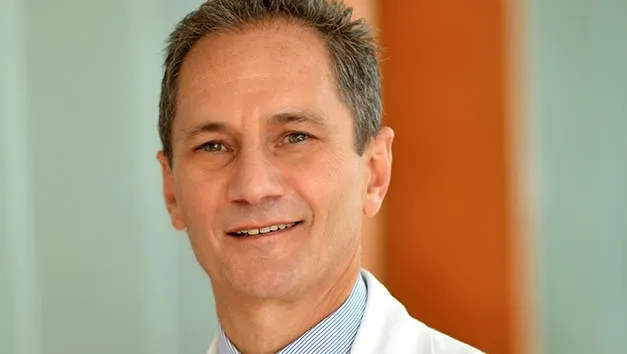
In the treatment of acute liver injury, there is a critical juncture: acting immediately or waiting and watching can have vastly different effects on a patient's prognosis, with almost no middle ground. The right action can save a life, while missing the opportunity can be fatal.
"You suddenly come to a fork in the road, and if you can guide the patient's liver in the right direction, they can recover," said Dr. Norman L. Sussman, Chief Medical Officer of Durect Corp. "At this moment of intervention, you think: if I knew what to do right now, I could change this patient's course."
Acetaminophen overdose is one of the most common causes of acute liver failure, often pushing patients to this fork in the road. If treated properly, patients almost always survive; but if the opportunity is missed, they may die.
This aspect of hepatology has always fascinated Sussman and has shaped his career as a liver specialist, including his current work at clinical-stage biotechnology company Durect. The company is leveraging its endogenous epigenetic regulatory program to develop treatments for acute organ injury and chronic liver disease.
In October of this year,Durect announcedthat its lead candidate drug, larsucosterol, has reached an enrollment milestone in its Phase 2b trial. The company hopes the drug could become the first approved treatment for severe alcohol-associated hepatitis (AH).
Arriving at life-changing forks in the road seems to define many stages of Sussman's life. In addition to the decision points doctors face in patient care, he also made the decision in the late 1970s to leave apartheid South Africa, refusing to accept the system of racial segregation that many had grown accustomed to.
Another turning point came at the end of 2020, when he was about to retire from Baylor College of Medicine, where he had served as Associate Professor and Director of Project ECHO at Baylor St. Luke's Medical Center. Instead of spending time considering his next steps as originally planned, he decided to accept the position of Chief Medical Officer at Durect because he was deeply fascinated by the company's science.
"Sometimes an opportunity arises in life where you say: this is so important, so grand, and so close to my interests, that turning away would be foolish," he said.
"Game changer"
Forks in the road can also bring therapeutic possibilities, which is what Sussman saw at the 2019 American Association for the Study of Liver Diseases (AASLD) meeting. At that time, Durect presented interim data showing that AH patients treated with larsucosterol had asurvival rate of 100%during the 28-day follow-up period, compared to a historical mortality rate of 26%.
"I thought, this is one of the most exciting things I've seen in this field in a long time," he said. "I can define certain events as 'game changers,' and that's exactly how I felt about this."
"Sometimes an opportunity arises in life where you say: this is so important, so grand, and so close to my interests, that turning away would be foolish."

Norman Sussman
Chief Medical Officer at Durect
Throughout his career in hepatology, Sussman has felt frustrated by AH. Hepatitis is inflammation of the liver, with various causes and potentially curable, but AH is currently incurable and even difficult to treat. The recommended first step is to stop drinking, but this does not always reverse severe damage. Although current steroid treatments can reduce inflammation, they do not improve long-term survival.
"People have tried various ways to downregulate inflammation, but the effects have not been significant," Sussman said.
Durect's candidate drug takes a different approach. DNA hypermethylation is an abnormality found in patients with severe AH. Larsucosterol modulates gene expression patterns without altering the DNA sequence and inhibits DNA methylation, which may improve cell survival, reduce inflammation, and decrease lipotoxicity.
This combined effect is important because the nature of AH is complex. Some diseases are caused by a defect in a single gene, but diseases like AH are more complex.
"For complex diseases like AH, addressing only one aspect of the disease may have limited effectiveness," Sussman said. Steroids might address the inflammatory component of AH, but they "seem insufficient to change the course of severe AH."
Sussman stated that larsucosterol has this potential, and it could also be used to treat acute organ injury and other chronic diseases involving DNA hypermethylation.
"Honestly, I never thought I would see something like this. It's incredible," he said of the biochemical results he saw at the AASLD meeting. "I couldn't believe the results were so good."
Currently, the company is recruiting patients at more than 60 clinical trial sites in the United States, the United Kingdom, Europe, and Australia, with top-line results expected in the second half of 2023.
Making major choices
Sussman was born and raised in apartheid South Africa. As a white person, he belonged to the country's privileged class and attended medical school at the University of the Witwatersrand. At the time, many white South Africans chose to enjoy status and a comfortable life, and he could easily have followed suit.
"People are very good at ignoring major issues," he said. "Some would say: 'That's just the way things are. I'm lucky to be white and live in a comfortable place.'"
But Sussman and his wife decided not to be that kind of person, so they left South Africa, first going to the United Kingdom and then to the United States.
"My wife and I were very uncomfortable with (apartheid) as a backdrop, and honestly, I didn't think it would be resolved peacefully," he said.
Today, fairness and equality are also reflected in his work as a liver specialist and in Durect's goal of developing treatments for AH. Sussman believes that the stigma of alcoholism should not influence treatment decisions.
"So, if someone has a drinking problem... they have a problem that I hope to help solve," he said. "Can I use my skills to make this person's life better? As a doctor, helping one person at a time is satisfying. But impacting the lives of thousands or even hundreds of thousands of people by developing a useful product is a hundred thousand times better."