
How One of the World's Most Prolific Inventors Is Leading an Ambitious Plan to Conquer All Diseases
As one of the world's most prolific inventors, Stephen Quake leads a lab at Stanford University and serves as the head of science at the Chan Zuckerberg Initiative. Inspired by his wife's prenatal testing experience, he developed non-invasive prenatal testing, saving countless lives. Now, he oversees CZI's scientific strategy, focusing on cellular mysteries and disease prevention through research institutes, funding, and open-source software, with the goal of ending all diseases by 2099.
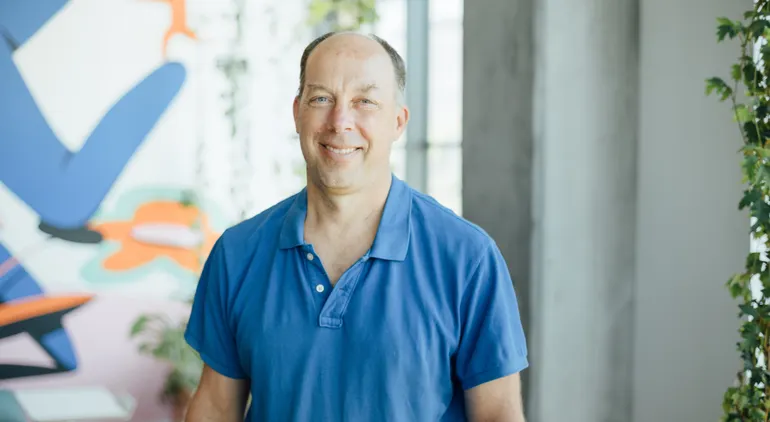
"Why are we doing this test that could make us lose our unborn baby?"
This was the question Stephen Quake asked himself when his wife needed an amniocentesis during her first pregnancy. Amniocentesis is a frightening invasive procedure, carrying risks ranging from cramps and infection to premature labor, fetal malformation, and miscarriage.
Although that experience was stressful, it prompted Quake to eventually develop a blood test alternative to amniocentesis. Today, he says, about "8 million people a year get these tests, and because people are no longer using amniocentesis and other invasive tests, thousands of unnecessary deaths have been avoided."
As a long-time innovator in health, Quake has worked in several industry and university positions. MIT has called him "one of the world's most prolific inventors." His innovations often stem from personal experiences and a desire to help others facing similar challenges.
He says, "There's a very direct connection between my life experiences as a father and husband and the research I do in the lab."
Quake seems to be everywhere. He is the Lee Otterson Professor of Bioengineering and Professor of Applied Physics at Stanford University and leads the Quake Lab named after him. He is a former founding co-president of the Chan Zuckerberg Biohub and has been elected to the National Academy of Sciences, the National Academy of Engineering, the National Academy of Medicine, and the National Academy of Inventors.
This summer, he became the head of science at the Chan Zuckerberg Initiative (CZI), a philanthropic organization founded and owned by Facebook (now renamed Meta) founder Mark Zuckerberg and his wife, Dr. Priscilla Chan. The organization's mission is to cure, prevent, or manage all human diseases by the end of this century. He takes on this new role while continuing his work at Stanford.
"It's an incredibly rare opportunity, and having a 100-year time scale is a luxury."
— Stephen Quake, Head of Science at the Chan Zuckerberg Initiative
In 2015, Zuckerberg and Chan pledged to donate 99% of their Facebook shares to advance CZI's mission. Since its founding in 2015, the initiative has allocated approximately $4.84 billion in grants and invested over $300 million in venture capital in companies whose values and missions align with CZI's.
CZI's science division takes a three-pronged approach: "doing science by building institutes, funding science through grants, and building open-source software to accelerate science," says Quake. "As head of science, my job is to oversee all of this and push it toward inspiring big questions that ultimately impact human health."
For example, in October, CZI announced a partnership with the Bill & Melinda Gates Foundation, pledging $2 million to fund researchers to investigate and detect new and emerging pathogens, with applications in human health, zoonotic diseases, vector-borne diseases, and antimicrobial resistance.
The initiative also said it will work with UK Biobank and other partners to conduct a set of repeated multi-organ imaging scans on 60,000 UK Biobank participants to help researchers assess physiological changes over time.
All In
Quake has been interested in science and technology since childhood. As the son of a software entrepreneur, he learned to program computers with punch cards during his childhood in upstate New York. He turned that passion into a computer summer camp for neighborhood kids, and eventually, long hours in front of screens honed his fast keyboard skills. Once, when accompanying his father to a computer expo in Las Vegas, he even entered and won a typing contest to see who could type a company's marketing slogan the fastest.
"They deliberately made it harder by putting capital letters in the middle of words," he says. "While they were doing their marketing pitch, I went to the computer and practiced until I had the phrase perfectly memorized."
His interest in computers became a springboard for Quake's scientific passion. In high school, he participated in a weekend science program at Columbia University, studying physics. He also read the autobiography of theoretical physicist Richard Feynman and was inspired by it. By age 22, he had earned a bachelor's degree in physics and a master's in mathematics from Stanford. Just three years later, he received a PhD in theoretical physics from Oxford. Today, a web search for Quake's name describes him as an "American inventor"—a title he is very proud of.
"By the number of patents, I'm one of the most prolific inventors in the world," he says. "My research and the discoveries we've made as an academic center have led to patentable inventions at Caltech, Stanford, and now the Biohub labs."
Additionally, many of his inventions at Stanford have been incubated into companies. For example, he founded or co-founded several biotech companies, such as ImmuMetrix, Fluidigm, and Quanticel Pharmaceutical.
In fact, he says Stanford receives "substantial royalties" each year from our patents on non-invasive diagnostics, including pregnancy tests and tests for organ transplant recipients.
Impacting Lives
Quake's inventions and the companies he founded have brought success and accolades, such as winning the $500,000 Lemelson-MIT Prize (2012), known as the "Oscar for inventors," but he says what he is most proud of is the impact of his work on people's lives—especially the non-invasive prenatal test he developed, and now tests that allow organ transplant patients to avoid invasive biopsies.
"Hundreds of thousands of people each year get safer, better care after transplants because of these inventions," he says.
However, he is not stopping.
"There's more to come; we have many projects in various clinical trials," he says.
Some notable examples include: a non-invasive test to predict preeclampsia, part of his work at Stanford and CZ Biohub, detailed in a Nature article in February; other projects to predict preterm birth; a method using computational approaches to classify cells to identify pancreatic cancer, also published in Nature in 2020; and a therapy for food allergies being developed by another company he co-founded, IgGenix, which aims to develop a first-in-class antibody to block the allergic cascade.
He also has personal connections to some areas. His daughter was born three and a half months premature and had a peanut allergy until she underwent an early experimental desensitization treatment that was successful but required her to eat one peanut daily.
"Finding less invasive, lower-risk methods is a huge motivation," he says.
A Century-Long Vision
Biotech and other for-profit companies must prioritize speed, but for CZI's mission to end disease by 2099, Quake is happy to work on big problems.
"It's an incredibly rare opportunity, and having a 100-year time scale is a luxury," Quake says. "It allows us to truly focus on... transformative discoveries and fundamental science that will translate into therapies and diagnostics over decades."
However, within the next decade, the focus of CZI's science philanthropy will be on measuring human biology, by "funding science and technology that helps us understand the mysteries of cells and how cells work together in systems."
A company representative said via email that the goal is to "build tools to understand, observe, measure, and analyze any biological process in the human body, across spatial scales and in real time."
"This is an amazing time," Quake says. "I'm very excited about it."
