
Chasing the 'Holy Grail' Gene in Cancer Research: Omega Therapeutics' mRNA Epigenetic Approach
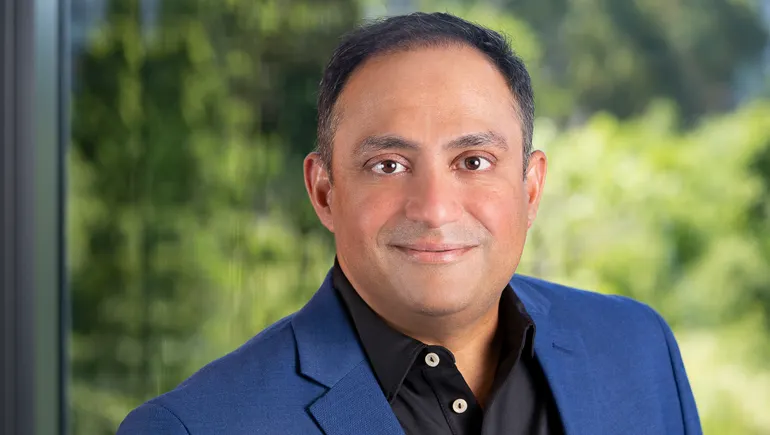
Omega Therapeutics' CEO, Mahesh Karande, states that MYC gene overexpression is present in most human cancers and is the 'holy grail target' in oncology. The company's OTX-2002 is a first-in-class mRNA epigenetic controller designed to downregulate MYC expression and is currently in Phase 1/2 clinical trials.
Genetic regulation is the next major breakthrough direction in oncology, but one gene stands out as particularly important and notoriously difficult to control: c-Myc (i.e., MYC).
Overexpression of the MYC gene is present in most human cancers, making MYC what Omega Therapeutics President and CEO Mahesh Karande calls the "Holy Grail target" in oncology.
"(MYC) is associated with 50% of solid tumors and almost 100% of metastatic cancers," said Karande. His clinical-stage biotechnology company is focused on developing programmable epigenetic medicines to control gene expression.
However, the Holy Grail is the Holy Grail precisely because it is difficult to attain. Karande noted that other characteristics of MYC make it a difficult drug target: it is a "master regulator" controlling many aspects of cell growth regulation and cellular metabolism; it lacks a "binding pocket," making it difficult for drug molecules to bind to the protein; and it also has self-regulatory functions, self-correcting when "attacked."
"You need to keep increasing the drug dose, but at some point, you won't be able to put enough drug into the system," Karande said.
In fact, no one has yet successfully targeted MYC for drug intervention, Karande admitted. But Omega's attempt uses a hot industry technology: mRNA.
"People call this the century of biology... I think our control over biology is unprecedented."

Mahesh Karande
CEO and President of Omega Therapeutics
In late October, Omega Therapeutics dosed the first patient in the Mychelangelo I trial. This Phase 1/2 study evaluates its lead candidate, OTX-2002. OTX-2002 is a potential first-in-class mRNA epigenetic controller designed to downregulate the MYC gene for the treatment of hepatocellular carcinoma and other solid tumors associated with this gene.
Additionally, OTX-2002 recently received Orphan Drug Designation from the U.S. Food and Drug Administration (FDA).
According to the company, OTX-2002 is being developed to "downregulate MYC expression at the pre-transcriptional level through epigenetic regulation and potentially overcome MYC's self-regulatory mechanism."
In other words, it can "deliver the drug into the genome, like adjusting a fan speed controller, to regulate the gene to the range you want," Karande explained.
This mechanism also has potential implications for other cancers.
"Finding a way to downregulate the expression of this gene will allow us to target different types of cancer. And the beauty of our mechanism is that we only precisely regulate in the affected tissue... without affecting other physiological processes. This is crucial because MYC also plays an important role in other processes in the body, and we don't want to interfere where intervention is not needed," he said.
A Renaissance
Even after leading the company for nearly four years, Karande remains in awe and excited about the science.
"Imagine what I'm saying!" he said excitedly. "It's almost as awe-inspiring as a rocket to the moon."
In fact, the trial name Mychelangelo not only alludes to the spelling of the gene name but also pays tribute to the artist and his era.
"The name itself suggests this is a renaissance," Karande said. "People call this the century of biology... I think our control over biology is unprecedented."
The potential of using mRNA therapeutics as programmable epigenetic drugs to control gene expression is vast, and the technology "can be applied to almost any disease area," he added.
"Our pipeline is very broad," he mentioned, with candidates covering not only oncology but also immunology, regenerative medicine, and monogenic diseases such as hair loss.
"Serving Patients"
Karande considers pharmaceutical and biotech work a "noble cause," but it is not the only thing that motivates him. Innovative people and ideas also drive him.
However, the biotech industry was not initially in his career plans.
"At the end of the day, if you can't get drugs and therapies to those in need, that's a true failure."
Mahesh Karande
CEO and President of Omega Therapeutics
"Growing up in India, career choices were often binary: if you were good at science, you either became an engineer or a doctor, and I chose engineer," he said.
Although he studied engineering at Georgia Tech and met his wife in the U.S., he "quickly realized he didn't want to pursue a PhD in engineering."
Instead, he worked at an engineering company and realized he really enjoyed working with people and "the business side of things." Eventually, he earned an MBA from the Wharton School at the University of Pennsylvania. After that, he entered consulting, then moved into the pharmaceutical industry, holding several senior leadership roles at Novartis, including Vice President and Head of U.S. Oncology Solid Tumors, President of Novartis Africa, and President of Novartis Egypt. Over the years, he has drawn inspiration from drug discovery and development.
"You have the opportunity to work with the smartest people who are solving some of the toughest problems in medicine and healthcare," he said. "Working with this group of people is incredible."
But for Karande, innovation in pharma and biotech is not just about science and drug discovery; it's also about accessibility. He has traveled to 78 countries and worked with Novartis in emerging markets, which gave him a different perspective on the world and its needs, and enabled him to open access to medicines for patients in need. For example, during his time at Novartis, he helped launch the Novartis Access program, which provided 15 innovative chronic disease medicines at $1 per dose in Kenya, and it was later expanded globally.
"At the end of the day, if you can't get drugs and therapies to those in need, that's a true failure," Karande said. "On an ethical and global level, if we don't create access to these medicines for a broad population, the entire industry is failing. If patients die because they can't access a life-saving drug, that's a failure."
Although Omega is still in the clinical stage, accessibility is something Karande always thinks about.
"For me, that's also an important part of innovation that pharma companies and executives need to consider," he said.
All of this is part of the "noble cause" he feels every day.
"The day I stop feeling that," he said, "I will stop working."