
Bacteria-Enabled Technology: Cross-Domain Potential from Wound Healing to Cancer Therapy
Evelina Vågesjö, co-founder and CEO of Ilya Pharma, is dedicated to expanding bacteria-enabled technology from wound treatment to cancer supportive care. The company's lead candidate drug, ILP100-Topical, has entered a pivotal Phase II study, while also developing ILP100-Oral for the treatment of colitis in cancer patients following checkpoint inhibitor therapy.
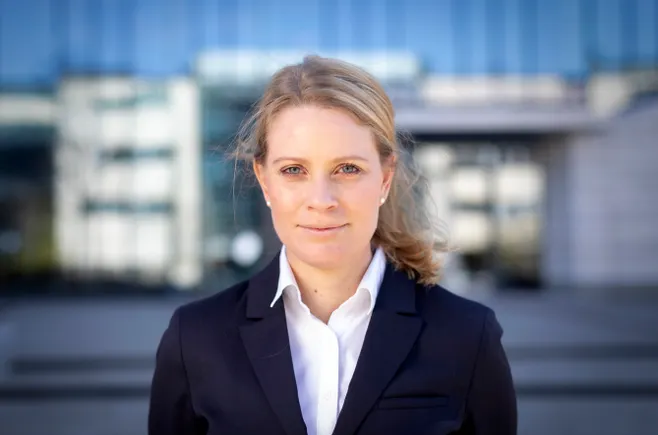
Some people run for fun, others for fitness, competition, or to enjoy the outdoors. For Evelina Vågesjö, running serves all these purposes—and also for Ilya Pharma.
"I often say that I run, stay healthy, and keep in good shape to be smarter at work," she says.
Her words are half joking, half serious. Vågesjö is in constant motion, both physically and mentally. She describes herself as always active—moving, thinking, working, creating—and channels this energy into her work to improve patients' lives.
As co-founder and CEO of Ilya Pharma, a Swedish clinical-stage immunotherapy company, Vågesjö is driven by a firm determination to turn her scientific discoveries into reality to help patients. In fact, "determined" is an apt word to describe Vågesjö. She founded the company in 2016, based on her research during her PhD in physiology at Uppsala University in Sweden.
Ilya Pharma's technology uses lactic acid bacteria as "bioreactors" to produce chemokines and other immunoactive endogenous proteins to accelerate healing and stimulate tissue regeneration.
"I want to find the fastest path to proof of concept or product approval. That drives me." —Evelina Vågesjö, co-founder and CEO of Ilya Pharma
Its lead candidate, ILP100-Topical, is a first-in-class immunotherapy designed to treat surgical wounds in patients with prediabetes, diabetes, and obesity. In May this year, the FDA approved the investigational new drug application for ILP100-Topical, and the company is initiating an adaptive Phase II study designed as a pivotal trial, with the primary endpoint of uncomplicated healing.
The company is also conducting a Phase IIa study of ILP100-Topical in patients with diabetic chronic wounds, funded by the European Innovation Council Accelerator grant program.
Additionally, the company is developing ILP100-Oral, intended to treat cancer patients who develop colitis after receiving checkpoint inhibitor treatment, with plans to initiate first-in-patient clinical trials by the end of 2023 or early 2024.
Beyond drug development, Ilya is also working to improve the cell and gene therapy supply chain. Vågesjö says via email that bottlenecks in "late-stage Phase III and commercial manufacturing capacity" in this field are real. For example, in 2021 the company acquired one of its main suppliers, Nordic Bioanalysis AB, and "has developed a business and investment plan for a new greenfield site with sterile and non-sterile manufacturing capacity for bacteria as medicines and gene therapy medicinal products, and is currently evaluating different financing and potential partnership opportunities."
Ilya's work pays tribute to the source of the company's name: Ilya Mechnikov, a scientist born in what is now Ukraine, who won the Nobel Prize in 1908 for his research on the immune system and also advocated the benefits of lactic acid bacteria.
However, using bacteria in the way Ilya Pharma does is still novel. Vågesjö notes that at a recent industry conference, when participants discussed different modalities for gene therapy, "bacteria were not mentioned once."
"But I think this is a new field that is about to emerge, right around the corner," she says. "That's when you need to make yourself heard in the right way, introducing your special modality to peers." Vågesjö is also committed to proving that her efforts can translate from the lab to patients.
"If you are very confident in your data and believe you can make a difference in any indication or any patient group, you should advance your technology or candidate to proof of concept in patients," she says. "I am very determined to obtain proof of concept, and also to prove the value of this science—I am convinced it works, and I am convinced it will help patients."
Always on the move
Vågesjö has always been busy, curious, and impatient. She played soccer as a child and competed in dressage—an equestrian discipline requiring precise, almost dance-like movements from the horse.
This pursuit of staying active followed her into academia. In addition to her PhD in physiology, she holds a Bachelor of Science in management control systems from Uppsala University, a Master of Science in biomedical science from Uppsala University, and an MBA from Edinburgh Business School at Heriot-Watt University in Edinburgh.
She was one of the winners of MIT Technology Review's "Innovators Under 35" Europe in 2019; was named to the 2021 "Power List" in advanced therapies by Pharmaceutical Manufacturer; and serves on the board of the Norwegian company Lytix Biopharma.
"My calendar is always full, and I live a very active life, which is exactly what I like," she says.
Even when not working, Vågesjö is on the move. She has a small dog that runs with her—"well, I run with it," she corrects—and she spends a lot of time outdoors, which she says is "very Scandinavian."
"I live in the countryside and love being outdoors," she says. "I like running and walking in the forest; outdoor activities give me a lot of energy."
She also draws energy from the enthusiasm of those around her.
"I get energy from strategic discussions, whether it's business, intellectual property, or clinical strategy," as well as solving complex problems with "super smart peers," she says.
A person who is always busy and never stops is bound to be somewhat impatient.
"I always liked school and learning, but I also realized I was very impatient as a child," she says. For Vågesjö, this is particularly challenging in the pharmaceutical industry, which often moves slowly in many long-standing practices.
"I want to find the fastest path to proof of concept or product approval. That drives me," she says.
This is also why, as a leader, she places science at the forefront of the company's actions and decisions, always thinking about "how the product actually works in the body, on immune cells."
She also wants to set an example for her team.
"I know that as a leader, I have to be a role model of sorts. But I think my priority is that we should always focus on the data and never be afraid to follow the science," she says. "When you have a new modality in cell and gene therapy, you must always consider the science in every decision."

