
Strand Therapeutics Co-founder: From Early mRNA Believer to Pioneer of 'Programmable' Drugs
Tasuku Kitada, co-founder, president, and head of R&D at Strand Therapeutics, is a long-time believer in mRNA technology. The company is developing 'programmable' mRNA drugs through synthetic biology, aiming to achieve single-dose, precise treatment in areas such as oncology. Kitada's upbringing has shaped his high tolerance for change and risk, which he regards as a key trait for entrepreneurs.
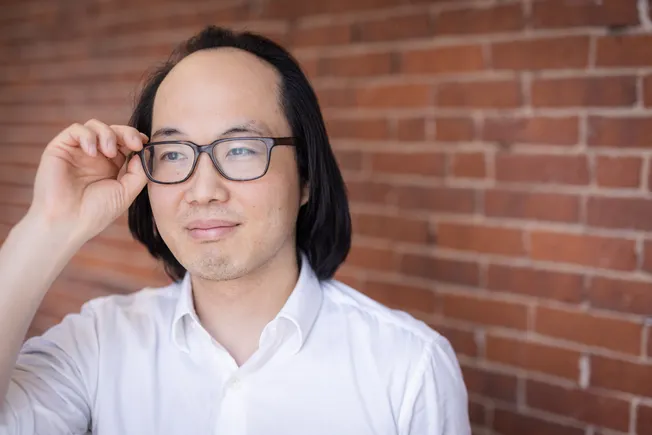
Tasuku Kitada has an extremely high tolerance for change, risk, and uncertainty—perhaps even relishing them. Among the core qualities needed by biopharmaceutical entrepreneurs, this is especially critical, particularly for someone who helped pioneer his own field of research.
Kitada is currently co-founder, president, and head of R&D at Strand Therapeutics. This emerging biopharmaceutical company claims to be building "programmable, long-acting mRNA medicines that enable precise, potentially curative therapies with a single dose."
Although Strand is less well-known than the mRNA giants Moderna and BioNTech, which rose to prominence during the COVID-19 pandemic, Kitada's belief in the technology dates back long before it became widely recognized. According to a former colleague, Kitada recognized mRNA's potential during his academic years and successfully helped develop a technology that engineers mRNA based on synthetic biology genetic programs—an approach that later became the foundation of Strand.
"We were the first research team to build engineered synthetic networks using synthetic messenger RNA," Kitada said.
Strand was founded by Kitada and CEO Jake Becraft in 2019 and is now working to push the technology to the next frontier: achieving curative therapies in oncology and beyond by programming "smarter" mRNA medicines.
Using its platform, Strand leverages synthetic mRNA to fight cancer: through precise programming and control, the drug expresses anti-cancer mechanisms only within the lesion, ensuring the treatment is safer than systemic cytotoxic approaches like chemotherapy.
"This is the value proposition and platform technology we have been building," Kitada said. "A network of synthetic mRNA programs that enter cancer cells, express proteins only in cancer cells, and kill cancer cells."
Last summer, the company received two Phase I Small Business Innovation Research (SBIR) grants from the National Cancer Institute, part of the U.S. National Institutes of Health, to develop mRNA therapies for melanoma and triple-negative breast cancer; it also received a contract to develop an off-the-shelf CAR-T immunotherapy for B-cell non-Hodgkin lymphoma. Additionally, Strand partnered last year with BeiGene, headquartered in China, to develop and commercialize immuno-oncology therapies for solid tumors based on its mRNA technology.
Adapting to Change
Leaving academia to start a company may seem risky, and indeed it is. But Kitada has experienced constant change since childhood, learning to adapt to new people, new environments, new cultures, and even entirely new contexts.
Over the decades, Kitada has moved back and forth between Asia, the United States, and Europe, crossing multiple languages and cultures along the way. He was born in Japan and moved to the United States with his family as a young child. After living on the East Coast for many years, he returned to Tokyo, Japan, at age 10. The culture shock forced this already "Americanized" child to adapt to a "cram school" lifestyle, focusing on academics and gaining admission to a desired university.
For Kitada, the "desired university" was the University of Tokyo. But he credits Japanese scientist and Nobel laureate Susumu Tonegawa's autobiography—who also studied in the United States—for sparking his interest in molecular biology and DNA. That memoir also ignited his desire to pursue graduate studies in the United States.
As his career progressed, Kitada repeatedly "uprooted" himself: first returning to the United States to earn a Ph.D. in molecular biology at UCLA; then crossing the country for postdoctoral research at MIT; and later moving to Belgium, where he currently lives with his Polish-Belgian wife and children. Throughout this journey, he has taken pride in promoting diversity, equity, and inclusion in the workplace and actively participates in the "Biotech and Investor Inclusion Group" within the biosciences sector.
"My risk tolerance is very high. I think that's why I started Strand."
—Tasuku Kitada, Co-founder, President, and Head of R&D, Strand Therapeutics
This life defined by constant change is also marked by a drive to continually pivot and readapt. This does not mean Kitada feels instantly at ease everywhere. Rather, he believes that after a period of adjustment and learning, he can "get the hang of it."
"Every time, I think: 'Okay, after a little adjustment, I can understand how things work... and eventually become effective in every environment,'" he said. "This has given me tremendous confidence that I can operate in any environment."
That is why he does not hesitate when trying new things, nor does he feel anxious about attempting them. "I just don't have that fear," he said. "That's my mindset, and I think it helps a lot."
Risk Tolerance
This ability to handle change extends beyond the personal realm and permeates career choices—crucial for biopharmaceutical entrepreneurs. In fact, it was this mindset that helped him transition from the lab to management, daring to take risks that many scholars in similar situations might hesitate to take or even abandon.
"I see many extremely smart, talented people whose way of thinking may be more conservative," he said. These individuals often have entrepreneurial ideas, but risk aversion prevents them from actually putting those ideas into practice.
"I think the difference between entrepreneurs and non-entrepreneurs lies in the degree of risk aversion. If risk aversion is very high, in the end, they often don't do it," he continued. "My risk tolerance is very high. So I think that's why I co-founded Strand with (Becraft)."
In fact, before founding the company, Kitada worked as a biotechnology analyst, but he was not satisfied with merely being an industry commentator and observer.
"My life goal has never been to make more money for the rich," he said. "Rather than watching others develop drugs and grow companies, I wanted to try it myself."
Kitada revealed that their lead development candidate—a "potent" replicating RNA that can "stimulate the immune system from within the tumor"—is expected to enter the clinic next year, with indications covering melanoma, head and neck squamous cell carcinoma, and triple-negative breast cancer.
The drug will be injected directly into the tumor. Although Kitada said the Strand team is "very excited" about it and efficacy in animal models is encouraging, he acknowledged that the injection route limits the types of cancer that can be treated.
That is why they are "even more excited" about the next-generation technology: drugs administered via intravenous injection, which, although delivered systemically, are precisely designed to express proteins only in specific cells. Kitada said they are developing two versions: one platform targeting cancer cells and another targeting immune cells.
"These technologies will be truly revolutionary," he said.
