
From Resurrecting Woolly Mammoths to Accelerating Drug Development: Colossal Biosciences Spins Out Startup Form Bio
Colossal Biosciences is dedicated to resurrecting extinct species such as the woolly mammoth. Its spun-out startup, Form Bio, commercializes an internally developed bioinformatics platform designed to simplify CRISPR gene editing, data sharing, and experimental workflows, thereby accelerating drug development and biomanufacturing. The platform has secured $30 million in Series A funding and collaborates with institutions like Harvard University.
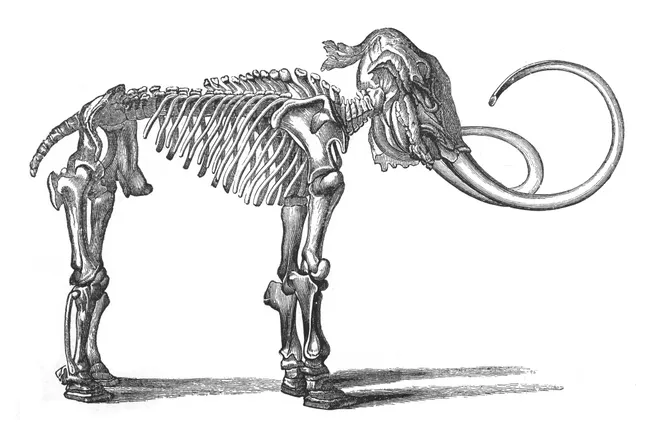
Ten thousand years ago, woolly mammoths roamed vast areas of the Northern Hemisphere, but hunting and climate change eventually led to their extinction. Today, a gene-editing company called Colossal Biosciences is working to 'resurrect' the mammoth and other species.
This ambitious goal has earned the company significant media attention and funding. The U.S. Central Intelligence Agency (CIA) recently announced an investment in Colossal through its venture capital arm, In-Q-Tel. In-Q-Tel, in ablog postexplaining the investment decision, noted that the move is 'less about mammoths and more about capabilities.'
Colossal's leadership says it is these forward-looking capabilities that will ultimately help the company spin off multiple subsidiaries, with the first one announced in September.
This new company, called Form Bio, is a computational life sciences platform originally developed for Colossal's own research efforts.

Colossal's technology has broad potential beyond de-extinction—from redesigning crops and animals to enhance their drought tolerance, to programming materials with enhanced properties.
'I believe we are on the threshold of synthetic biology... and the possibilities it can bring to the world,' said Ben Lamm, CEO and co-founder of Colossal.
Similarly, Form Bio aims to achieve far-reaching goals in the life sciences by quickly and easily synthesizing vast amounts of data into meaningful results.
Form Bio launched with a $30 million Series A funding round led by Jazz Venture Partners, with several Colossal executives joining the leadership team and committing to continue Colossal's mission of accelerating breakthroughs through its technology. The company aims to solve 'some of the major problems in biomanufacturing,' said Claire Aldridge, Chief Strategy Officer at Form Bio.
The technology originated from Colossal's exploration while trying to solve these 'major problems,' explained Kent Wakeford, co-CEO of Form Bio and former COO of Colossal.

Colossal was co-founded with George Church, a genetics professor at Harvard Medical School, and its goal is to apply 'advances in synthetic biology to address biodiversity loss, species conservation, and restoration,' Wakeford said. However, when Colossal partnered with Harvard on this work, researchers found they were using different data analysis systems and lacked an easy way to share data and experiments.
'Harvard was using 55 different technical data points at the time. We wanted to see if we could bring all of that together into one platform, creating a single source of truth for all scientists and enabling them to run computational experiments,' Wakeford said.
This practical application made the team realize that the newly created platform could be applied beyond the work of Harvard and Colossal.
'As we started building this platform, we saw that it could not only help Harvard with all its advanced CRISPR, gene editing, and genome assembly work, but also be applied across the entire synthetic biology field—whether it's biomanufacturing drugs, biomaterials, biofuels, recyclable plastics, or food alternatives. All of these can use a similar platform to do their work,' Wakeford said.
Aldridge describes the platform as 'an operating system for science.'
'It brings all the different tools and workflows into one easy-to-use, intuitive user interface that helps you extract discoveries from your data to drive progress,' she said.
Simplifying data to tackle complex challenges
Wakeford said Colossal is currently using the Form Bio platform not only with Harvard but also with the University of Melbourne and the University of Connecticut.
'This collaborative network is constantly expanding,' he said. 'Our software platform supports all the permission settings, data sharing, and various parameters needed for multi-team scientific collaboration.'
One example of the technology solving real-world problems is Colossal's work in introducing CRISPR edits into embryos to add cold-resistant mammoth genes to the elephant genome, Aldridge said. This process requires multiple steps, such as identifying the guide RNA for CRISPR editing, selecting the best CRISPR editing platform, and then designing primers to verify the edits.
'I believe we are on the threshold of synthetic biology... and the possibilities it can bring to the world.'
— Ben Lamm, CEO and co-founder of Colossal Biosciences
'The capability built inside Colossal that is now part of Form is to do all these steps in one workflow,' she said. Researchers simply input the gene they are interested in, and the platform guides them through each step needed to execute that experiment via a user-friendly interface.
Researchers initially used it for Colossal's genetic de-extinction work to build what Lamm calls 'proxy species' to reintroduce extinct species into the wild. The company says this effort could help address climate change by filling 'the ecological gaps left by species loss.'
The Form Bio platform is 'well-suited for de-extinction, but it can also be applied to any field,' Aldridge said. 'It can be used to identify CRISPR-based drugs to truly go in and edit someone's genome; it can also be used to engineer pest-resistant traits into crops.'
Wakeford said Form Bio plans to partner with biotech companies, particularly those working in cell and gene therapy.
'Anyone working in synthetic biology can use our platform to run their workflows, perform analyses, share data, and collaborate, but on top of that, we offer very specific solutions,' Wakeford said.
Its first major solution is candidate validation for manufacturing.
'Our platform helps in every aspect, from the initial scientific research, to validation, and most critically, when you take these constructs built in mouse models and put them into actual human production,' Wakeford said. 'We see this as a key part of bringing these next-generation drugs and therapies to market in a way that is safer and more cost-effective for humans.'
For example, one way to improve patient safety is to reduce the number of truncated proteins produced during gene editing, as they sometimes trigger immune responses and are not naturally occurring.
'If we can reduce the likelihood of truncated protein production, we can reduce the likelihood of an immune response to that truncated protein,' she said.
One of Form Bio's early partners (not yet publicly disclosed) has already achieved 'double-digit improvements in addressing the truncation issue' in its processes, Wakeford said.
'Our platform is mature and used by multiple universities and biotech companies, and we see an opportunity to make it available to the broader ecosystem,' Wakeford said.
Wakeford believes the biotech sector is currently facing a 'macroeconomic' opportunity due to the ubiquity and low cost of data. Their platform can accelerate key stages of drug development, reducing time to market and lowering costs.
'We believe this is the perfect time for us to launch the company,' he said.